









If you want frequent post-exercise recovery at home, a cold plunge is easier to arrange. If you prefer brief dry exposure and have access to a suitable supervised nearby facility, whole-body cryotherapy is worth considering. Neither approach is universally superior for overall recovery; your choice comes down to session frequency, total cost, and personal convenience.
What Is a Cold Plunge?
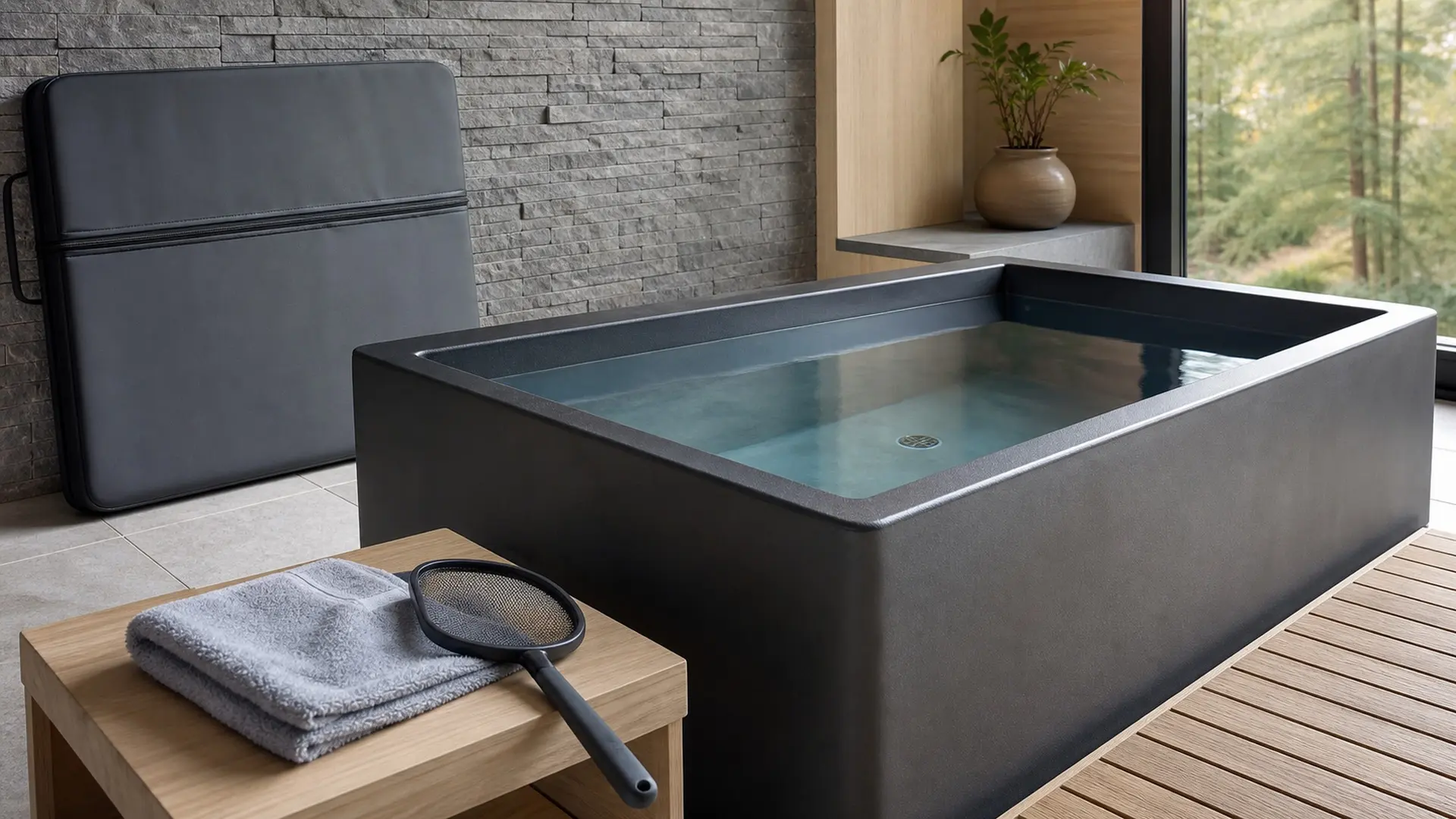
A cold plunge, also called an ice bath or cold-water immersion, involves lowering your body into cold water up to the chest or neck while keeping your head dry. Cold water surrounds your body, conducting heat away from submerged muscles.
Setups range from simple tubs filled with water and ice to automated chiller units with built-in filtration. Floating ice is not required as long as the water stays at your target cold temperature.
What Are the Benefits of Cold Plunging?
Reduced Muscle Soreness
You may feel less sore 24 hours after high-intensity exercise compared to resting passively. Cooling tissues temporarily slows pain signals from nerve endings, offering short-term relief.
During immersion, cold water causes blood vessels to narrow while water pressure compresses tissues, which may help reduce local fluid build-up and swelling. For more details, see our guide on cold-water immersion for DOMS.
Recovery of Muscular Power
Strenuous training causes temporary muscle fatigue and discomfort that impair your ability to generate rapid force. Cold-water immersion supports muscular power recovery 24 hours after high-intensity or eccentric exercise compared to passive rest. Tissue cooling and water pressure on the body may aid recovery by easing pain, reducing local fluid accumulation, and lowering metabolic demands, making it easier to regain explosive strength for movements like jumping or sprinting.
Reduced Stress
Cold-water immersion may help lower stress, with research showing reduced stress roughly 12 hours after exposure. Cold exposure initially triggers alertness. This may be followed by a shift toward the parasympathetic branch of the autonomic nervous system—which controls involuntary functions such as heart rate—helping the body return toward rest over subsequent hours.
What Is Whole-Body Cryotherapy?
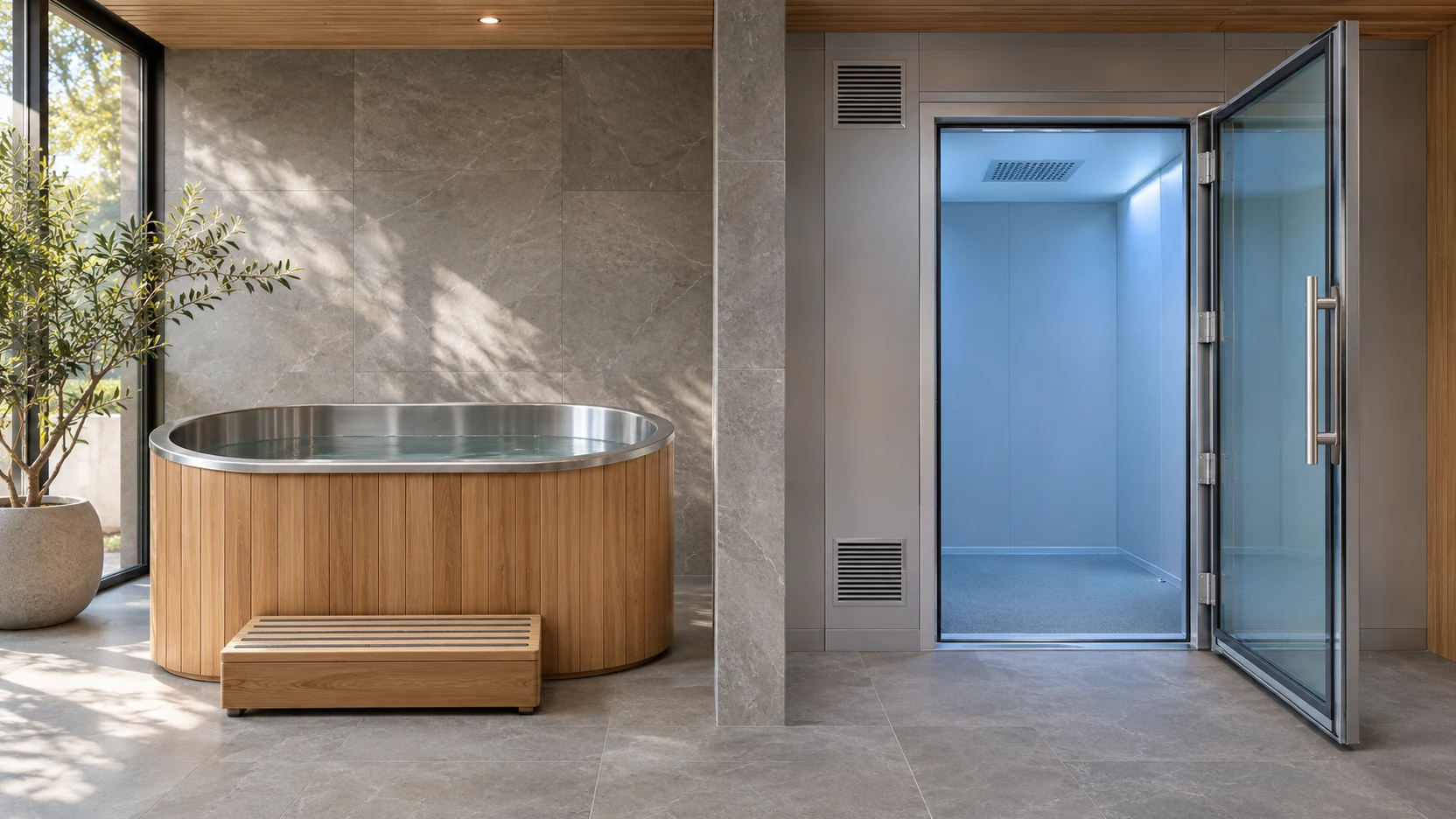
Whole-body cryotherapy involves brief exposures to extremely cold air inside an enclosed chamber. To protect extremities and airways, users must wear protective gear—including dry socks, insulated clogs, gloves, ear protection, and a face mask—and ensure their skin and undergarments are completely dry before entering.
True whole-body cryotherapy encloses the entire body, including the head, inside a refrigerated room. Systems that keep the head outside an open cylinder are partial-body cryo-saunas.
What Are the Benefits of Whole-Body Cryotherapy?
Reduced Muscle Soreness
Both cold plunges and whole-body cryotherapy can help reduce muscle soreness during consecutive days of heavy exercise. In a trial of 13 competitive male players completing a three-day tennis protocol, both cold-water immersion and whole-body cryotherapy similarly reduced soreness compared to passive rest, with neither method proving superior. Rapid skin cooling slows pain signal transmission and temporarily eases discomfort.
Deeper Sleep
You may sleep more deeply after repeated sessions. In a study of 20 healthy adults, five consecutive daily whole-body cryotherapy sessions led to longer slow-wave sleep—the deepest stage of non-REM sleep—and higher subjective sleep quality. Slow-wave sleep is an important restorative phase for physical recovery. In exercise recovery contexts, easing physical discomfort and encouraging parasympathetic activity may make it easier to settle into deep rest.
Better Mood
Repeated daily sessions may help lower feelings of anxiety and support a more positive mood. In a study of 20 healthy adults, five consecutive daily whole-body cryotherapy sessions led to improved mood scores and reduced anxiety. The exact biological mechanisms behind these shifts remain under study, but short-term repeated exposure showed clear improvements in self-reported emotional well-being.
Support for Physical Rehabilitation
Combining whole-body cryotherapy with supervised physiotherapy may offer less pain and improved daily physical function for people managing ankylosing spondylitis—an inflammatory condition causing spinal pain and stiffness. Reducing joint pain and morning stiffness allows individuals to participate more comfortably in guided exercises and therapy routines.
Cold Plunge vs Cryotherapy: Key Differences
| Feature | Cold Plunge (Cold-Water Immersion) | Whole-Body Cryotherapy |
|---|---|---|
| Where You Do It | At home (tub/chiller) or athletic centers | Commercial recovery clinics or specialized spas |
| Total Time Commitment | Immersion plus water prep/cooling time and regular tub care | Brief exposure plus round-trip travel, check-in, and changing |
| How Costs Arise | Upfront tub/chiller or ice, plus electricity, filters, and cleaning supplies | Pay-per-session fees or monthly center memberships |
| Maintenance | Tub owner handles water sanitation, filtration, and cleaning | Handled entirely by facility staff |
| Experience | Wet, direct cold water contact | Brief, dry cold air exposure with protective gear |
Comparing Muscle Cooling
Water transfers heat away from the skin far more effectively than air. A study measuring thigh muscle temperatures in 10 healthy men found that a 10-minute cold plunge at 8°C lowered deep muscle temperature significantly more than a 2-minute cryotherapy session at −110°C.
Water Pressure and Body Position
Water presses against a submerged body with hydrostatic pressure that increases with depth. When sitting or standing in a cold tub, this gentle water compression shifts blood toward the chest, as shown in research on cold-water immersion. In contrast, whole-body cryotherapy involves standing or walking in a dry chamber without water compression, as outlined in cryotherapy chamber protocols. These different environments create distinct physical sensations and body responses during recovery.
Equipment and Operating Costs
Your total cost depends on how often you use each option relative to its ongoing expenses:
- Cold Plunges: Occasional use with a simple tub keeps upfront costs low, but buying, carrying ice, and preparing the water becomes tedious for frequent sessions. Adding a chiller reduces repeated ice handling, though it requires advance cooling time and higher initial investment, along with ongoing costs for electricity, cleaning supplies, and replacement filters where fitted.
- Whole-Body Cryotherapy: Clinic visits avoid equipment ownership, water care, and home maintenance. However, per-session fees or monthly memberships build ongoing costs, along with the time needed for round-trip travel and changing before and after brief exposures.
Comparing local facility fees and travel time against real ownership and running costs will show which model best fits your budget and schedule.
What Are the Risks of Cold Plunges and Cryotherapy?
Both cold plunges and whole-body cryotherapy subject the cardiovascular system to sudden thermal stress. Sudden cold exposure causes blood vessels to constrict, raising blood pressure and heart rate. According to medical resources from the American Heart Association and WebMD, individuals with cardiovascular disease, uncontrolled high blood pressure, Raynaud’s phenomenon, or circulatory disorders should avoid both modalities unless cleared by a physician.
Cold Plunge Risks
- Cold Shock Response: Sudden immersion causes an involuntary gasp and rapid breathing. Gasping while submerged creates an immediate drowning risk.
- Hypothermia and Loss of Coordination: Remaining in cold water too long lowers core body temperature, impairing physical coordination and making it difficult to exit the tub safely.
- Water Hygiene: Untreated water can harbor bacteria, which may cause skin irritation.
To reduce these risks, lower yourself into the water gradually while keeping your head above the surface. Do not hold your breath or hyperventilate before or during a plunge. Plunge with a partner or within view of others, use stable entry steps, and exit immediately if you experience chest pain, dizziness, or loss of breathing control.
Cryotherapy Risks
- Frostbite: Sub-zero air can freeze skin tissue if skin or undergarments are damp, or if required protective gear is missing.
- Oxygen Displacement: Cryotherapy chambers operating on liquid nitrogen pose an asphyxiation risk if nitrogen gas displaces oxygen in an unventilated room.
To reduce these risks, ensure skin and clothing are completely dry before stepping inside. Wear all required gloves, socks, clogs, face mask, and ear protection. Choose supervised facilities equipped with proper nitrogen room ventilation, active oxygen monitoring, and doors that allow an immediate exit.
Ice Bath vs Cryotherapy: How to Choose
To decide between the two options, ask yourself two key practical questions:
- How many times a week will you use it? Use your realistic weekly frequency to compare local session fees against the cost of equipment and ongoing home maintenance. If you only recover occasionally, paying per visit at a facility avoids the commitment of equipment ownership.
- Would you rather maintain equipment or travel to a facility? A cold plunge requires managing water hygiene, filter changes, and tub cleaning yourself. Whole-body cryotherapy leaves maintenance to facility staff, but requires booking, travel, and changing time for every session.