









After a cold plunge, remove wet swimwear, dry off and put on warm, dry clothes. Move somewhere sheltered before reaching for a drink or snack. If you feel well and steady on your feet, gentle movement can follow once you have started warming up.
Deciding what to do after an ice bath is easier before you get in. Leave a towel, loose clothing, socks and shoes within reach, and have a warm drink ready. With an outdoor tub, choose your changing spot in advance so you can get out of the wind immediately.
Why Warming Up Matters
Getting out of the water does not always stop your body from cooling. Core temperature can continue to fall after cold exposure, a process called afterdrop. Wet skin, damp clothing and wind can also keep taking heat away.
Warming up helps limit further heat loss and lets you return to daily activities comfortably. Feeling alert as you leave the tub is not a reliable measure of body temperature. Give yourself time to get dry, dressed and warm before driving or heading back outside.
Dry Off
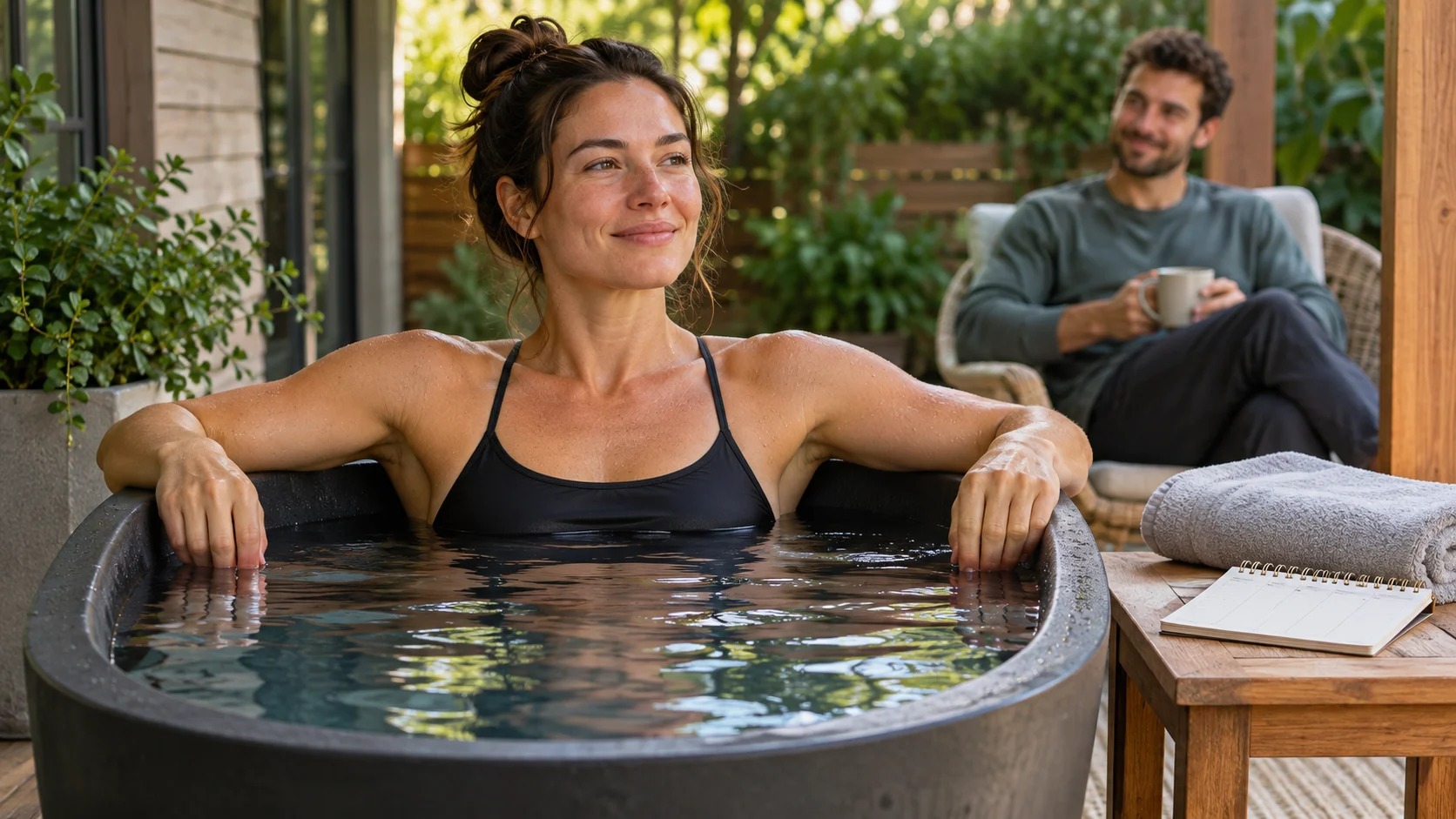
Keep a large, absorbent towel beside the tub. Step onto a dry, non-slip mat, remove wet swimwear and dry your body before putting clothes on. If your hair is wet, towel it dry too.
A changing robe gives you privacy outdoors, but wearing it over a wet swimsuit leaves damp fabric against your skin. Change underneath it as soon as you can. Keep your towel and clothes away from splashes; a dry set is far more useful than a damp pile beside the tub.
Put On Warm Clothes
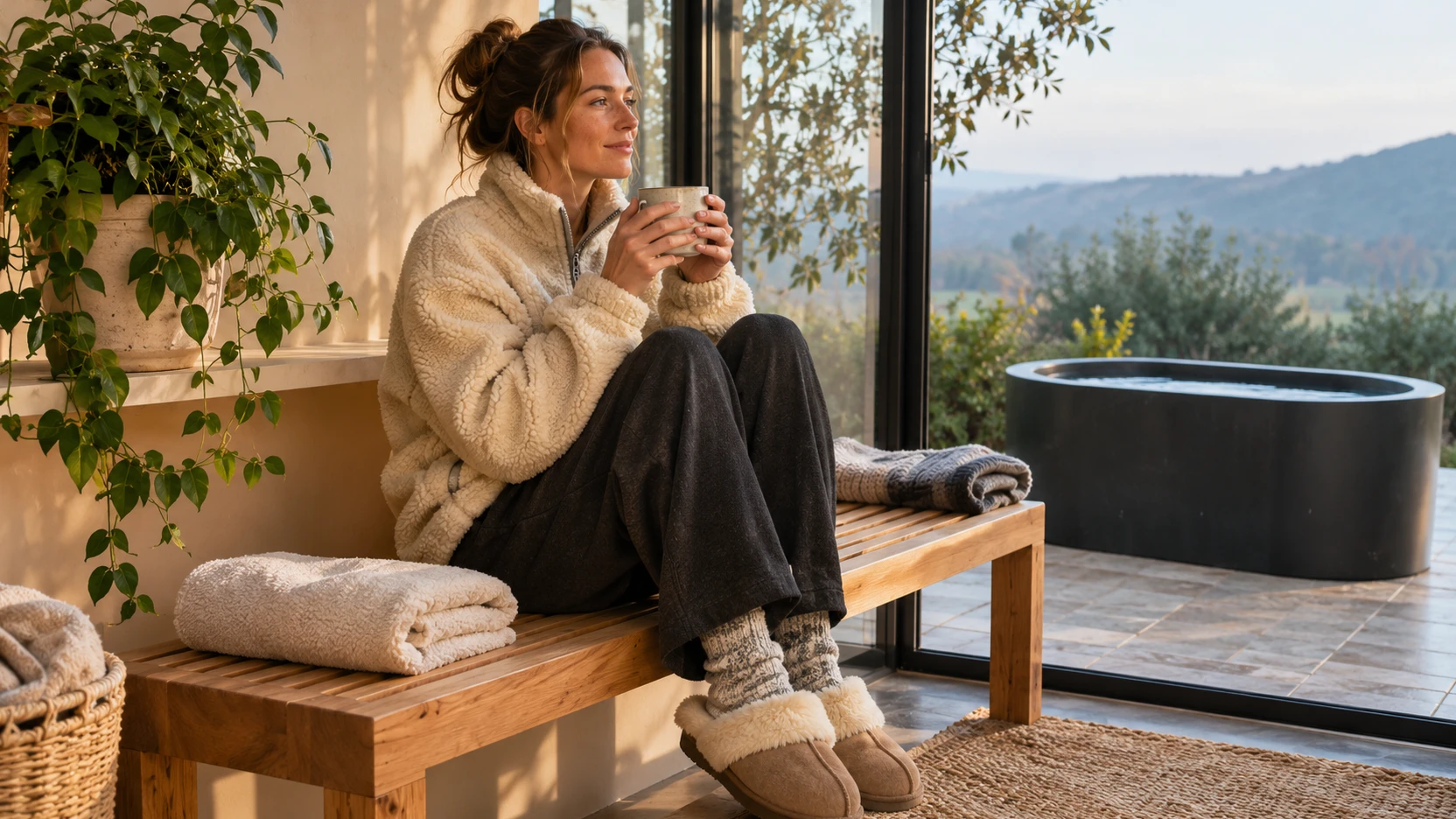
Choose clothes you can pull on easily with cold hands. Loose trousers, a long-sleeved top and a fleece are simpler to manage than tight leggings or several small buttons.
Use the layers to suit the setting:
- Indoors, start with a dry top, trousers and socks. Add a fleece or blanket if you still feel chilled.
- Outdoors, add an insulated layer and a windproof jacket. A warm hat is useful in cold weather.
- Put on dry socks and shoes before walking across cold paving or decking.
Keep an extra layer nearby so you can add warmth without going back outside to fetch it. Remove a layer if you become hot enough to sweat and dampen your clothes.
Find a Warm Place
Head into the house or another sheltered, warm space once you are out of the tub. Standing on a windy patio while checking your phone adds cold exposure just when you are trying to warm up.
Sit somewhere dry, away from drafts. If you use a blanket, wrap it around your body and shoulders over your dry clothing. For an outdoor plunge away from home, plan access to shelter before the session; a towel alone is a poor substitute on a cold day.
Do not start driving while you are shivering or your hands feel too numb to handle the controls normally. Stay with someone if you feel unwell.
Have a Warm Drink
A mug of warm water, tea or broth can make warming up after an ice bath more comfortable. Prepare it beforehand in a flask so you can get dressed and settle somewhere warm without having to make it while cold.
Choose a comfortable drinking temperature. A warm drink provides fluid and comfort, but its small volume does little to raise core temperature on its own, as RLSS UK explains. Keep your dry layers on while you drink.
If you plunge in the evening, choose a caffeine-free option. Avoid alcohol as a warming drink.
Eat a Small Snack
If you are hungry or have not eaten for several hours, have an easy carbohydrate-containing snack once you are dressed and sheltered. A banana, toast or a few crackers are simple options. Warm porridge can fit naturally after a morning plunge; soup with bread may suit a session before lunch.
Food supplies energy, including energy used to produce body heat. You do not need a special recovery supplement or a large meal after every brief plunge. If you have recently eaten and feel fine, there is no need to force a snack.
Only eat or drink when you are fully alert and able to swallow normally.
Move Gently
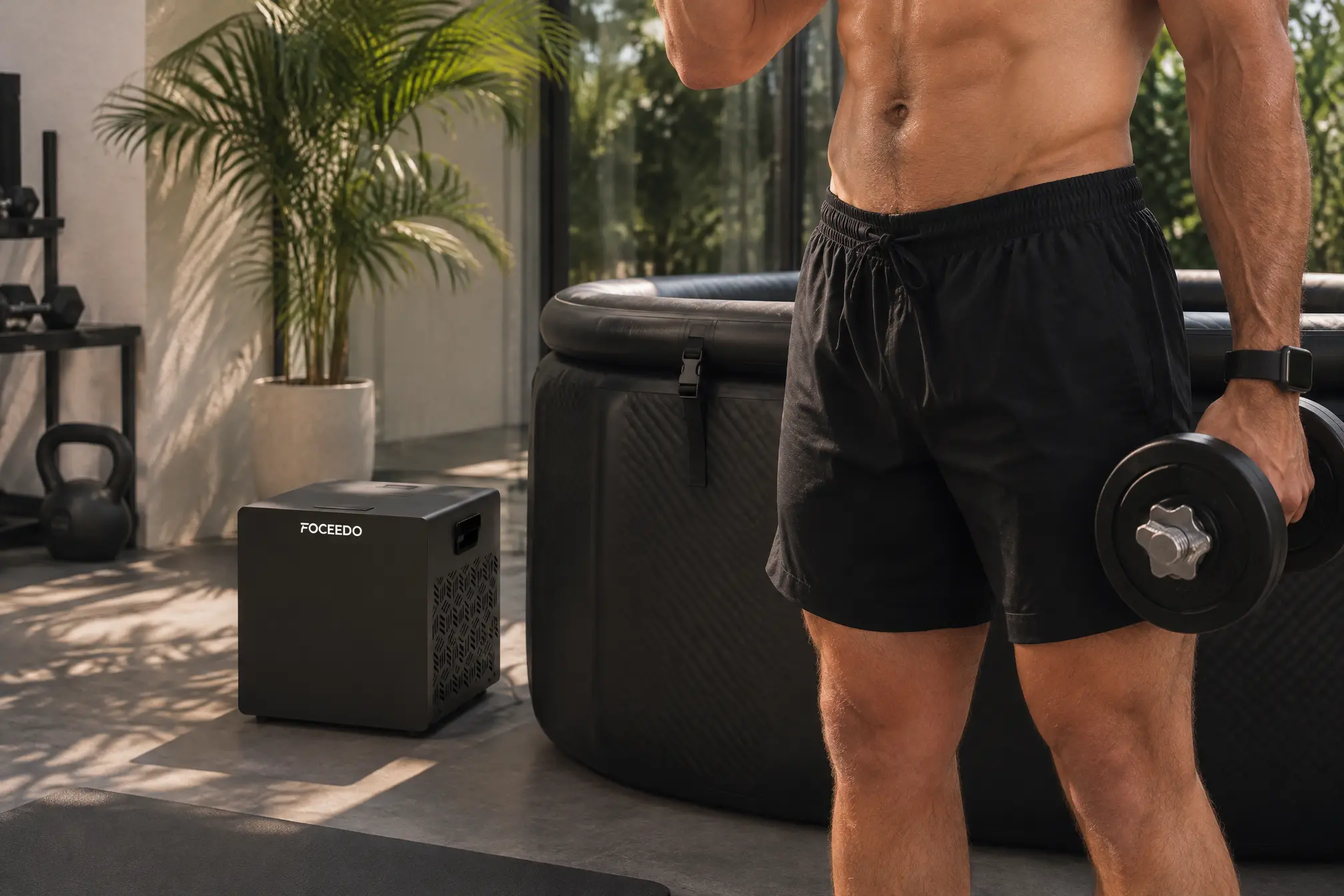
Get dry and insulated first. Once you have begun to warm up, an easy walk around a warm room may help if you are alert, comfortable and steady on your feet. Start slowly, with enough space to move without slipping.
Keep the effort light enough to speak normally. There is no need to turn rewarming into a workout: running, burpees or a demanding squat routine can leave you exhausted or sweaty.
If you are shivering strongly, dizzy or weak, sit or lie down somewhere sheltered and get help instead of trying to exercise through it. Wilderness Medical Society guidance recommends insulation and initial rewarming before exercise in people who have become cold.
When to Get Help
Seek emergency help if someone develops confusion, slurred speech, slow breathing or unusual drowsiness after cold exposure. These can be signs of hypothermia.
While waiting, move them into shelter, replace wet clothing with dry layers and wrap them in blankets. Stay with them. Do not use a hot bath or rub their arms and legs to warm them. Give food or a warm non-alcoholic drink only if they are fully awake and can swallow safely.
If your usual plunge repeatedly leaves you struggling to get warm, pause the routine and seek medical advice before another session.