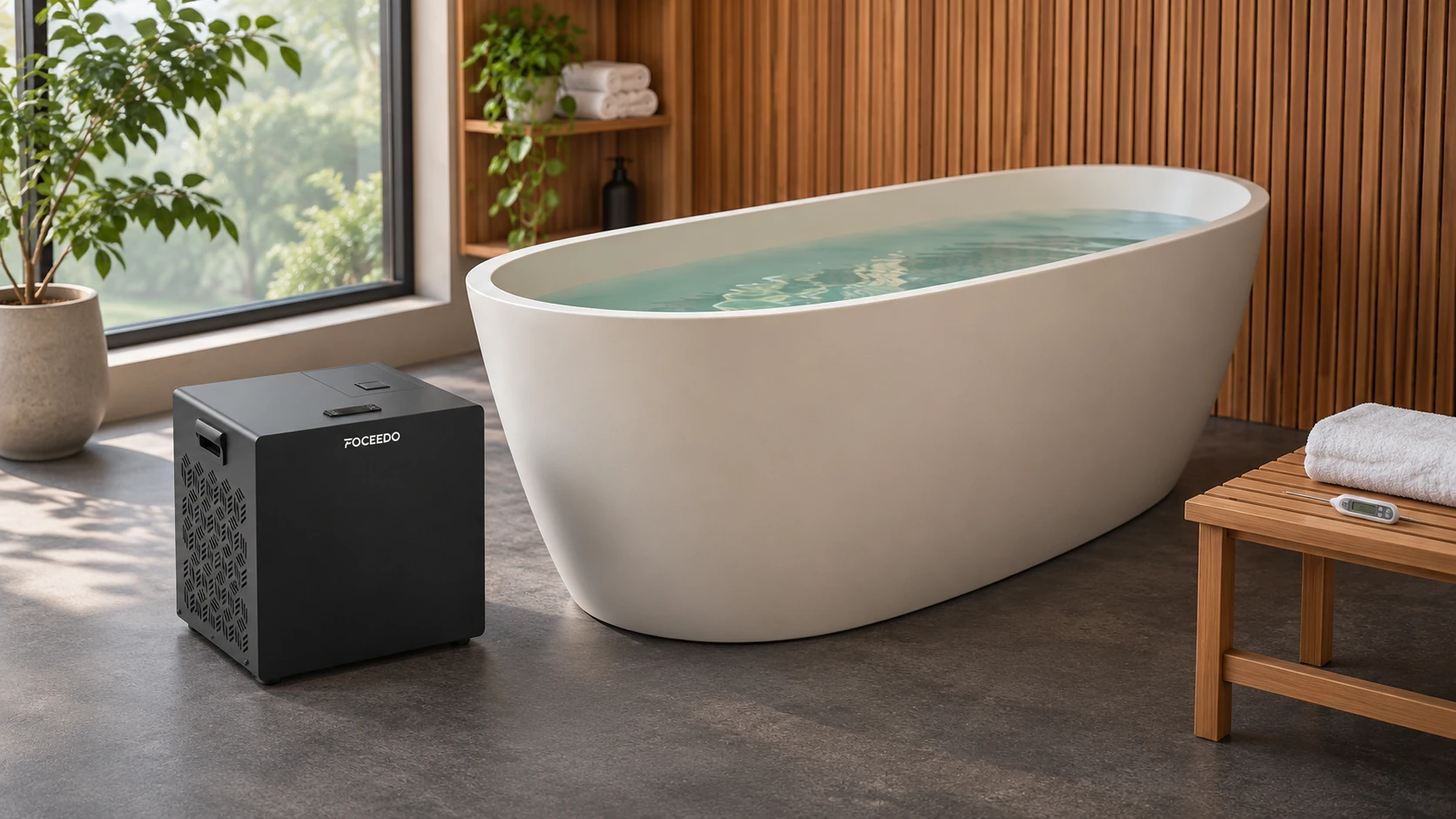










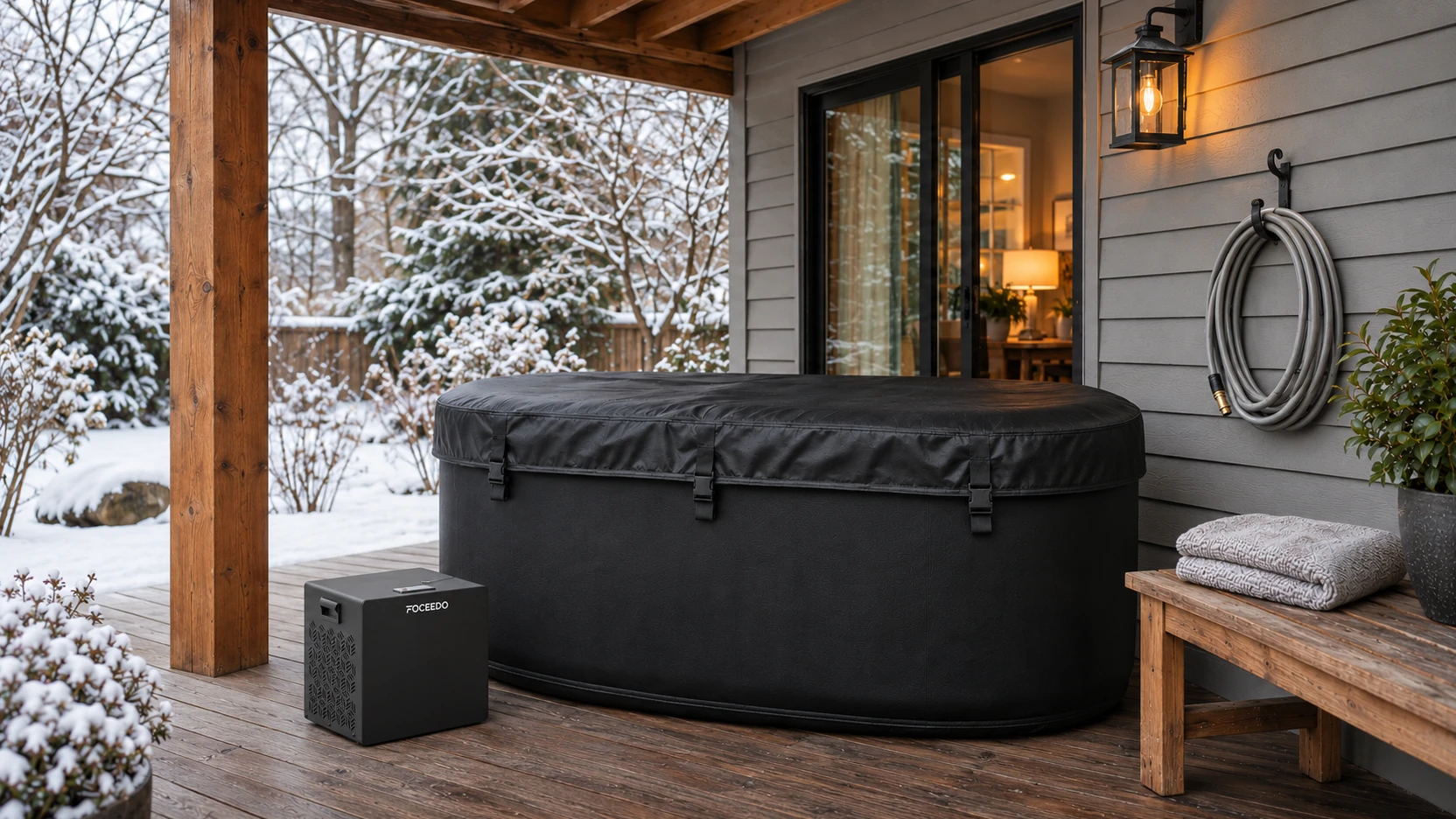
Winter care starts with a choice: keep your outdoor cold plunge operating within its approved conditions, or drain it and put it away. Water left inside a chiller, pump or hose can freeze and expand, damaging parts even when the tub itself looks fine.
If you continue using the system, plan for circulation, insulation and reliable power. If you stop using it, remove the water from the equipment as well as the tub before freezing weather arrives.
Keeping Your Cold Plunge Running
Check the manufacturer’s minimum ambient operating temperature before leaving an outdoor ice bath with chiller running through winter. This is the air temperature around the machine, not its lowest water-temperature setting. Check any separate requirements for the pump and filter housing too.
If your forecast falls outside those limits, move the system to a suitable protected location or shut it down.
Keep Water Circulating
For systems approved for winter operation, keep the circulation running as the manufacturer specifies. The compressor may stop when the water reaches its set temperature while the pump continues moving water through the machine. Switching off the entire unit can stop that flow.
Before a cold night, check:
- Whether the pump continues running when cooling stops.
- Whether an app schedule, sleep setting or external timer switches off circulation overnight.
- Whether the return flow is normal and any flow warning is showing.
- Whether valves are open, hoses are free of kinks and the water level meets the machine’s requirements.
A running pump with little or no water flow needs attention. Follow the manual to clear a blocked filter or trapped air; disconnect power before opening filter housings or removing hoses. Circulation helps carry heat through the system, but it cannot guarantee protection when the whole water circuit becomes too cold.
Insulate Pipes and Fittings
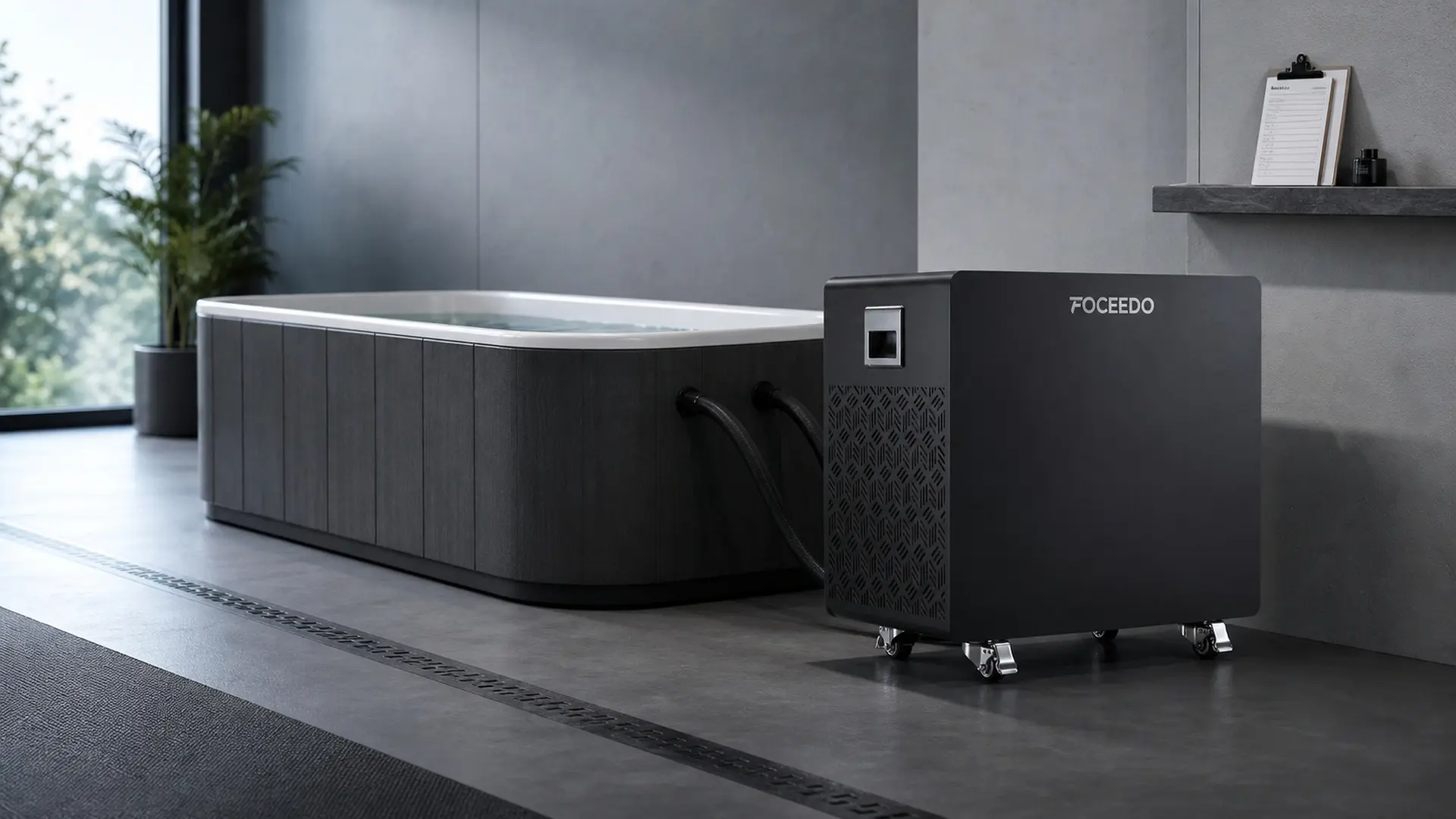
Inspect the exposed route between the tub and chiller. Long bare hoses, uncovered joints and an external filter housing all need consideration when planning winter protection.
Use insulation suitable for the pipe size and outdoor exposure, following the equipment supplier’s recommendations. Close gaps at bends and joints, protect the insulation from rain, and check it after storms. Keep shutoff valves and drain points accessible so you can act quickly if the system needs draining.
Insulation slows heat loss; it does not generate heat. Heating cables or heated enclosures need explicit approval for the equipment and installation. Do not improvise by wrapping electrical heaters around plastic hoses or filter housings.
Protect the Installation Area
A sheltered position reduces exposure to wind-driven rain and snow. Keep the machine on a stable surface with drainage away from the equipment, and clear snow from its air openings.
Maintain the manufacturer’s ventilation clearances. Wrapping the chiller in a blanket or enclosing it in a tight box can obstruct airflow. A protective enclosure needs room for air intake, exhaust and servicing.
An unheated garage or shed can still fall below freezing. Check its overnight temperature before treating it as a winter-safe location. If the chiller sits indoors while the tub remains outside, the connecting pipes still need protection and the hose arrangement must remain within the manufacturer’s limits.
Monitor Temperature and Flow
Watch the overnight forecast as well as daytime conditions. Check actual water temperature before use and confirm circulation ahead of a cold spell. Compare the measured temperature with the setpoint, especially after an unusually cold night.
Act on weak flow, repeated alarms or unexpected temperature changes. If you suspect ice inside the equipment, do not keep restarting it. Contact the supplier for thawing and inspection instructions, then check for damage and leaks before reuse.
Prepare for Power Cuts
Keep the shutdown instructions and required drain tools where you can find them. During an outage, water circulation stops. Do not assume the system can safely wait until morning.
If you cannot maintain the required protection, follow the winter shutdown procedure before water freezes. The same applies when a pump fails. If you will be away and nobody can check the equipment or respond to an outage, draining and storing it may be the more practical choice.
Shutting Down for Winter
Plan the shutdown while the water can still drain freely. Simply switching off a full machine and leaving it outside exposes the water trapped inside to freezing.
Switch Off and Disconnect
Follow the model’s shutdown sequence and disconnect its electrical supply before opening the water circuit. Identify the drain points and arrange where the water will go. Avoid draining across a path where it could freeze and create a slipping hazard.
Take a photo of the hose connections before disconnecting them, and keep seals and fittings together for reassembly.
Drain the Whole System
Work through every water-filled part of the installation:
- The tub and any low points around its outlets.
- Both connecting hoses, including loops that can retain water.
- The chiller’s water circuit and its specified drain points.
- The pump and filter housing, using their individual draining instructions.
An empty tub does not confirm that the chiller is empty. Ask your supplier how to remove residual water if the manual does not explain it. Do not tip the machine, run the pump dry or use compressed air unless the manufacturer specifically instructs you to do so. Do not add salt or antifreeze as a substitute for the approved procedure.
Clean, Dry and Store
Clean the tub and removable components with compatible products. Service the filters according to their type, and let parts dry before packing them away. Label any worn seals or damaged hoses for replacement before the next season.
Store the chiller in a dry location protected from freezing, in the orientation specified by its manufacturer. Keep hoses relaxed rather than sharply folded, protect open connections as directed, and keep the fittings with the machine.
For a FOCEEDO unit, such as the E03 ice bath chiller, provide your model number and a photo of the connections when requesting winter-storage instructions. This helps identify the correct drain procedure for your equipment.
Check Before Restarting
Inspect hoses, seals, housings and electrical cables before refilling. Reconnect the system, fill and prime it according to the manual, and confirm normal circulation and leak-free connections before starting the cooling cycle. Our installation guide explains the general setup checks.
Benefits of Winter Cold Plunging
Cold-water immersion can help reduce muscle soreness after demanding exercise compared with passive rest. That may be useful after a hard run or competition when soreness affects the following day. Research review.
For people who already enjoy an outdoor ice bath, keeping a suitable setup available lets them maintain their routine through the season. Cooler air can also help cool the water, reducing the need for added ice in a basic tub.
Winter Cold Plunge Safety Tips
Cold air and wet clothing make the period after a plunge more demanding. Prepare your exit and a warm place to change before getting in.
- Measure the water temperature each time. A cold night can lower it below your usual setting, especially in a system without heating.
- Keep steps and the route indoors free of ice. Place dry footwear and a towel within easy reach.
- Enter gradually and keep your head above water. Avoid breath-holding, and have someone nearby who can help you leave the tub.
- Do not push through dizziness, breathing difficulty or loss of coordination. End the session and get assistance.
- Dry off and change out of wet clothing promptly. Our warm-up guide covers what to do after you get out.
Seek medical advice before starting if you have heart or circulation problems, uncontrolled blood pressure, significant cold sensitivity or another relevant health condition. The Royal Life Saving safety guidance explains why screening, controlled exposure and supervision matter.
Confusion, slurred speech or unusual drowsiness after cold exposure can signal hypothermia. Seek emergency help, move the person into shelter and replace wet clothing with dry insulation. CDC hypothermia guidance.