









An مبرد الحمامات الجليدية’s running cost has two parts: the energy needed to cool a fresh fill and the energy used to keep it cold. The first cooldown is the heavier cooling task. Once the water reaches its target, a covered, well-insulated tub needs much less cooling to replace the heat gained between uses.
For an ice bath at home, the total running cost also includes water, filters and treatment supplies. Start with electricity, because both the equipment’s power draw and its cooling time affect what you pay.
Monthly Electricity Costs
Power and Runtime
A 1,000 W appliance draws 1 kW. Running at that input for three hours uses 3 kWh, costing $0.60 at $0.20/kWh. The calculation is:
Input power in kW × hours running × electricity rate = electricity cost
Look for electrical input on the specification sheet. Cooling capacity tells you how quickly a chiller removes heat; it is not its electricity consumption. A unit rated at 3 kW of cooling capacity does not necessarily draw 3 kW from the outlet.
For an ice bath with a chiller, check whether the system’s input figure includes its pump and water-treatment equipment. Include separately powered devices in the total, using their own operating schedules.
Cooling and Maintenance
Cooling fresh water removes heat from the whole fill. For example, taking water from 25°C to 10°C requires a 15°C reduction. Once it is cold, bringing the same volume back from 11°C to 10°C requires removing only one-fifteenth as much heat from the water. That is why maintaining temperature in a well-insulated tub generally needs much less cooling than starting again with warm water.
The compressor then runs as needed, while circulation and treatment follow their required schedules. Heat removed is not the same as electricity consumed: compressor efficiency, pump use and heat entering during operation also affect the bill. For a monthly total, count actual cooling cycles and other loads rather than treating every day as a new full cooldown.
A Cost Example
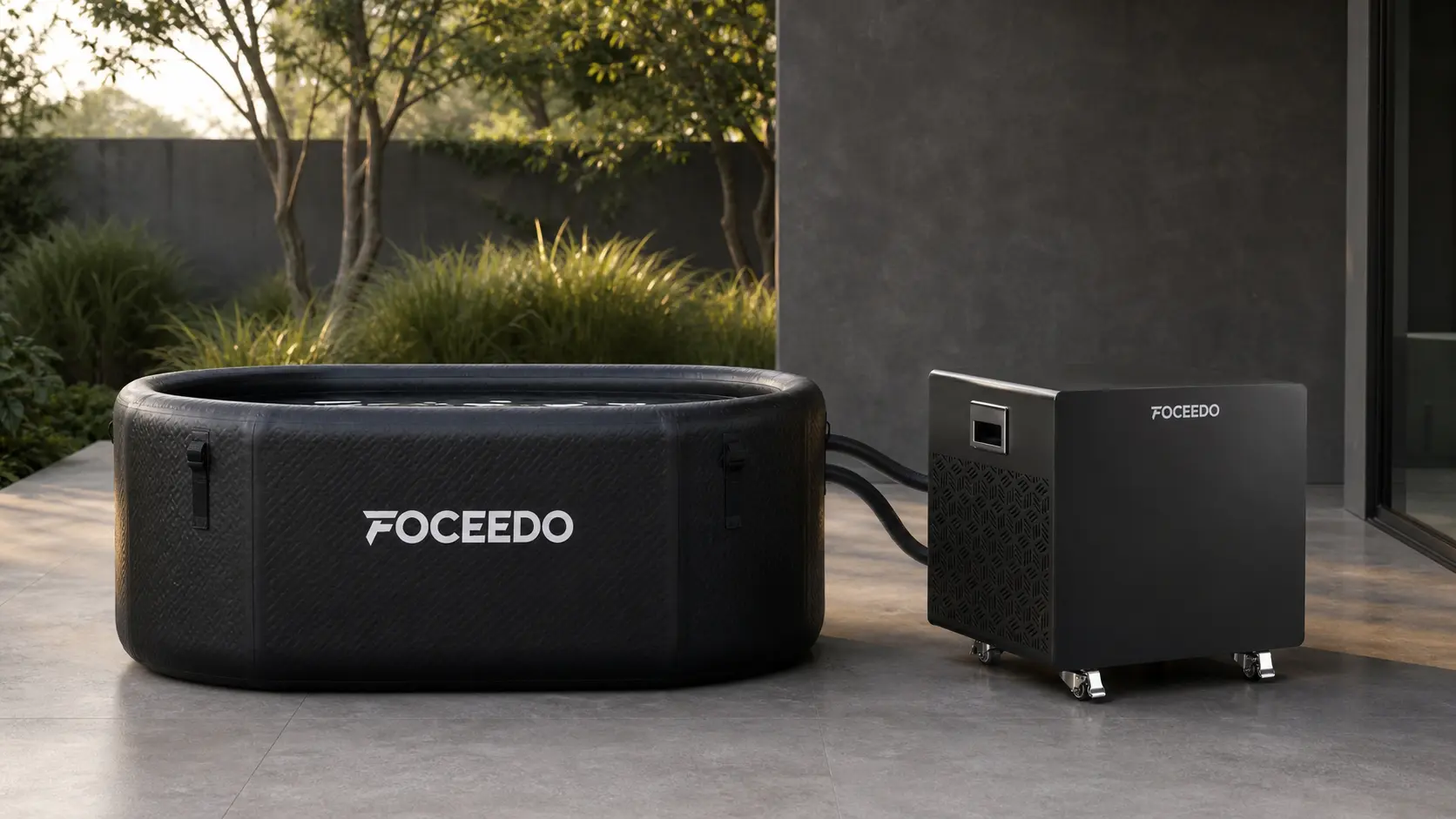
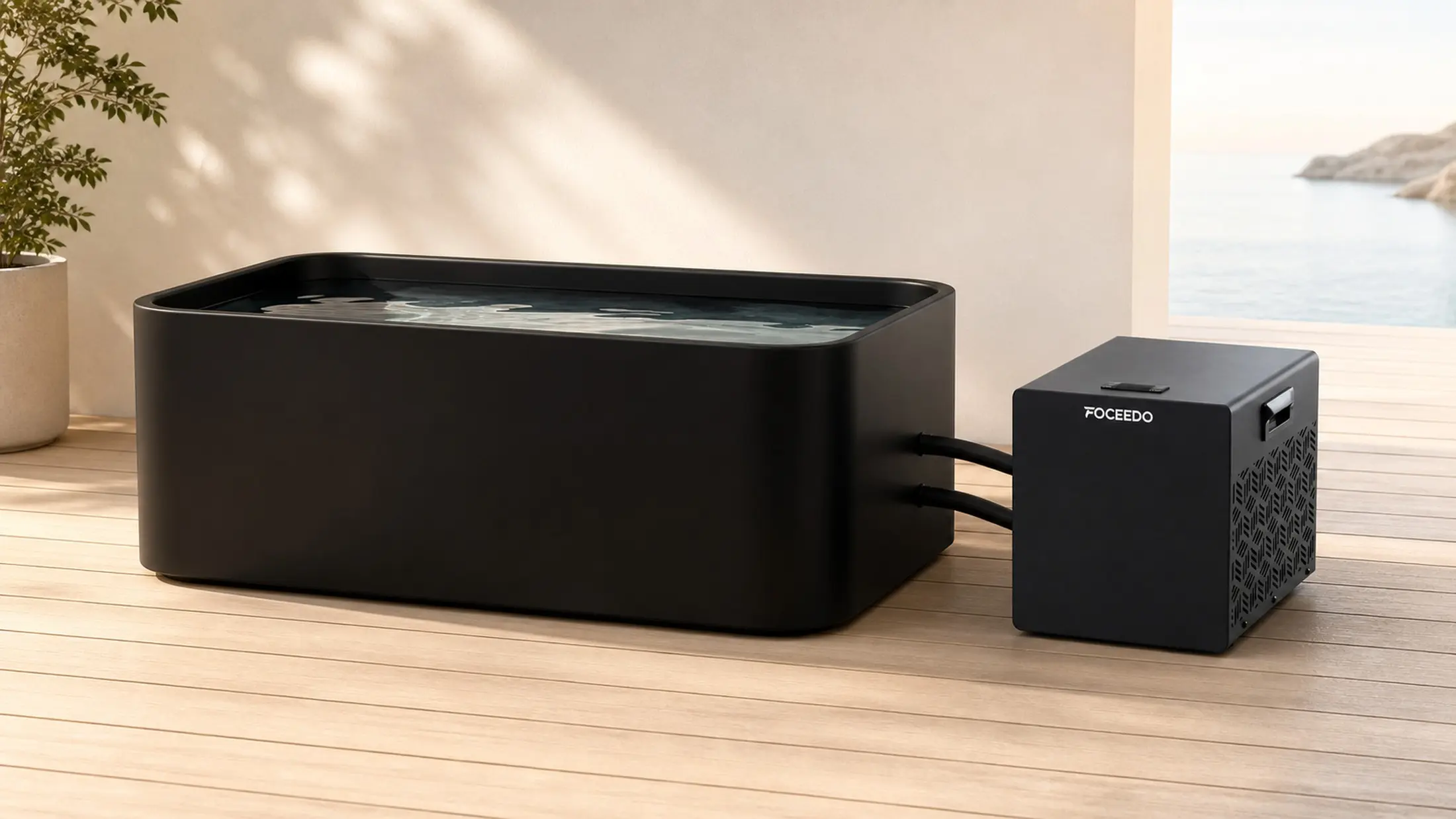
Take FOCEEDO’s E05 (0.5 HP) و E10 (1 HP) as an example. Both cool 300 L of water from 25°C to 10°C, with an ambient temperature of 25°C. At $0.20/kWh, their listed input powers and reference cooling times give the following estimates:
| Item | E05 — 0.5 HP | E10 — 1 HP |
|---|---|---|
| Input power | 729 W | 1,160 W |
| Cooling time | 4.2 hours | 1.9 hours |
| Estimated energy | 0.729 × 4.2 = 3.062 kWh | 1.160 × 1.9 = 2.204 kWh |
| Estimated cost | $0.61 | $0.44 |
The E10’s higher input is offset by its shorter cooling time: it finishes 2.3 hours sooner and costs about $0.17 less in this calculation. A lower wattage alone does not guarantee a lower cost per cooldown.
Lowering the target to 5°C, with the same water volume, starting temperature, ambient temperature and tariff, gives:
| Item | E05 — 0.5 HP | E10 — 1 HP |
|---|---|---|
| Cooling time | 6.8 hours | 2.8 hours |
| Estimated energy | 4.957 kWh | 3.248 kWh |
| Estimated cost | $0.99 | $0.65 |
Estimates use listed input power, reference cooling time and $0.20/kWh. Insulation and installation can change actual energy use.
What Affects Running Costs?
Water Volume and Temperature
For the same temperature drop, 300 L of water contains 50% more heat to remove than 200 L. Starting temperature matters just as much: cooling from 25°C to 10°C requires three times the heat removal from the water as cooling from 15°C to 10°C, at the same volume. Electricity use also depends on how efficiently the chiller operates during each job.
Refilling warm water means another full cooldown. Keeping suitable water in service between sessions avoids repeating that task, while a lower target temperature increases both the initial cooling load and the temperature gap that insulation must resist.
Climate and Insulation
An ice bath tub exposed to hot air and direct sun gains heat faster than a shaded, insulated tub. Heat can enter through the walls, base, lid and hoses, so a good cover helps even when the chiller itself is efficient.
Usage and Chiller Size
Repeated use introduces more heat through people entering the water, open covers and top-ups. A cold plunge tub used throughout the day therefore has a different cooling workload from one used once in the evening.
Choose capacity around your water volume, climate and available cooling time. An undersized unit can run for long periods without reaching the target; extra capacity can shorten the wait. Our chiller sizing guide covers those choices, while the cooling-time guide helps you plan when to switch on.
Costs Beyond Electricity
The main costs beyond electricity are water, care supplies and occasional repairs. When comparing systems, look at what you will need to buy again after the initial purchase.
- Water changes. Emptying the tub means paying for a fresh fill and cooling it again. Filtration removes particles, while ozone helps break down some contaminants; together with cleaning, these features help manage water between changes. More users bring more dirt, sweat and body oils into the water, increasing the cleaning workload and potentially the need for fresh water.
- Filters and cleaning supplies. A washable pre-filter can be cleaned and reused, while a replaceable cartridge creates an ongoing purchase. Before buying a system, check the price and availability of its replacement filters, and whether the cleaning products you need are ordinary compatible supplies or proprietary refills. Built-in filtration and ozone should be included when assessing what additional treatment supplies the setup actually needs.
- Repairs and parts. A worn hose, seal or pump can add to ownership costs. Check which parts are covered by the warranty and whether replacements are available locally. For an out-of-warranty repair, parts, shipping and labour all contribute to the bill.
Our water-care guide explains how to use filtration, ozone and cleaning together to maintain the water between changes.
How to Reduce Running Costs
Improve Insulation
Cover the tub between uses, repair gaps in the insulation and insulate exposed water lines where suitable. Shade the tub, but keep the chiller’s intake and exhaust clear: it needs airflow to release the heat removed from the water.
Adjust Cooling Times
For regular use, keeping a well-insulated tub cold can avoid repeatedly cooling a warm fill. Before changing to scheduled cooling, compare the energy used to maintain temperature during the idle period with the energy needed to cool the water again. Switching off for more hours does not by itself show how much electricity you save.
Keep the circulation and water-treatment schedule required by your equipment. With time-of-use tariffs, plan substantial cooldowns for lower-rate periods where practical, allowing enough time to reach the target before use.
Keep Up with Maintenance
Clean filters as instructed, straighten kinked hoses and keep the ventilation area free of obstructions. Reduced water flow or restricted airflow can slow cooling. If cooling time rises without a change in water volume or weather, check these points before extending the timer.
Chiller vs. Ice: Cost Comparison
Compare the cost of preparing 300 L of water at 10°C, starting with 25°C tap water. The cold plunge chiller in this example is 1 حصان, with 1,160 W input power and a 1.9-hour reference cooling time at 25°C ambient temperature, as in the earlier calculation.
Using ice at 0°C, approximately 43 kg of ice mixed with 257 L of water produces a final fill close to 300 L at 10°C before heat gain from the tub and surroundings. This follows the heat balance for melting ice: the ice absorbs heat as it melts and the meltwater warms. Allow room for the added water.
Assume ice costs $2 per 5 kg bag. Buying nine bags supplies 45 kg for $18. At an electricity rate of $0.20/kWh, the 1 HP chiller’s estimated cost for the cooldown is 1.160 × 1.9 × $0.20 = $0.44.
| Item | Buying ice | 1 HP chiller |
|---|---|---|
| Final water volume | About 300 L, including melted ice | 300 L |
| Starting tap-water temperature | 25°C | 25°C |
| Target temperature | 10°C | 10°C |
| Cooling input | About 43 kg of ice; nine 5 kg bags purchased | 1.160 kW × 1.9 h = 2.204 kWh |
| Example price | $2 per bag | $0.20 per kWh |
| One-cooldown expense | $18 | About $0.44 |
At $2 per bag, buying ice costs about $17.56 more than using the 1 HP chiller for this cooldown. Even at $1 per bag, the difference is $8.56; at $3 per bag, it rises to $26.56, with the electricity rate unchanged.
For subsequent sessions, a chiller does not need to repeat the full 25°C-to-10°C cooldown while the water remains cold. It only replaces heat gained between uses, so the next session’s cooling demand is normally much smaller in a covered, insulated tub. Ice users also need less ice if they retain cold water. The figures above compare one fresh-water preparation, not a recurring cost for every plunge.