









Résumé rapide
Key Takeaways
- A converted chest freezer can cost less upfront, but sealing it does not make a household appliance a purpose-built immersion system.
- A dedicated ice bath chiller provides controlled cooling and circulation. Filtration and sanitation features depend on the model.
- Compare the complete setup, water-care routine and support, not just the appliance price.
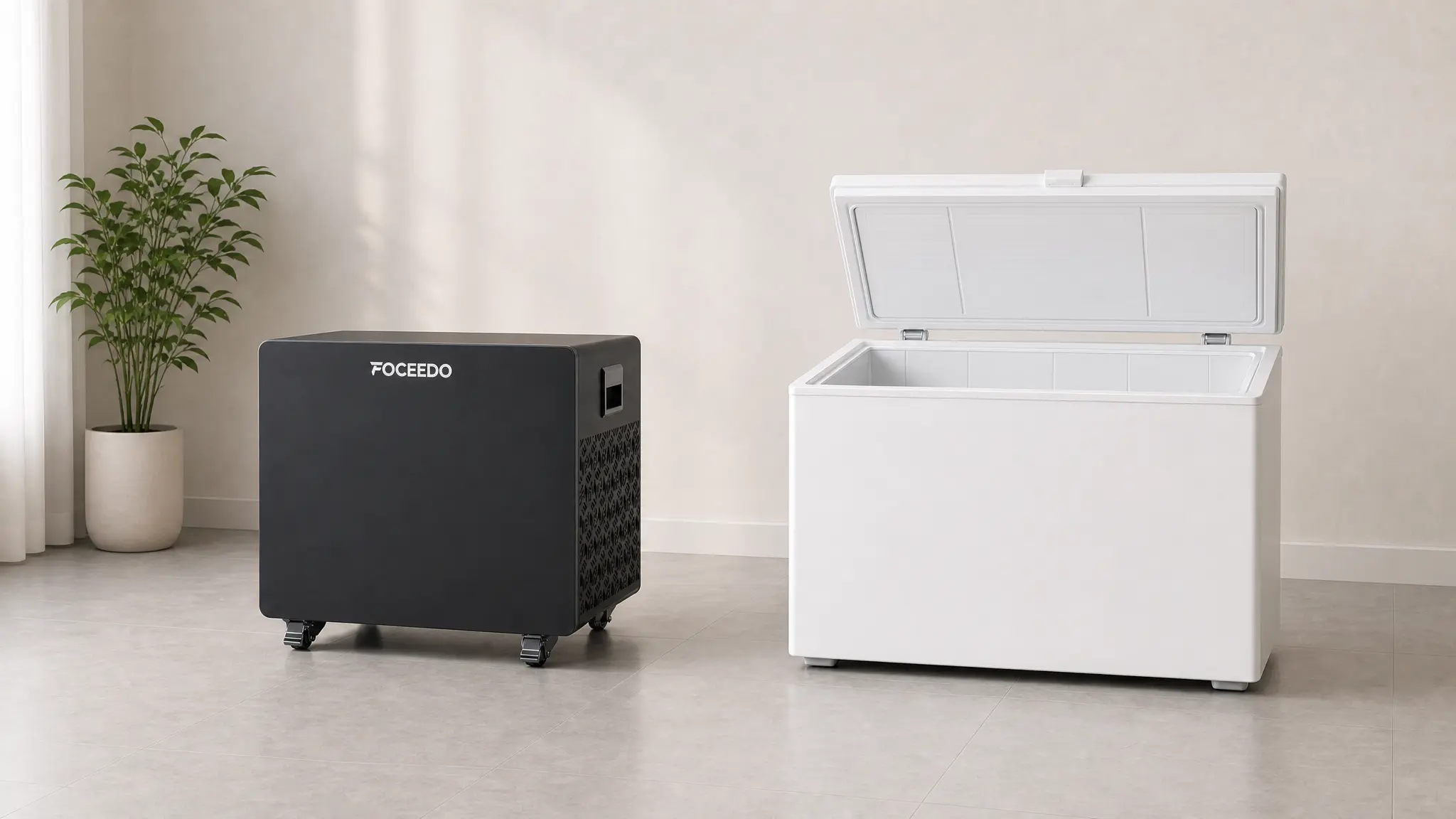
Choosing between a DIY chest freezer and an ice bath chiller is not only a budget question. It is a question of how often you plunge, who will use the tub, where the system sits, and how much risk and maintenance you are willing to manage.
A freezer can make water cold. A chiller is built to move, cool, and manage water as part of a repeatable cold plunge system. That difference becomes more important once cold plunging moves from a weekend experiment to a daily habit or a shared recovery service.
Fast Comparison
| Factor | DIY Chest Freezer | Ice Bath Chiller |
|---|---|---|
| Upfront cost | Often lower; add sealing and water-care equipment | Often higher; check what is included |
| Electrical suitability | Household freezer modified outside its intended use | Choose equipment intended for the installation and follow its electrical requirements |
| Temperature control | Depends on thermostat, controller and circulation | Adjustable setpoint; performance depends on sizing |
| Water circulation | Requires a separate arrangement | Part of the cooling loop |
| Filtration and sanitation | User-selected add-ons | Model-dependent; ongoing water care is still required |
| Indoor placement | Needs drainage and moisture protection | Tub and hoses also need drainage and moisture protection |
| Shared use | Avoid a modified household freezer for clients | Confirm capacity, water treatment and intended duty with the supplier |
The simple version is this: a chest freezer is cheaper to start, while a chiller is easier to live with. The more often you use the water, the more valuable circulation, filtration, and predictable temperature become.
How Each Setup Works
Chest Freezer Setup
A chest freezer is a household appliance designed to freeze dry, sealed food. In a DIY cold plunge, the freezer is modified to hold water by sealing seams, corners, drain points, and liner gaps with silicone, epoxy, or another waterproof coating.
The freezer cools from the walls, not from water circulation. That means the water near the liner can become much colder than the water near your body, especially if there is no separate pump moving water through the tub.
Most careful users unplug the freezer before entering. A GFCI outlet is important, but it does not make a water-filled household appliance risk-free, especially if cords, seals, plugs, condensation, or wet hands are involved.
Ice Bath Chiller Setup
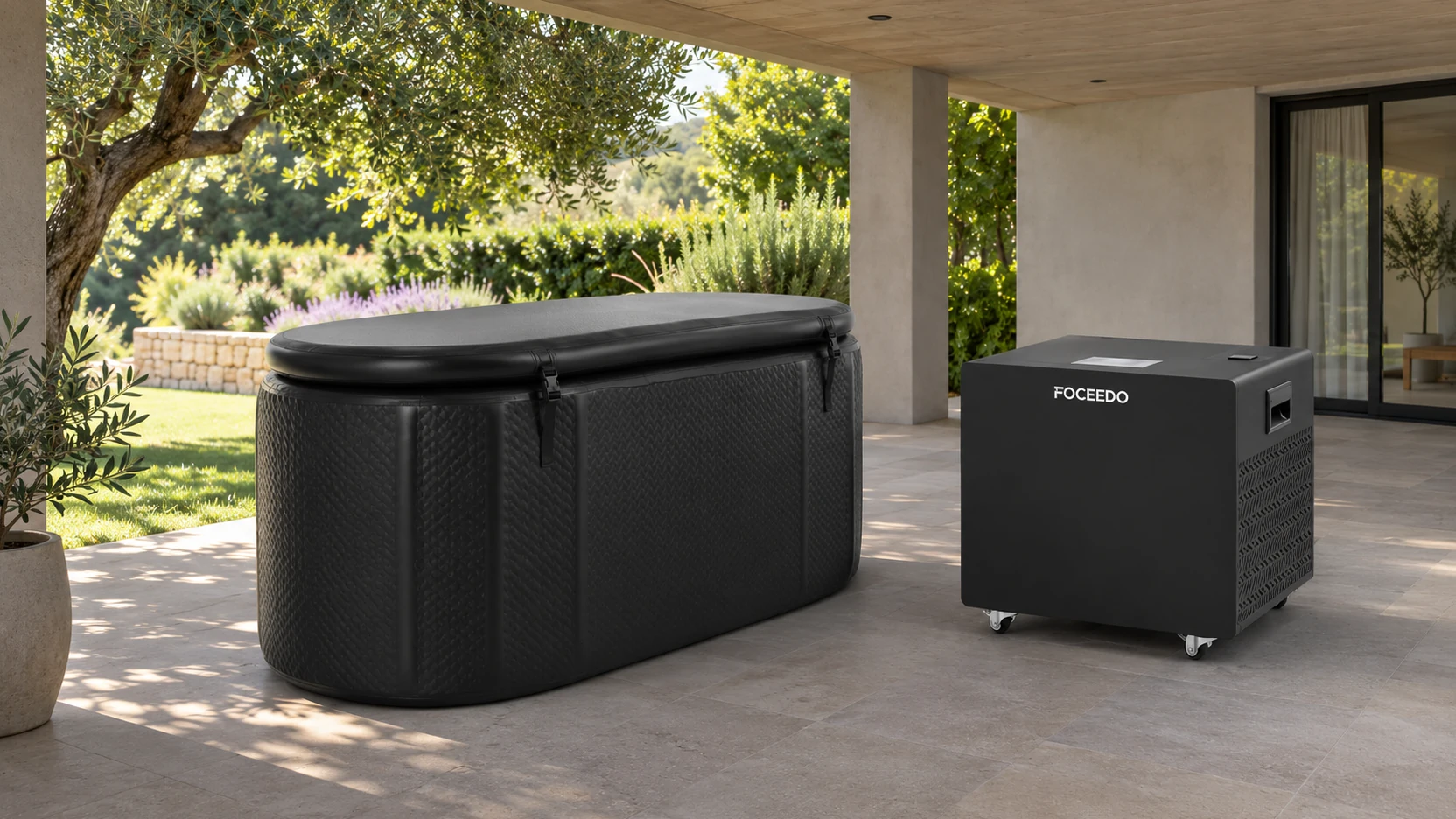
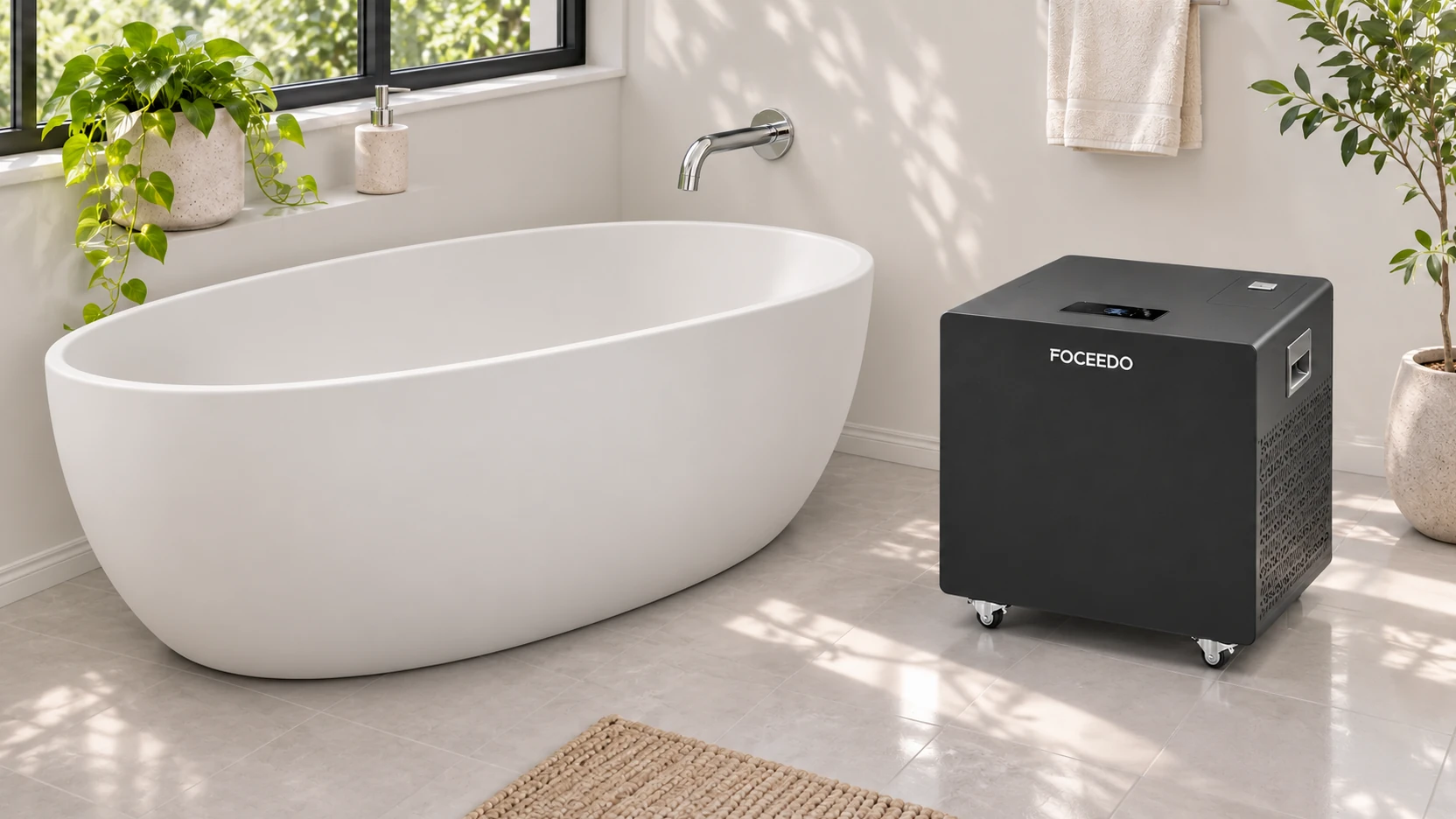
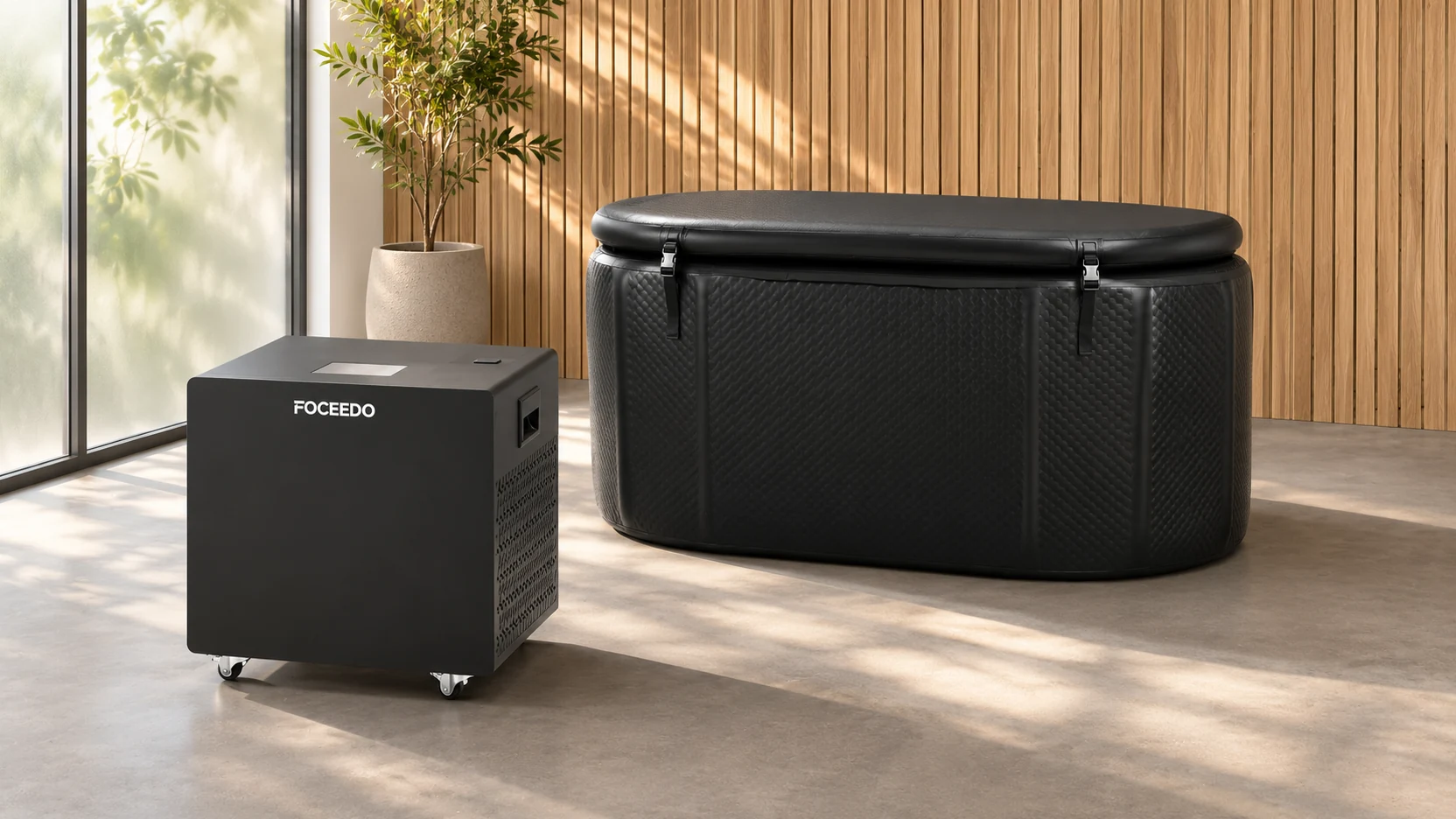
An ice bath chiller is an external water-cooling unit connected to a tub by hoses. Water is pulled from the tub, cooled inside the machine, filtered or circulated through the system, and returned to the plunge.
This moving-water design is the main difference. The chiller does not just make one wall of the container cold; it keeps the water moving so the whole tub stays closer to the target temperature.
Different chillers have different features. Some are cooling-only with a simple external filter, while higher-performance models may include heating, dual filtration, ozone, app control, or more advanced temperature management.
Pros of a Chest Freezer
Lower Entry Cost
The biggest reason people choose a chest freezer is the lower upfront cost. If you already own a freezer or can buy one cheaply, the starting price can look much more attractive than a complete cold plunge system.
For an occasional user, compare that price with a purpose-built tub and purchased ice before committing to a conversion. A lower appliance price leaves the cost and suitability of the complete system unresolved.
Low Temperature Capability
A chest freezer can reach temperatures below freezing in its intended use. That ability does not tell you how quickly it will cool a tub of water: cooling capacity, water volume and heat transfer determine the time.
Without suitable temperature control and circulation, ice can form near the liner while water elsewhere remains warmer.
Simple One-Box Layout
A freezer can look simple because the tub and cooling source are inside the same box. You do not need to place a separate chiller beside the tub, run hoses across a deck, or match an external unit to a plunge barrel.
Sealing, drainage, water treatment and electrical suitability still need attention. Adding a pump and filter also reduces the space advantage.
Cons of a Chest Freezer
Electrical Safety Risk
The most serious issue is electrical safety. A chest freezer was not originally designed for a person to sit inside a large volume of water while the appliance is plugged in.
Never enter a water-filled freezer while it is connected to mains power. A thermostat, smart plug or timer is not a substitute for physically disconnecting it. Disconnecting the freezer also does not address separately powered pumps or other equipment.
GFCI protection reduces ground-fault shock risk, but it does not certify a modified freezer for bathing. Have a qualified electrician assess the installation; do not treat an unplugging routine as proof that the conversion is safe.
For shared or commercial spaces, this risk becomes much harder to justify. A home user can choose personal risk, but a gym, spa, trainer, or recovery studio has a duty of care to clients.
Not Built to Hold Water
Unless the manufacturer expressly approves it, a household freezer has no verified suitability for holding bath water and a person. Its liner, seams and drain were designed for its original storage purpose.
Water is heavy. When a person enters, exits, sits, shifts, and leans against the walls, the liner and seals face stress that the appliance was never meant to manage.
This is why sealing is not a one-time detail. Silicone and epoxy can age, peel, crack, or separate from the liner, especially with temperature cycling and repeated cleaning.
A small leak may start as a nuisance. Indoors, it can become a flooring, wiring, mold, or humidity problem.
Weak Water Movement
A chest freezer cools from its walls. Without active circulation, the water closest to the cold wall may chill faster than the water around your body.
This creates uneven temperature zones. You may have very cold water at the edge, warmer water near your skin, and a less consistent experience than the thermometer suggests.
You can add a pump, but that turns the project into a more complex DIY water system. Now you must manage pump placement, hose safety, filter resistance, electrical routing, and cleaning around extra parts.
Harder Water Care
Cold water still needs care. Skin oils, sweat, hair, dust, sunscreen, and microbes enter the tub every time someone plunges.
In a static freezer setup, water care depends heavily on manual draining, scrubbing, chemical testing, and any pump or filter you add yourself. If the water is shared, the cleaning burden rises quickly.
The issue is not that a chest freezer always becomes dirty immediately. The issue is that the system does not come with a standardized water-care design, so cleanliness depends on the user’s routine and discipline.
Condensation and Indoor Mess
Condensation forms where a surface is colder than the surrounding air’s dew point. Either setup can develop droplets on exposed cold surfaces; the amount depends on insulation, surface temperature and room humidity.
Condensation also makes electrical safety harder to control. Moisture near plugs, cords, outlets, and extension points should never be treated casually around a water-filled appliance.
Check for leaks separately, wipe up droplets and provide a water-resistant floor with safe drainage. Keep plugs and electrical connections away from water, and control room moisture if surfaces stay wet.

Pros of an Ice Bath Chiller
Steady Water Temperature
The biggest advantage of a chiller is not simply making water cold. It is keeping water close to the temperature you choose.
For cold plunging, that matters because 10°C to 15°C feels very different from water that drifts unpredictably. A stable target helps you build a safer routine, compare sessions, and avoid chasing extreme cold for no reason.
Continuous Circulation
A chiller moves water through the system while it cools. This helps reduce hot and cold pockets inside the tub.
Moving water can feel colder than still water because it keeps replacing the thin warmer layer that forms near your skin. That makes the plunge feel more consistent, even when the thermometer reading is the same.
Easier Water Maintenance
Most chiller-based systems include a filter path, and some advanced models add stronger water-care features. This makes it easier to remove debris and keep the water clearer between changes.
This does not mean a chiller is maintenance-free. You still need to clean filters, refresh water, monitor hygiene, and follow the water-care instructions for your tub and chiller model.
Better Daily Use
A chiller reduces friction. You do not need to buy ice, wait for bags to melt, manually reset the water every time, or guess whether the tub will be ready when you are.
That convenience matters because consistency is the real value of cold plunging. If the setup is too annoying, most people eventually use it less.
Better for Shared Spaces
Shared use changes everything. When multiple people use the same plunge, water movement, filtration, cleaning access, and predictable operating routines become much more important.
For shared use, confirm the expected number of users, recovery time and water-treatment requirements with the supplier. A home chiller does not become suitable for continuous commercial use simply because it has a larger compressor.
Cons of an Ice Bath Chiller
Higher Upfront Cost
A chiller costs more than a basic chest freezer. That is the main reason many beginners hesitate.
The fair comparison, however, is not only purchase price. You also need to count sealing materials, pumps, filters, chemicals, water changes, repair risk, time spent cleaning, and the cost of mistakes.
Needs Tub Compatibility
A chiller must match the tub, water volume, insulation, hose fittings, pump flow, and ambient temperature all affect performance.
A strong chiller connected to a poorly insulated tub may still work too hard. A weak pump or restricted hose path can reduce cooling performance and create unnecessary strain on the system.
Needs Basic Maintenance
A chiller makes maintenance easier, but it does not remove it. Filters still clog, hoses still need checking, and water still needs routine care.
The best results come from simple habits: rinse before plunging, keep the tub covered, clean the filter, check connections, and change water before odor or cloudiness becomes obvious.
Not Every Model Is the Same
The word “chiller” covers many different machines. Some are simple cooling-only units, while others offer heating, advanced controls, integrated filtration, or active sanitation.
Heat exchanger material also matters. Copper, stainless steel, and titanium each behave differently with water chemistry, sanitation methods, and long-term corrosion risk.
FOCEEDO’s E03 et E05 are cooling-only models; the E10 et E20 offer cooling and heating. Choose filtration, ozone and water-treatment arrangements from the specifications and manual for the exact model supplied. Confirm approved water chemistry before adding salt or treatment chemicals.
Real Cost Over Time
| Cost Area | DIY Chest Freezer | Ice Bath Chiller |
|---|---|---|
| Main unit | Freezer purchase | Chiller plus compatible tub |
| Setup | Sealing, controller and any pump/filter additions | Hoses, fittings and any equipment not included |
| Water care | Cleaning, treatment and water replacement | Cleaning, treatment, filter care and water replacement |
| Electricity | Measure the complete setup | Measure the complete setup |
| Repairs | Modified-appliance support may be limited | Check warranty exclusions, parts and service |
| Time | Inspect seals and maintain added components | Maintain filters, connections and the tub |
There is no reliable two-year winner without actual purchase prices, energy readings and upkeep costs. Compare complete systems at the same water volume, target temperature and usage frequency.
A chiller is more expensive at the beginning, but it usually saves time and reduces daily friction. For frequent users, that convenience can be more important than the purchase price alone.
Safety and Setup Checklist
Check Electrical Suitability First
- Use equipment intended for water immersion systems and follow its installation instructions.
- Have grounding, GFCI protection and outlet placement checked by a qualified electrician.
- Keep electrical connections dry and stop using equipment with damaged wiring or leaks.
- Do not assume waterproof sealant, a GFCI or unplugging makes a freezer conversion approved for bathing.
Choose an ice bath chiller if any of these points matter more:
- You plunge several times per week.
- More than one person uses the tub.
- You want a stable target temperature.
- You want moving water and easier filtration.
- The setup is indoors or client-facing.
- You run a gym, spa, studio, hotel, or recovery service.
- You want less manual work before each plunge.
- You prefer a purpose-built system over a modified appliance.
Best Choice by User Type
Occasional Home User
For occasional use, a purpose-built tub with ice may avoid the cost of a chiller without converting an electrical appliance into a bath.
If comparing a freezer conversion on price, include its added equipment and recognize that its original approval does not establish suitability for immersion.
Daily Cold Plunge User
If you plunge daily or several times per week, a chiller becomes much more practical. The value is not just colder water; it is predictable water.
Daily users benefit from stable temperature, easier startup, less manual cleaning, and fewer excuses to skip the session. A routine that is easy to repeat is usually safer and more sustainable.
Personal Trainer
A trainer should separate personal equipment choices from equipment offered to clients. Client use requires a system suitable for the installation and the expected workload.
Client-facing use needs clearer procedures, cleaner presentation, better water management, and lower electrical liability. A modified freezer is difficult to defend in that environment.
Recovery Studio
A recovery studio needs repeatable temperature, shared-user hygiene, simple staff maintenance, and a professional look. A chiller-based system is much better aligned with those needs.
Customers also judge the space by what they see. A purpose-built cold plunge setup communicates care, while a modified appliance may raise questions about safety and cleanliness.
Hotel or Spa
Hotels and spas should avoid DIY chest freezer plunges. The risk profile, maintenance burden, guest expectations, and brand presentation do not fit a modified household appliance.
For these spaces, the cold plunge is part of the wellness experience. The system should look intentional, operate predictably, and be easy for staff to maintain.
Final Verdict
A DIY chest freezer can have a lower starting price, but electrical suitability, sealing and water care remain unresolved responsibilities. A modified appliance should not be presented as a proven safe alternative to a purpose-built bath.
An ice bath chiller costs more upfront, but it gives you better temperature control, active circulation, easier water care, and a more professional long-term setup. The more often the plunge is used, the more those advantages matter.
For occasional use, compare a tub-and-ice setup. For repeated use, choose a compatible tub and chiller with documented capacity, clear maintenance instructions and accessible support.
Frequently Asked Questions
Can I use a chest freezer for a cold plunge?
Conversions exist, but a household freezer is designed for food storage, not bathing. Sealing its liner does not establish electrical or structural suitability for immersion. A purpose-built tub avoids that conversion.
Do I need to unplug my chest freezer before entering?
Never enter a water-filled freezer while it is connected to mains power. Physically unplugging it is different from switching it off with a timer or controller, but it does not make the whole conversion safe or disconnect separate electrical equipment.
How does water care differ between the two setups?
A chiller system can circulate water through a filter, and some models include ozone or other treatment. Filters remove debris; they do not replace the model’s sanitation and cleaning routine. A freezer conversion needs its own water-care arrangement. Neither cold water nor clear-looking water proves that it is hygienic.
Is DIY cheaper over 2 years?
It can be. Add the appliance, tub, sealing, pump, filter, electricity, treatment and repairs for each option over the same two years. The answer depends on purchase prices, measured energy use and maintenance; a chiller is not automatically cheaper simply because it is purpose-built.