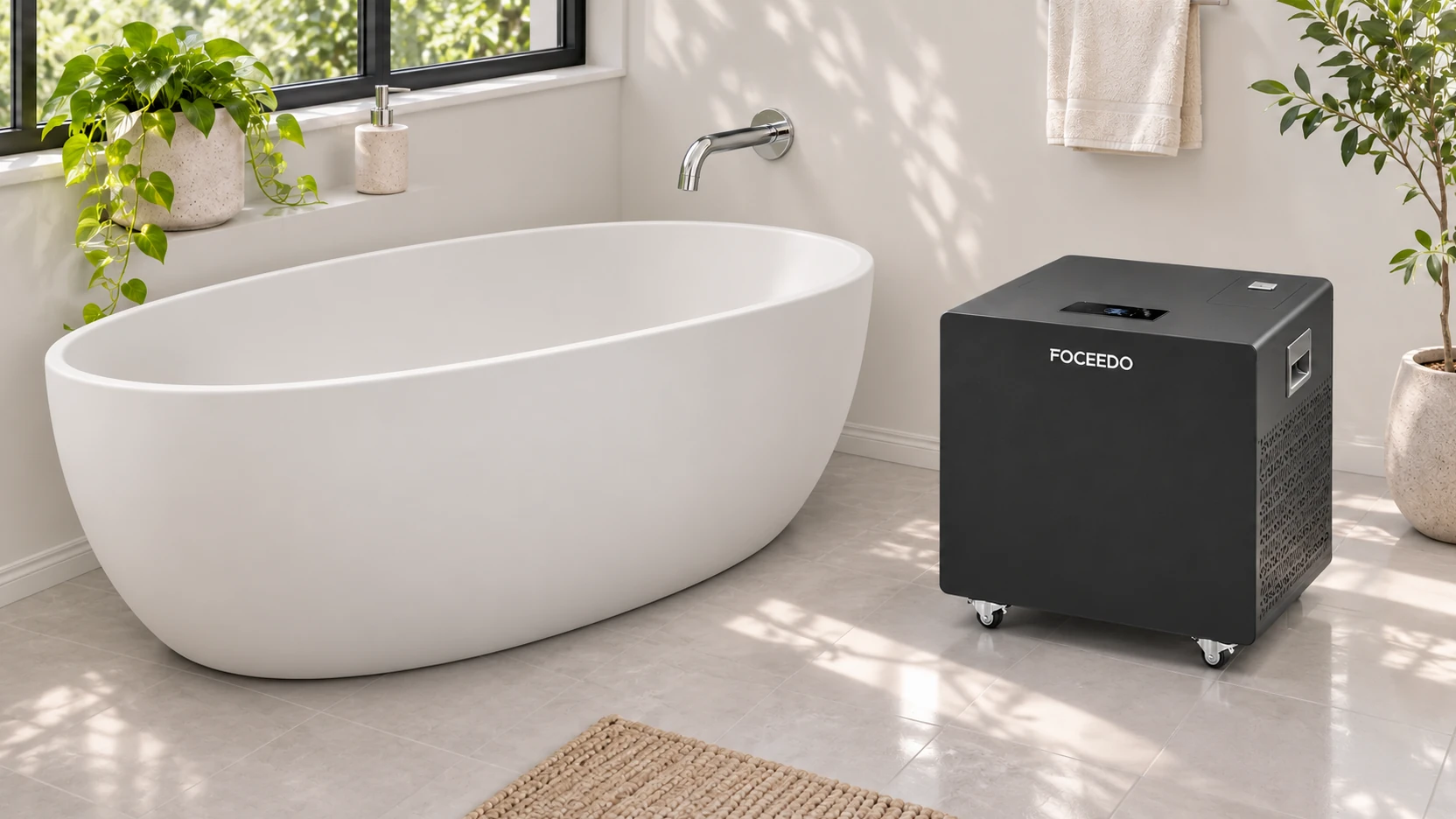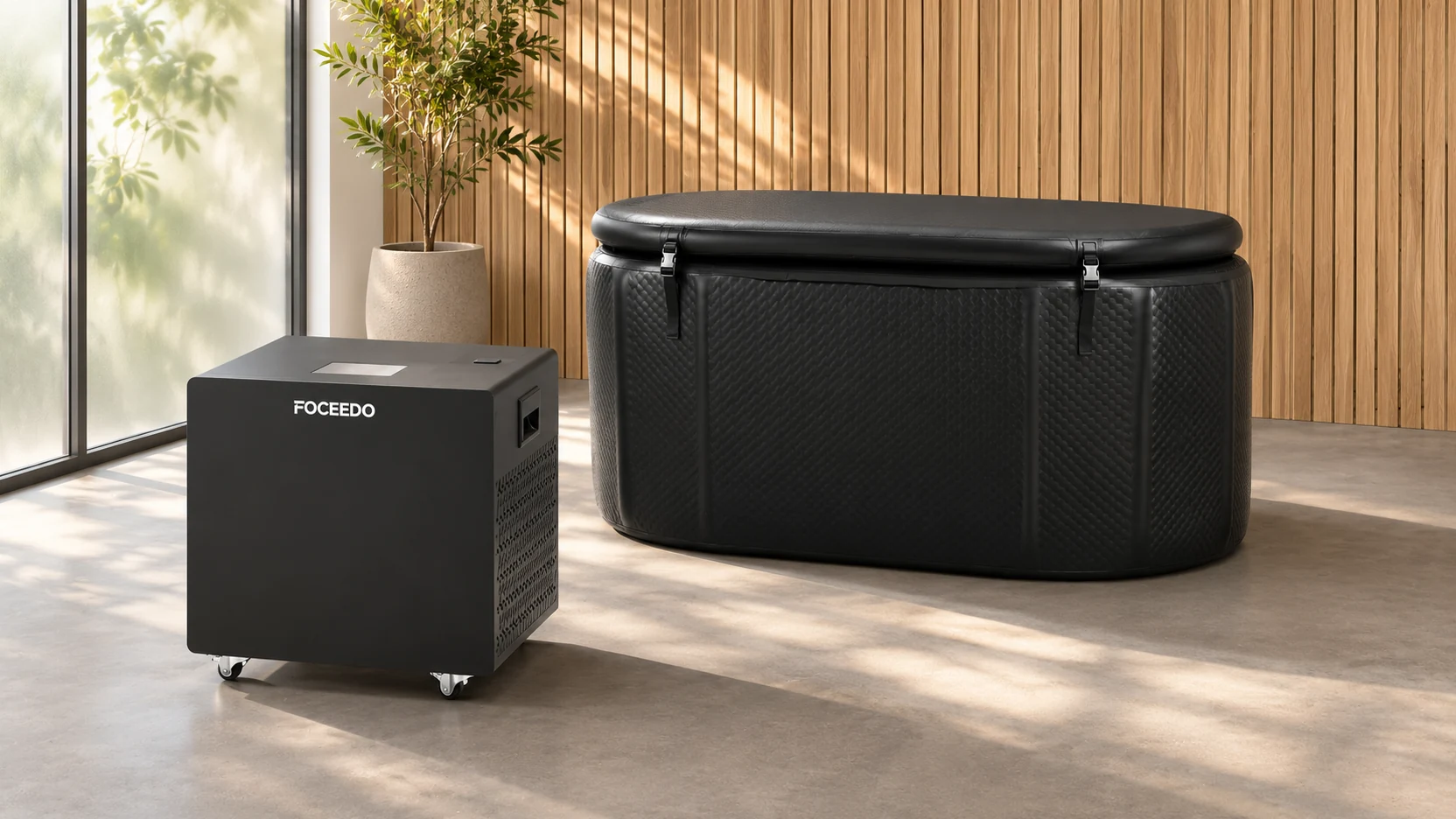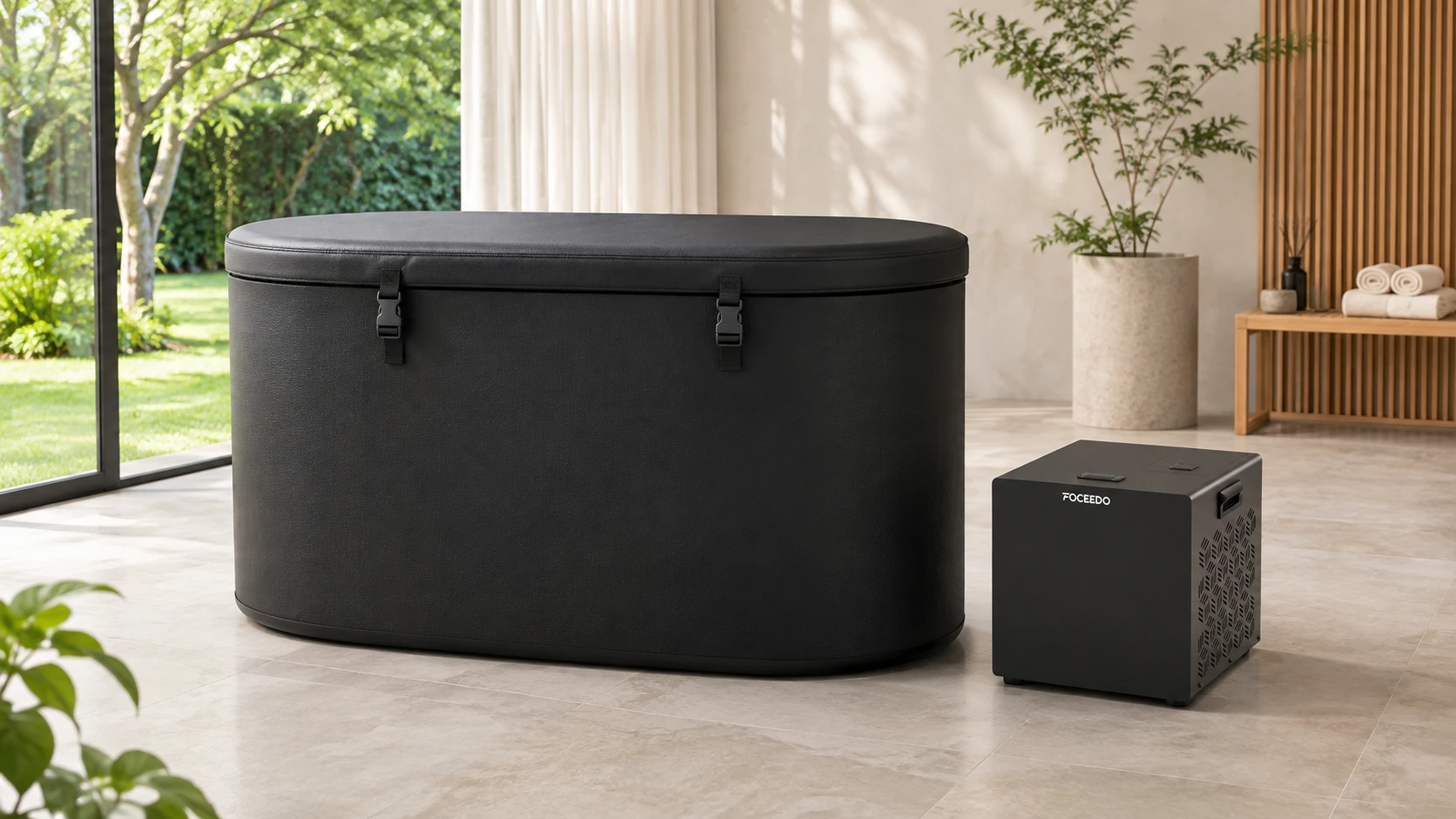










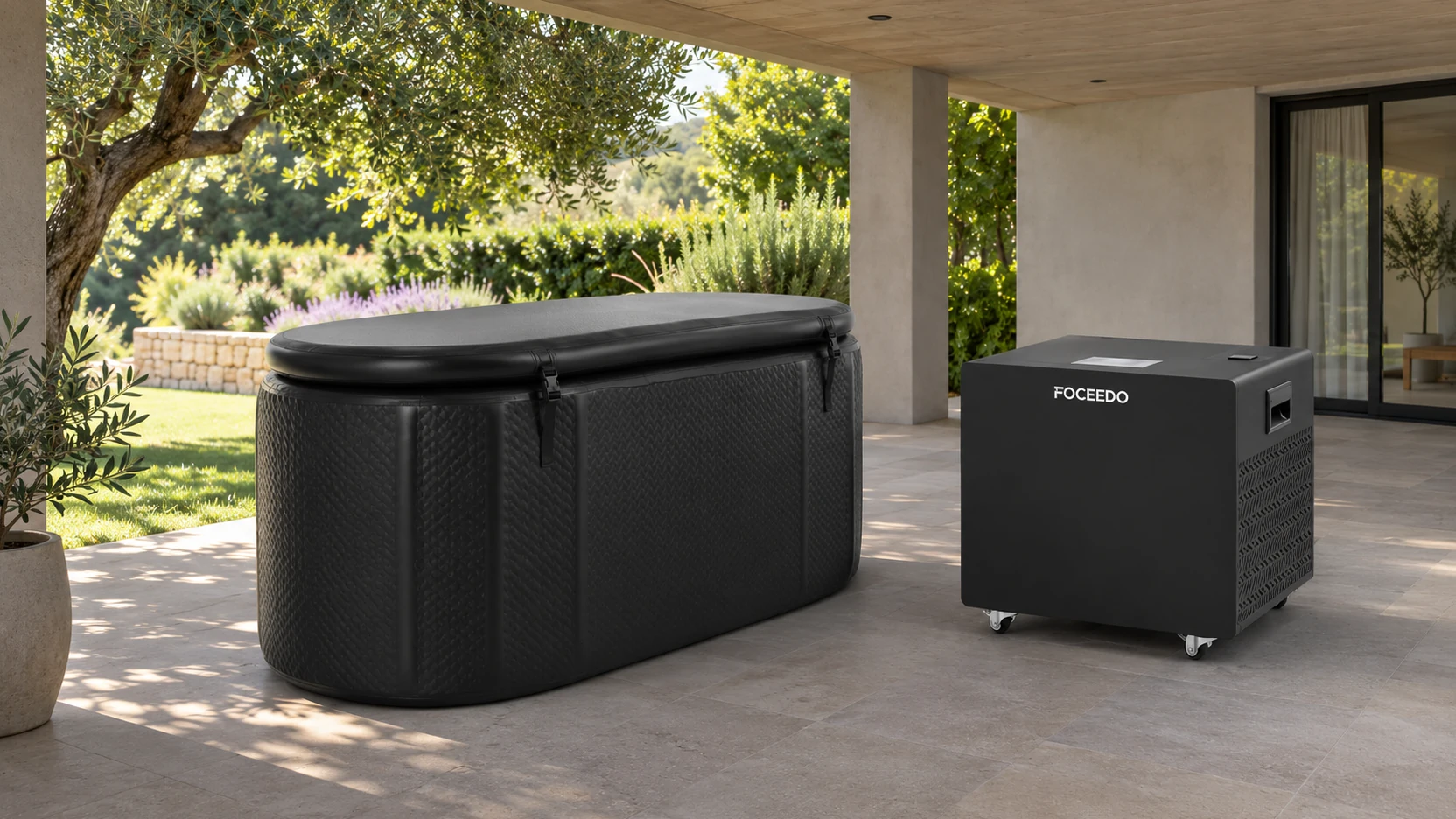
For an occasional summer plunge, cool the water with ice shortly before you get in. If you plunge most days, a cold plunge chiller can cool the tub ahead of time and hold the water near your set temperature. Afternoon shade and an insulated lid help keep an ice bath cold between uses.
Ice or a Chiller?
How Much Ice Do You Need?
Measure the water you actually put in the tub and check its temperature before buying ice. To cool 150 L (about 40 US gal) from 24°C (75°F) to 10°C (50°F), plan on about 23 kg (52 lb) of ice as a starting estimate. This assumes the ice starts at 0°C (32°F) and melts completely, with no heat added by the tub or the surrounding air.
Add ice in batches. Stir and check the water temperature before adding more. Use small pieces for a last-minute top-up so they melt faster. Leave room for the ice and for the water to rise when you get in.
When a Chiller Makes Sense
If you plunge after several workouts a week, a chiller can keep the tub ready between sessions. Set your usual temperature and let the chiller cool the water again as it warms. The tub can already be cold when you get home from the gym. That saves a stop for ice and the wait for it to melt.
When you keep the same water for several sessions, look for a chiller with built-in filtration. The pump sends water through the filter, which catches hair and lint. That helps the water stay clearer between plunges.
To have the tub ready at a regular time, measure the cooldown time on a hot day with your usual fill volume. If the water takes two hours to reach your target and you plunge at 6 p.m., start by 4 p.m. on days with similar weather and starting water temperatures.
Shade and Insulation
Tub Placement
Pick the tub’s location before you install it. A well-ventilated indoor space is a good first choice if you can drain the tub easily. Set the tub away from sunny windows. Outdoors, choose a covered patio or put up fixed shade. Check that it will shade both the lid and sides during the hottest part of the afternoon.
Tub and Cover Insulation
Start with a fitted, insulated lid. It should cover the whole opening and sit flat against the rim. Put it back on after each plunge.
If the water still warms quickly with the tub shaded and covered, check whether the walls have built-in insulation. A fitted wrap can slow warming between plunges if your tub has thin, uninsulated walls.
Why the Water Keeps Warming Up
On hot afternoons, an ice bath chiller may run longer to hold the same water temperature. If the water keeps warming during cooling, the tub is gaining heat faster than the chiller can remove it.
Sun, Heat, and Insulation
If the water warms in the afternoon, see whether the shifting shade has left the tub in direct sun. Shade any exposed sides, close the lid so it sits flat, and check for gaps in the insulation. Let the chiller run and check the water again. If the temperature starts falling, the changes are helping the tub cool again.
Airflow Around the Chiller
Hot exhaust can build up when a chiller blows into a wall or sits in a tight cabinet. If the intake draws that air back in, the warmer air makes it harder for the chiller to shed heat, so it cools the water more slowly. On a model with high-temperature protection, the compressor can shut down if the unit gets too hot.
Switch the chiller off before moving it. If it’s inside a closed cabinet, move it to an open, shaded spot. If the exhaust faces a wall, turn the unit so it blows into open space. Leave the clearance specified in your manual at both vents and make sure the hoses still curve freely.
Once the chiller is running again, measure the air just outside the intake with the thermometer out of direct sun. Check that the reading is within the model’s operating range and that the water temperature is coming down.
Cooling Capacity
If water still warms after you’ve checked the tub and the airflow, compare your actual fill volume and target water temperature with the chiller’s cooling data. The FOCEEDO E10 performance table uses air at 25°C (77°F), for example. If your patio regularly reaches 35°C (95°F), ask for performance data at that air temperature and your usual water volume. If cooling suddenly drops off in similar weather, check the settings and water flow before assuming you need a larger unit.