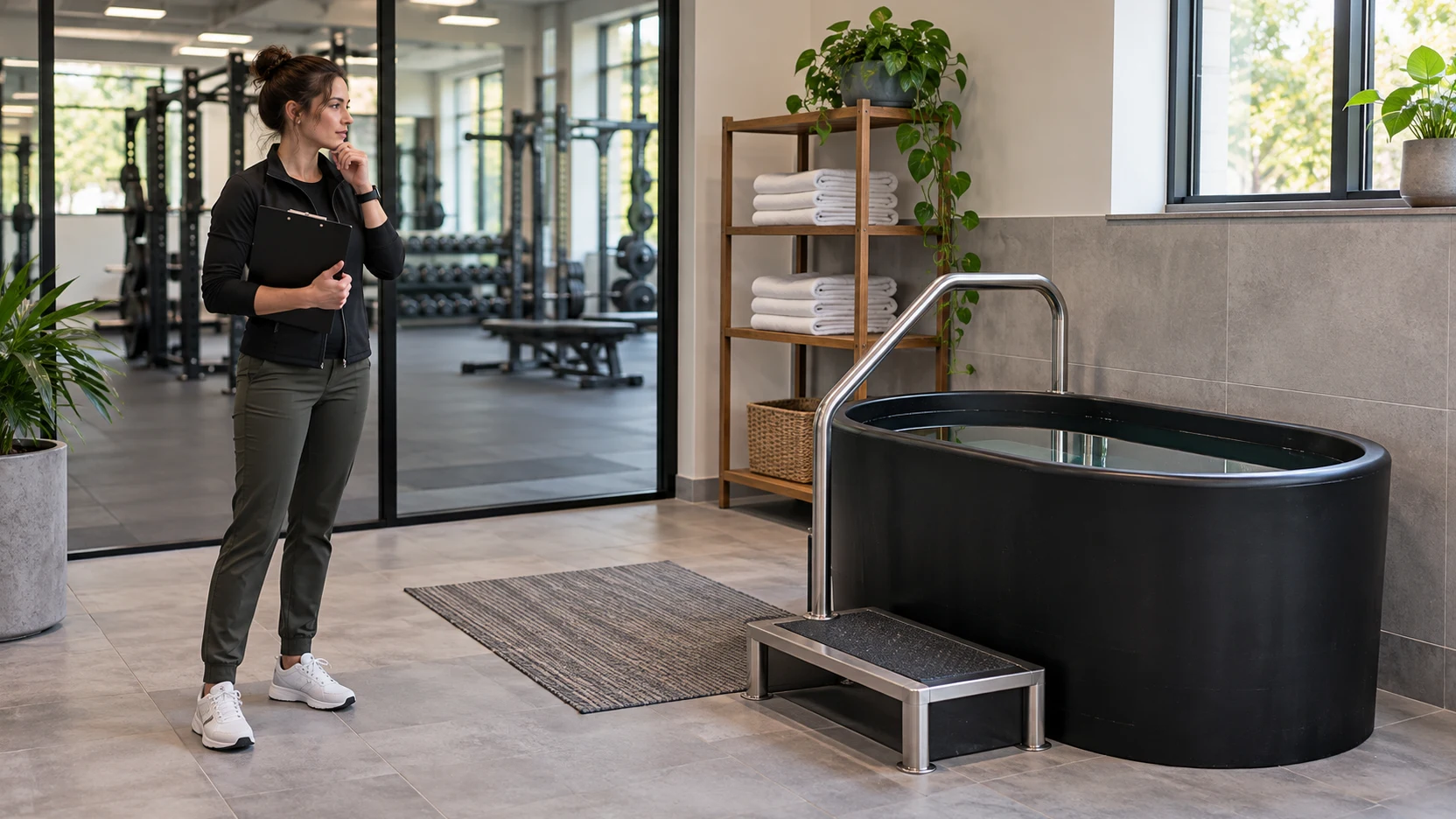










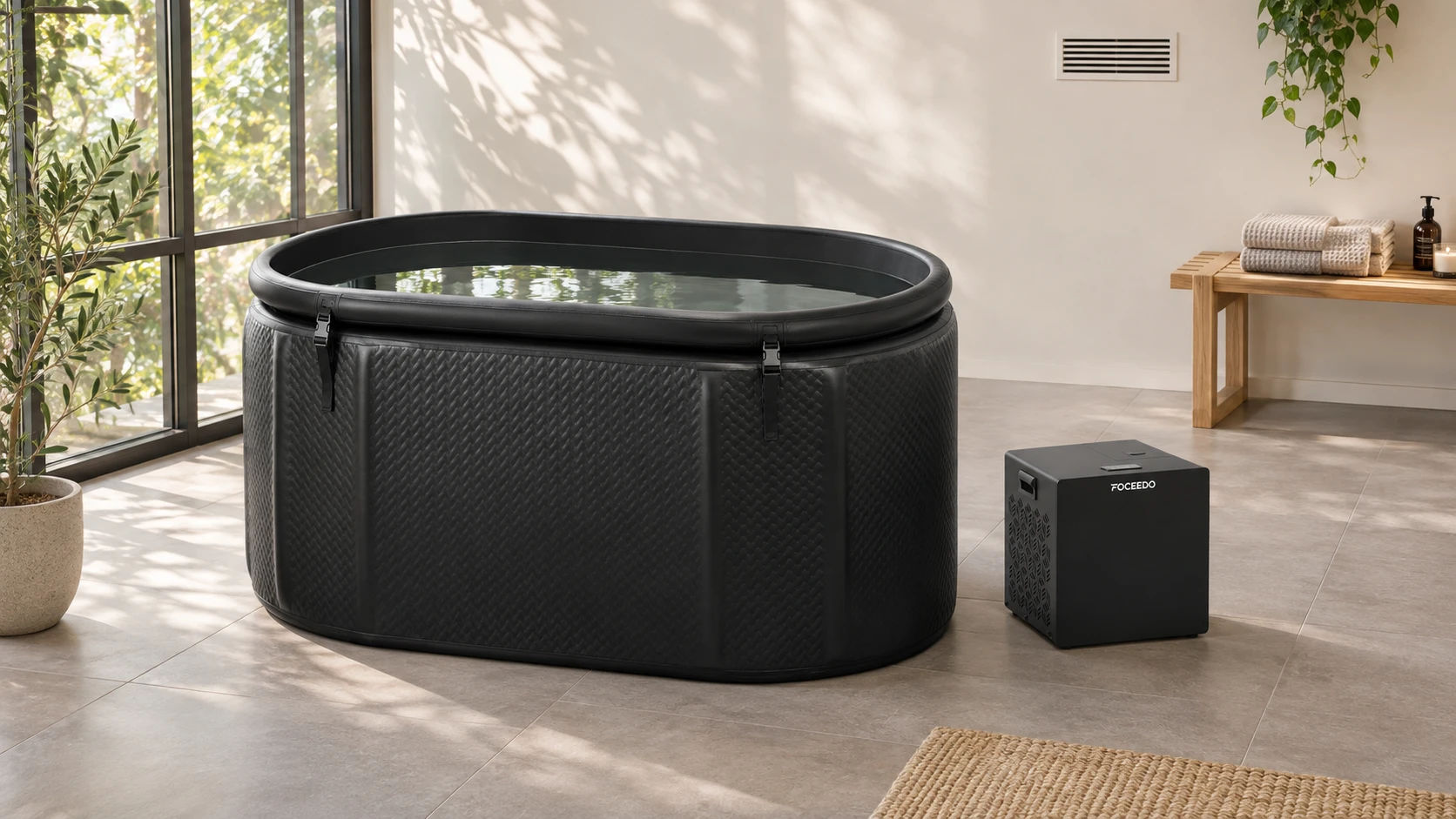
Yes. An indoor cold plunge needs a floor that can support the filled tub, a practical way to handle water, and enough ventilation for the chiller. A bathroom, garage, basement, or home gym can work, but each needs a different kind of preparation.
Before buying, walk through your proposed location with this checklist.
Quick Checklist
- Can the tub fit through the doors and along the delivery route?
- Has the floor been checked for the filled tub and the person using it?
- Is there room to get in and out, open the cover, and service the chiller?
- Can you fill and drain the tub without carrying water through the house?
- Can the floor handle splashes, and can you spot a leak before it spreads?
- Can the room release the chiller’s heat and stay dry?
- Is a suitable, protected power supply within reach of the equipment’s cable?
Resolve any unanswered points before filling the tub. Once several hundred liters of water are inside, moving the setup becomes a much bigger job.
Choose the Right Room
Start with rooms that already have convenient water access and surfaces you can dry easily. Then consider how the cold plunge will share the space with everyday activities.
| Location | What makes it useful | What to check |
|---|---|---|
| Bathroom | Nearby water supply and bathing facilities | Space around the tub, electrical placement, and whether the floor outside the shower is waterproofed |
| Garage | Often easier to bring equipment in and keep it away from living areas | Summer heat, winter temperatures, drainage, and separation from vehicle traffic |
| Basement | Can provide a dedicated area without taking over a bathroom | Access down the stairs, humidity, floor construction, and whether draining requires a pump |
| Home gym | Convenient if you already spend time there | Water beneath gym flooring, chiller heat, noise, and distance from electrical equipment |
A tiled floor alone does not make a room suitable for a cold plunge. Water can still reach joints, wall edges, or the structure beneath it. If the location is carpeted or has moisture-sensitive flooring, plan the floor protection before ordering the equipment.
Check Space and Floor Support
Measure the Whole Setup
Mark the tub and chiller positions on the floor with tape. Leave space for the hoses to curve without kinking, and add the ventilation clearances specified in the chiller manual. Check where the filter opens: a unit that fits under a shelf may still be impossible to service there.
Walk through the movements you will make each day. Can you lift and store the cover, step out onto a dry area, and reach a towel without stepping over hoses? Keep the exit from the tub clear, especially in a shared bathroom or narrow room.
Measure the delivery route as well. A rigid tub may fit in the room but fail to turn through a hallway or stair landing.
Count the Filled Weight
Water adds roughly 1 kg per liter, or 8.34 lb per US gallon. For example, a tub holding 300 L of water, with a 35 kg empty tub and an 80 kg user, puts about 415 kg (915 lb) on the floor before counting a separate chiller.
Use the actual operating water volume and equipment weights when checking your own setup. Ask the tub supplier how the load is supported: a flat base and a few small feet place the weight on the floor differently.
For an upstairs room, a suspended floor, or a floor whose construction you do not know, have a structural professional assess the proposed position and load. Dividing the weight by the tub’s footprint does not tell you whether the floor beneath it is suitable.
Plan Filling and Draining
Many self-contained cold plunge systems circulate water between the tub and chiller without a permanent connection to household plumbing. You still need a practical way to add and remove water.
Filling the Tub
A hose from a nearby compatible tap is usually more convenient than buckets. Check the tap connection and hose length before delivery; some bathroom faucets cannot accept a standard hose adapter.
For perspective, filling a 300 L tub with a 10 L bucket takes 30 trips. A location with an easy hose route can save considerable work every time you change the water. Stay nearby while filling, and leave the headroom specified by the tub manufacturer for water displaced when you get in.
Emptying the Tub
Choose the drain destination before choosing the final tub position. A nearby shower drain or other suitable household drain may work if it can accept the water and the hose can be secured there.
Gravity drainage needs a suitable downward route. If the water must travel uphill, you may need a separate transfer pump approved for that job. Do not assume the chiller’s circulation pump can empty the tub; use the draining method specified for your system.
Check that the discharge will not overflow the receiving drain, and stay with it while draining. If you use water-treatment products, follow their disposal directions and local requirements.
Keep the Floor Dry
Splashes and Leaks
Set up a non-slip area where you step out, keep a towel within reach, and wipe up splashes after use. Lift removable mats regularly so you can check and dry the surface underneath. Water trapped beneath a mat can go unnoticed even when the room looks tidy.
Keep hose connections visible and accessible. A water alarm near the equipment can help you notice a leak earlier, particularly if the tub is in a basement you do not visit often. If you find water around a fitting, stop and address the leak rather than repeatedly drying the same puddle.
Condensation
Cold water cools the hose surface. When humid room air touches that cold surface, water vapor turns into droplets, much like on the outside of a glass of iced water. This is normal condensation; the droplets come from the air. It is often more noticeable in warm, humid rooms. Tub walls can also collect droplets if their outer surface becomes cold enough.
Wipe moisture from the hoses and dry any drips on the floor. Keep hoses over a water-resistant area, away from electrical connections and flooring that can absorb water. If you use a removable mat to catch drips, lift and dry it regularly so moisture does not stay trapped underneath.
In a persistently damp room, a dehumidifier can reduce the moisture available to condense. An insulated tub helps keep its outer wall from becoming as cold, which can reduce condensation on the tub. Check hose fittings separately: water repeatedly emerging from one joint may be a leak rather than surface condensation.
Allow for Heat and Noise
Give the Chiller Room to Breathe
An air-cooled chiller moves heat out of the water and releases it into the surrounding room. Its compressor also produces heat. During a long cooldown, a small closed room can become noticeably warmer.
Keep the intake and exhaust clear, following the model’s specified distances. Avoid putting the chiller in a closed cupboard or directing its warm exhaust into a tight corner where the air circulates straight back into the intake.
Plan how warm air will leave the room. For a small enclosed space, ask the supplier about the unit’s room and ventilation requirements before buying. A dehumidifier removes moisture but also adds heat to the room, so it does not replace a ventilation plan.
Consider Nearby Rooms
Listen for more than the compressor when comparing equipment. Fans and circulation pumps also contribute to the sound, and a pump may keep running after active cooling stops.
If you plan to plunge early in the morning, avoid placing the chiller against a bedroom wall where possible. Keep it on the stable, level surface specified by the manufacturer, and prevent hoses or panels from resting against furniture that could rattle. Ask how any quoted noise level was measured before using it to compare two models.
Choose Your Tub and Chiller
For occasional use, your existing bathtub can let you try cold plunging without dedicating another area to a tub. You will need to prepare the water for each session, and the bathroom remains occupied while you use it.
A dedicated insulated tub is more convenient if you want to keep water ready between sessions. Choose its size around the space you have checked and the amount of water you will actually use. Then match the chiller to that water volume, room temperature, and target water temperature.
For a home setup, the FOCEEDO E05 chiller is a 0.5 HP option to consider. Before ordering, share your tub volume, intended room, and target temperature so the model and installation requirements can be checked together. Leave enough access to remove the filter and reach the water connections once everything is in place.
Also confirm the power requirements for the exact regional version. Have a qualified electrician check an uncertain supply, including grounding and suitable GFCI/RCD protection. Plan the position around the equipment’s power cable instead of relying on an extension lead across a wet area.
Before Your First Plunge
With the empty equipment in position, open the filter cover, remove the tub lid, and check the hose route. These simple movements reveal access problems before water makes the equipment difficult to move.
Follow the manufacturer’s filling and priming procedure. Establish water flow before starting cooling, inspect the connections for leaks, and watch the first cooling cycle for condensation or excessive room heat. Our chiller installation guide explains the connection and startup sequence.
Keep the tub secured against unsupervised access by children or pets. Store towels and supplies where you can reach them without blocking the exit or the chiller vents.