









Table of Contents

Taking your first step into an ice bath can be incredibly intimidating. As you look at the cold water, your body instinctively tenses, your heart speeds up, and your brain tells you to walk away. This natural resistance is completely normal; after all, your survival instincts are designed to protect you from extreme environments.
However, with the right mental preparation, a structured progression plan, and a mastery of your breath, you can transform this intimidating challenge into a deeply empowering, safe, and life-changing ritual.
Pre-Plunge Preparation
To ensure a seamless first plunge, you must set up your physical and mental environment well before your skin touches the water. Proper preparation prevents panic and protects your cardiovascular system.
Mastering Your Mindset
Your mind is your most powerful tool in cold exposure. Before you approach the tub, take a few minutes to acknowledge any hesitation and set a clear intention. Understand that the cold water is a temporary, controlled stressor designed to train your nervous system, not harm you.
When you frame the cold as a training partner rather than an enemy, your body naturally lowers its baseline stress response. This psychological shift helps you remain calm during the critical first thirty seconds of submersion.
Essential Gear and Environment Setup
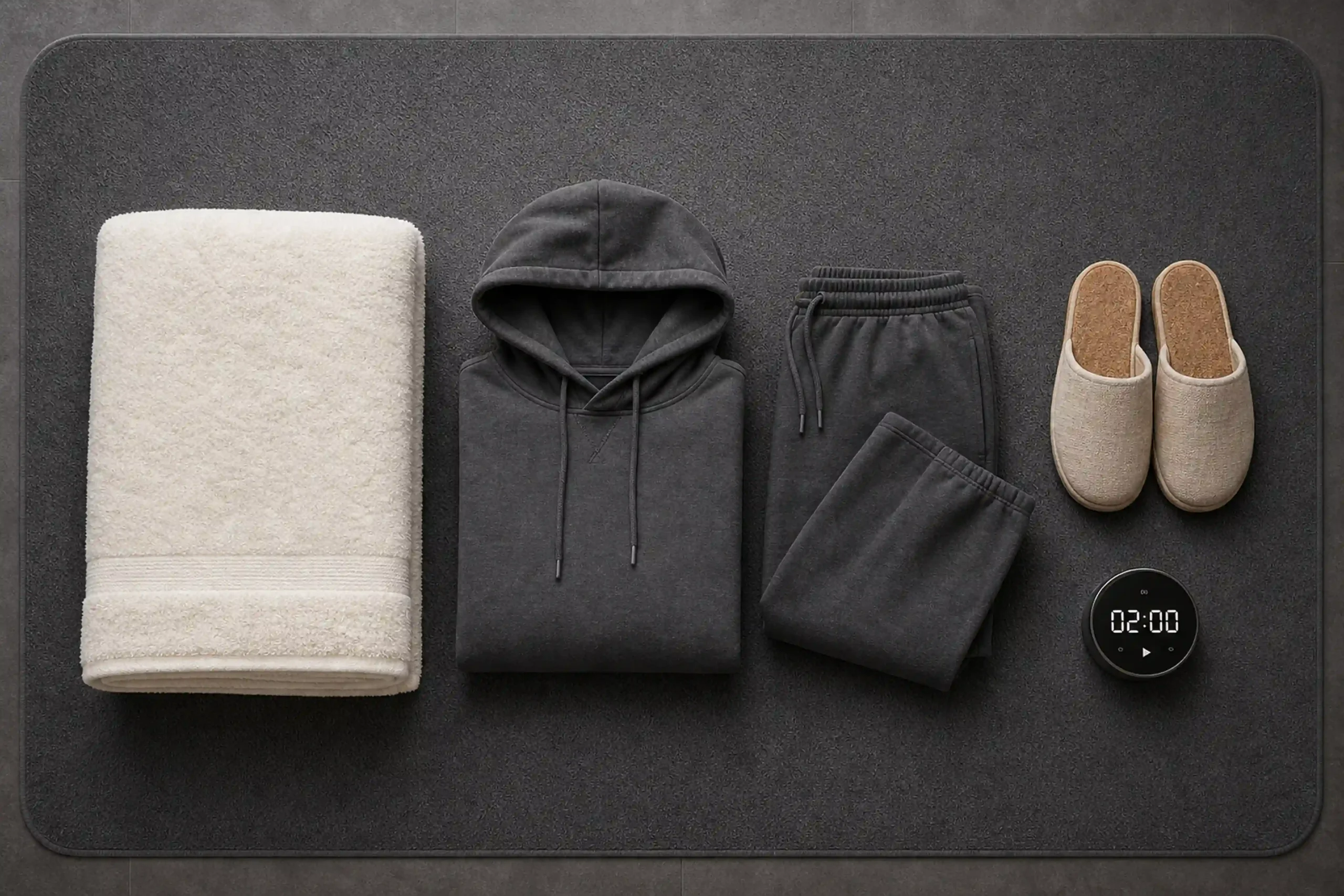
Set up your recovery station completely before you step into the water. Keep all your post-plunge gear within arm’s reach so you do not have to search for items while shivering.
Your essential setup should include:
- An oversized, high-absorbency towel.
- A set of loose, dry, and easily wearable warm clothes (such as a heavy cotton hoodie and sweatpants).
- Slip-resistant footwear or slippers to prevent falls on wet surfaces.
- A mechanical or digital timer placed in clear view but far enough away that you cannot easily turn it off early.
Setting Your Temperature and Water Level
Precision in water volume and temperature is the difference between a successful adaptational session and an overwhelming shock. Never guess your variables on day one.
Finding Your First-Time Target: 13°C – 15.5°C
The biggest mistake beginners make is starting too cold. A temperature of 13°C to 15.5°C (55°F to 60°F) is more than cold enough to trigger the cold shock response and initiate biological vascular adaptation.
Starting at this milder range allows your body to build vascular strength without triggering dangerous, uncontrollable gasping. Think of this temperature as your baseline weight in strength training—you must master it before adding more weight.
Managing Water Volume
When you step into the tub, your body mass will displace a significant volume of water. To prevent water from spilling over the sides and creating a slip hazard, only fill your tub to about two-thirds capacity.
For your first session, aim for a water level that only reaches your mid-chest or nipple line when seated. Keeping your neck and upper chest out of the water aggressively dampens the initial cold shock reflex, giving you much greater control over your breath.
The Final 5 Minutes (Pre-Entry Calm)
The final five minutes before you step into the cold are reserved entirely for calming your nervous system and securing your physical safety.
Breathing Your Way to Calm
Stand quietly beside your cold plunge tub and perform two minutes of slow, controlled nasal breathing. Inhale deeply through your nose for four seconds, hold for two seconds, and exhale silently through your nose for six seconds.
This specific breathing ratio activates your vagus nerve and shifts your body into a parasympathetic state. Entering the water with a low baseline heart rate dramatically reduces the peak spike of the cold shock response.
Crucial Safety Rule: Never Hyperventilate
You must never practice rapid, deep hyperventilation (such as Wim Hof-style breathing) before entering or while inside an ice bath. Hyperventilation flushes carbon dioxide out of your blood, which silences your brain’s natural oxygen alarm.
If your oxygen alarm is silenced, you risk experiencing an involuntary shallow water blackout without any warning. Always maintain slow, controlled, and shallow breathing when preparing to enter the water.
Inside the Cold
The physical entry into the water must be a deliberate, controlled movement. How you enter determines how quickly your brain registers safety.
How to Step Into the Water
How to Step Into the Water
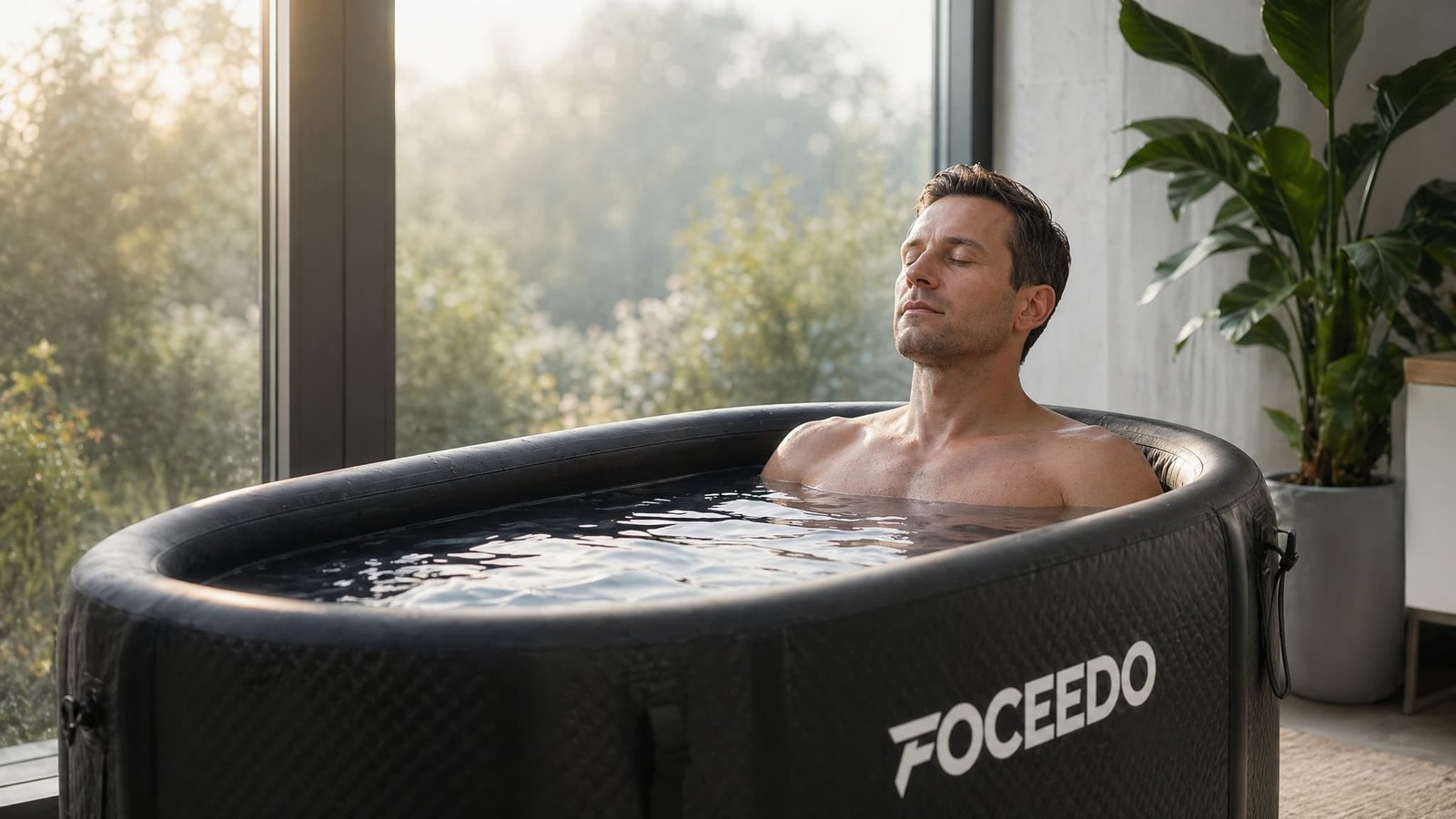
Do not hesitate, but do not jump or rush into the water. Step into the tub one foot at a time, keeping your hands completely out of the water (your hands contain dense concentrations of thermal receptors and will amplify the sensation of cold).
Once your feet are stable, slowly lower your hips and torso until the water reaches your chest. Keep your hands resting gently on top of your thighs or held close to your chest to reduce sensory overload.
What to Do When the Cold Hits
The moment the cold water touches your chest, your skin’s cold receptors will trigger an involuntary gasp. Your absolute priority at this second is to force a long, slow, and vocal exhalation through pursed lips.
Do not try to take a deep breath in; focus entirely on blowing the air out. After thirty seconds of controlled exhalation, your rapid heart rate will begin to drop, your blood pressure will stabilize, and your mind will enter a state of quiet focus as the initial cold sensation subsides.
Post-Plunge Recovery and Warming Up
The session does not end when you step out of the tub. The post-plunge phase is critical for safely bringing your core temperature back up and maximizing the metabolic benefits of your cold plunge.
Exiting the Tub Safely and Slowly
When your timer sounds, exit the tub slowly and carefully. Because cold water naturally restricts blood flow to your limbs, your leg muscles may feel slightly stiff, numb, or heavy.
Stand firmly, grip the edge of the tub for balance, and step onto a non-slip mat. Take a few deep breaths to allow your body to adjust before walking.
Avoiding the Immediate Hot Shower
It is tempting to run straight from your ice bath into a hot shower, but doing so triggers a phenomenon known as the “Afterdrop.” Instant exposure to hot water dilates your blood vessels rapidly, forcing the colder blood from your limbs to rush back to your warm heart and brain.
This sudden return of cold blood causes your core temperature to drop further, which can lead to intense shivering or dizziness. Instead, rely on your body’s natural ability to re-warm itself.
How to Warm Up Naturally
Immediately wrap yourself in your large towel and dry off thoroughly, removing all cold moisture from your skin. Put on your loose warm clothing, focusing on covering your head, feet, and hands first.
Perform ten to twenty slow, controlled bodyweight squats or pacing steps. This light muscular action generates internal metabolic heat and slowly pumps blood back to your limbs, helping you re-warm safely while burning extra calories through thermogenesis.
Absolutely not. For your first several weeks, keep your head, neck, and shoulders completely out of the water. Submerging your neck and chest triggers a much more intense cold shock response, so keep the water level at chest height until you are fully acclimated.
For beginners, we recommend starting with 2 sessions per week, spaced 3 days apart. This allows your cardiovascular system and hormonal pathways plenty of time to rest and complete their adaptation before you expose them to the cold again.