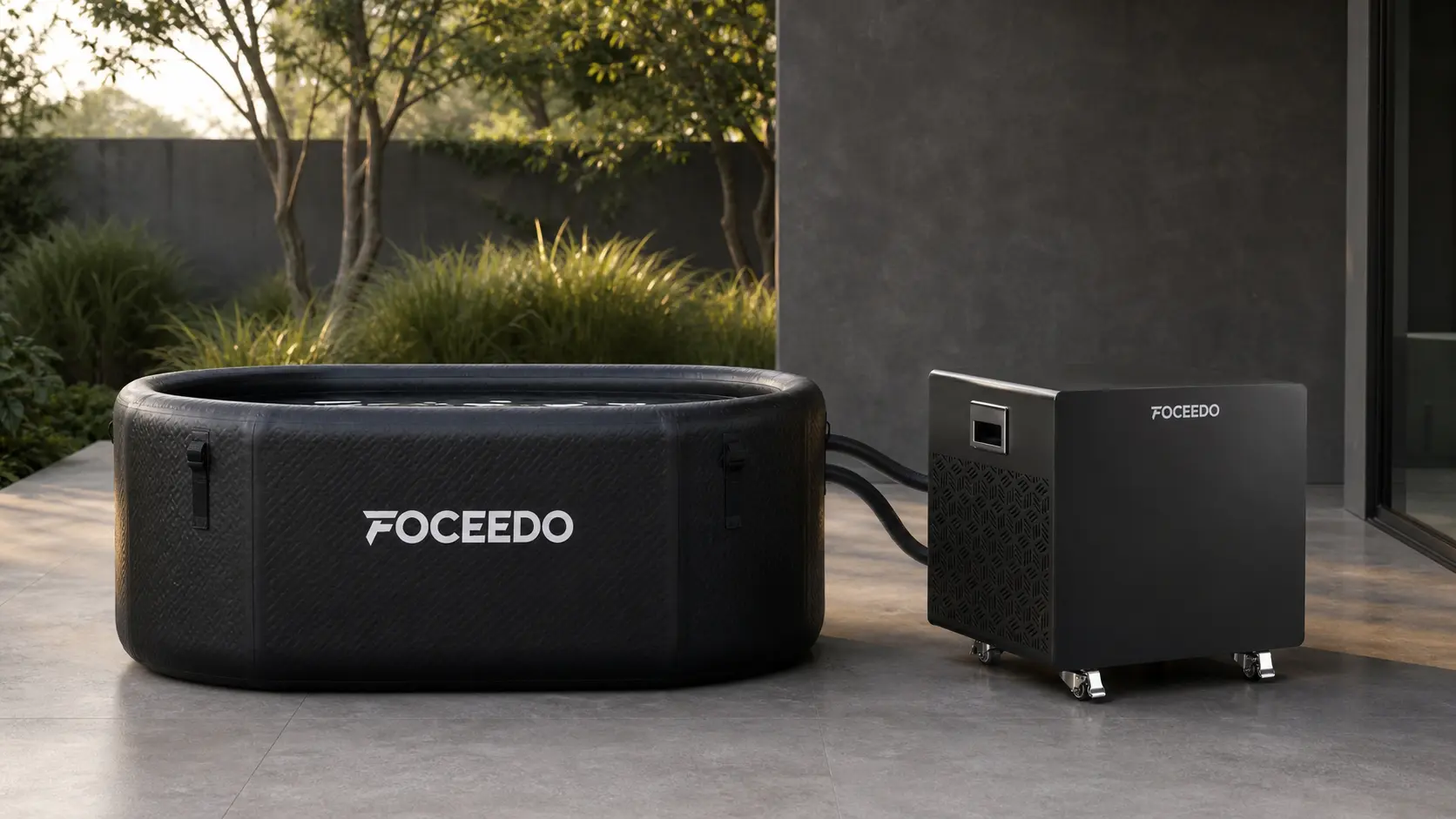










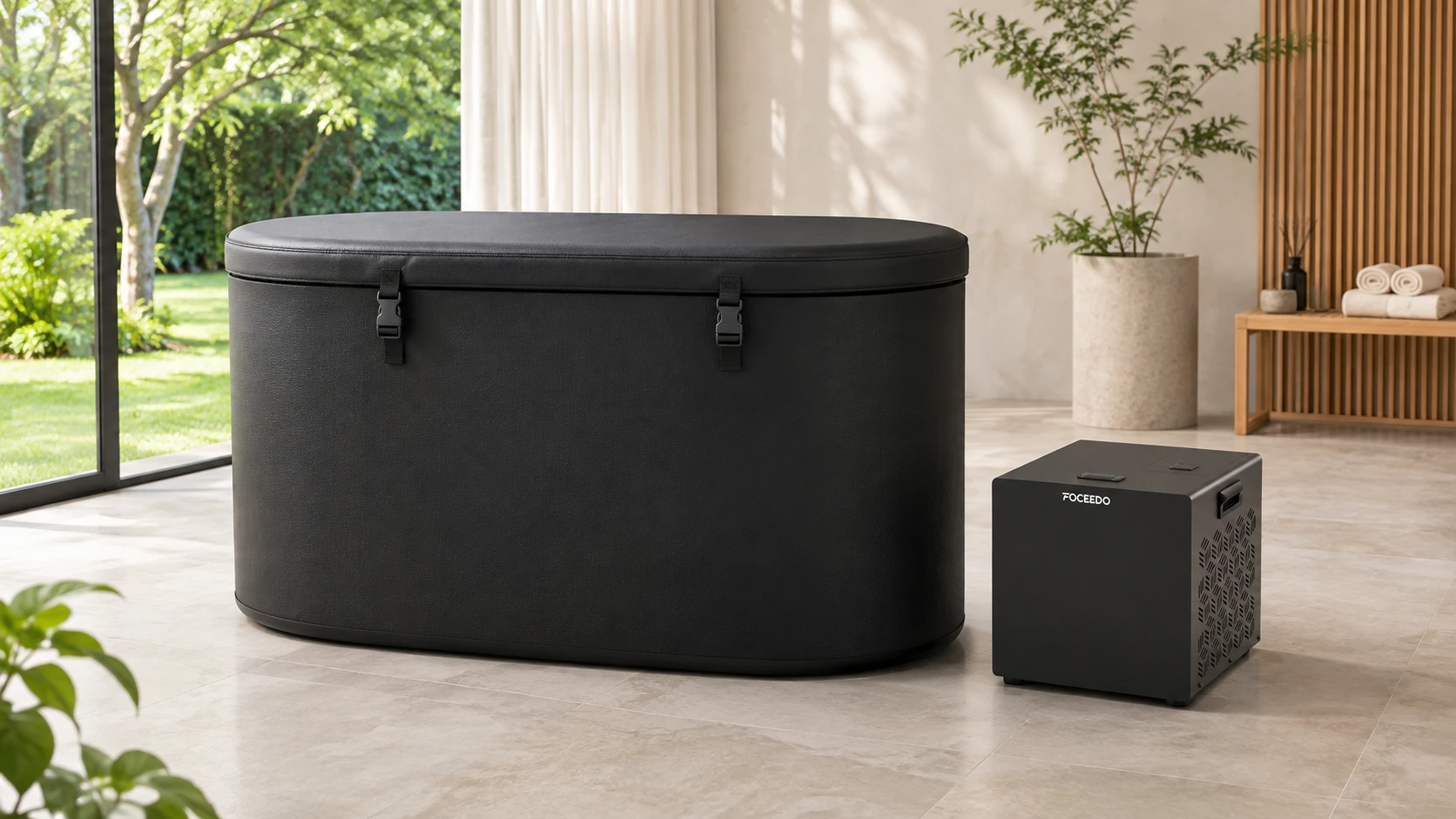
Many cold plunge chillers are rated at around 50 to 70 dB. For comparison, a normal conversation is about 60 dB. The main sounds are the compressor’s steady hum and the sound of the cooling fan.
What Makes a Chiller Noisy?
Several sounds overlap during operation. Knowing when each starts makes it easier to identify what you are hearing.
| Sound source | What you may hear | When you hear it |
|---|---|---|
| Compressor | A steady mechanical hum | During active refrigeration |
| Cooling fan | Moving air and a fan whir | When the fan runs to release heat |
| Circulation pump | Motor whir and water movement | During water circulation, which may continue after cooling stops |
| Contact with the floor or nearby objects | A buzz or rattle | When vibration passes into the supporting surface or something touches the equipment |
After a fresh fill, the chiller usually needs a longer cooling run than it does to maintain already-cold water. You may therefore hear the compressor and fan for longer on refill day. Once the target temperature is reached, the compressor can stop while the pump continues circulating water, depending on the system’s controls.
How to Compare Chiller Noise
Ask for a measurement of the complete system while it is cooling, including any separate pump. A pump-only demonstration will not show you how the setup sounds when the compressor and fan are also running.
الـ FOCEEDO E05 ice bath chiller, for example, lists 55 dB. To compare that figure with another model, check the measurement distance and which components were running.
Send the seller these questions:
- Which model and regional version does the noise figure cover?
- Is the measurement given in dB(A), and how far away was the microphone?
- Were the compressor, fan and circulation pump running together?
- Was the test indoors or outdoors, and how much background noise was present?
- Can you provide a continuous recording showing startup, active cooling and circulation after cooling stops?
The A in dB(A) means the measurement is adjusted for how sensitive human hearing is to different frequencies. Keep that measurement type consistent when comparing ratings. A figure taken at 3 meters also cannot be compared directly with one taken at 1 meter.
Use recordings to listen for the character of the sound, such as a low hum, sharp whine or intermittent rattle. Different microphones and playback volumes make separate recordings unreliable for judging which machine is louder.
If you already own a chiller, compare noise before and after an adjustment from the same listening position, with the unit in the same operating state. A sound meter can help; the NIOSH Sound Level Meter app is also available for iOS.
How to Reduce Chiller Noise
Choose a Better Location
Place the chiller away from bedroom walls and the places where people sit or work. On a patio, consider the nearest neighbor’s window as well as your own.
Listen from the location you want to keep quiet, not only from beside the tub. If two positions both meet the installation requirements, compare them during active cooling before deciding where the equipment will stay.
Check the permitted hose length and height difference before moving the chiller farther away. Extending the hoses across the room may exceed the pump’s installation limits. Shut down and follow the manual before relocating equipment or changing connections.
Reduce Vibration
Check that the machine sits level and all its feet or casters are properly supported. With the system switched off, look for hoses touching furniture, the cabinet resting against another object or an unstable platform beneath the unit.
A suitable vibration pad can reduce vibration transferred into the floor. Choose one that supports the equipment’s weight without letting it rock. This helps with vibration through the floor, while the fan’s airflow sound remains. OSHA vibration-isolation guidance
Keep the Vents Clear
Leave the intake and exhaust clearances specified in the manual. Check the exhaust side in particular: a shelf, fence panel or storage box can obstruct it even when the front of the machine looks clear.
Do not wrap a running chiller in a blanket or put it in a closed cabinet to muffle the sound. The unit needs to release heat. Keep any screen or partition outside the required clearance, and avoid layouts that send warm exhaust straight back toward the intake.
Adjust Cooling Times
If the controller supports scheduling, arrange the main cooldown for a time that suits your household. Use the cooling time you have observed with your own tub to set the start time. For a morning plunge, you could cool the water earlier in the evening and check whether the covered tub stays within your preferred temperature range until morning.
Check what the timer controls. Some settings stop cooling while circulation continues; others turn off more of the system. Preserve the circulation and water-treatment schedule your setup requires. In freezing weather, follow the manufacturer’s winter operating or draining instructions before changing the schedule of a water-filled outdoor system.
When Chiller Noise Needs Attention
A sudden change in sound, especially alongside weak water flow or an error message, is worth checking.
| What you hear | What to do |
|---|---|
| A rattle that began after moving the unit | Switch off and check the supports and contact with nearby objects. If it appears to come from inside the cabinet, contact support. |
| Gurgling after a refill or filter change, with weak return flow | Stop if normal flow is not established. Follow your model’s priming instructions or ask the seller for the correct procedure. |
| Grinding, scraping or a persistent sharp squeal | Stop the unit and contact support. Do not remove panels or reach toward a fan to investigate. |
| Louder operation together with weak flow, an alarm or poor cooling | Record the symptoms and check the manual. Avoid repeatedly restarting the machine to clear the problem. |
For water-flow problems, our chiller troubleshooting guide covers hoses, filters and trapped air. When contacting support, include the model number, when the sound started, any error code and a short recording if it is safe to make one. Mention whether the noise begins with the compressor or continues during circulation alone.