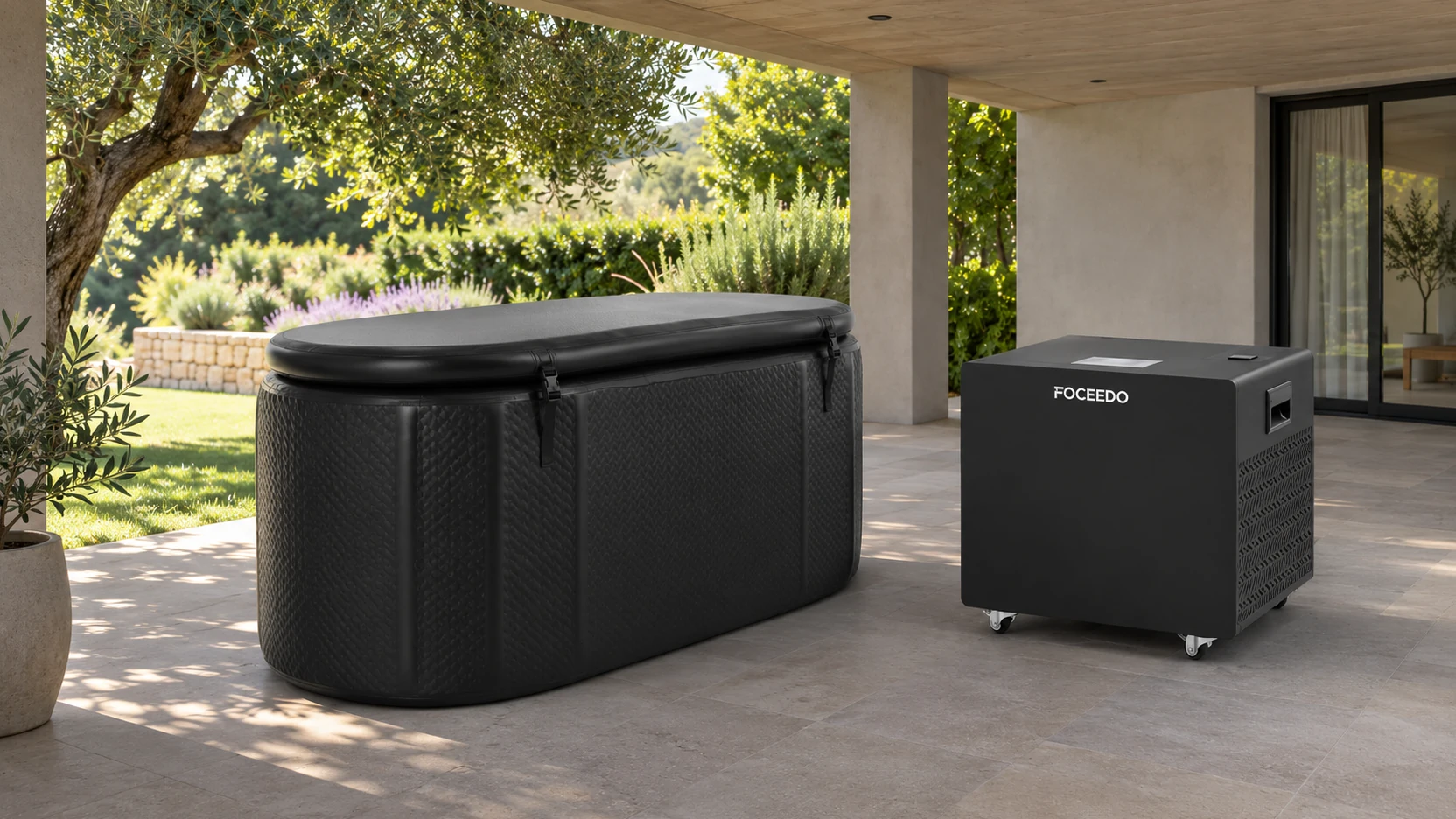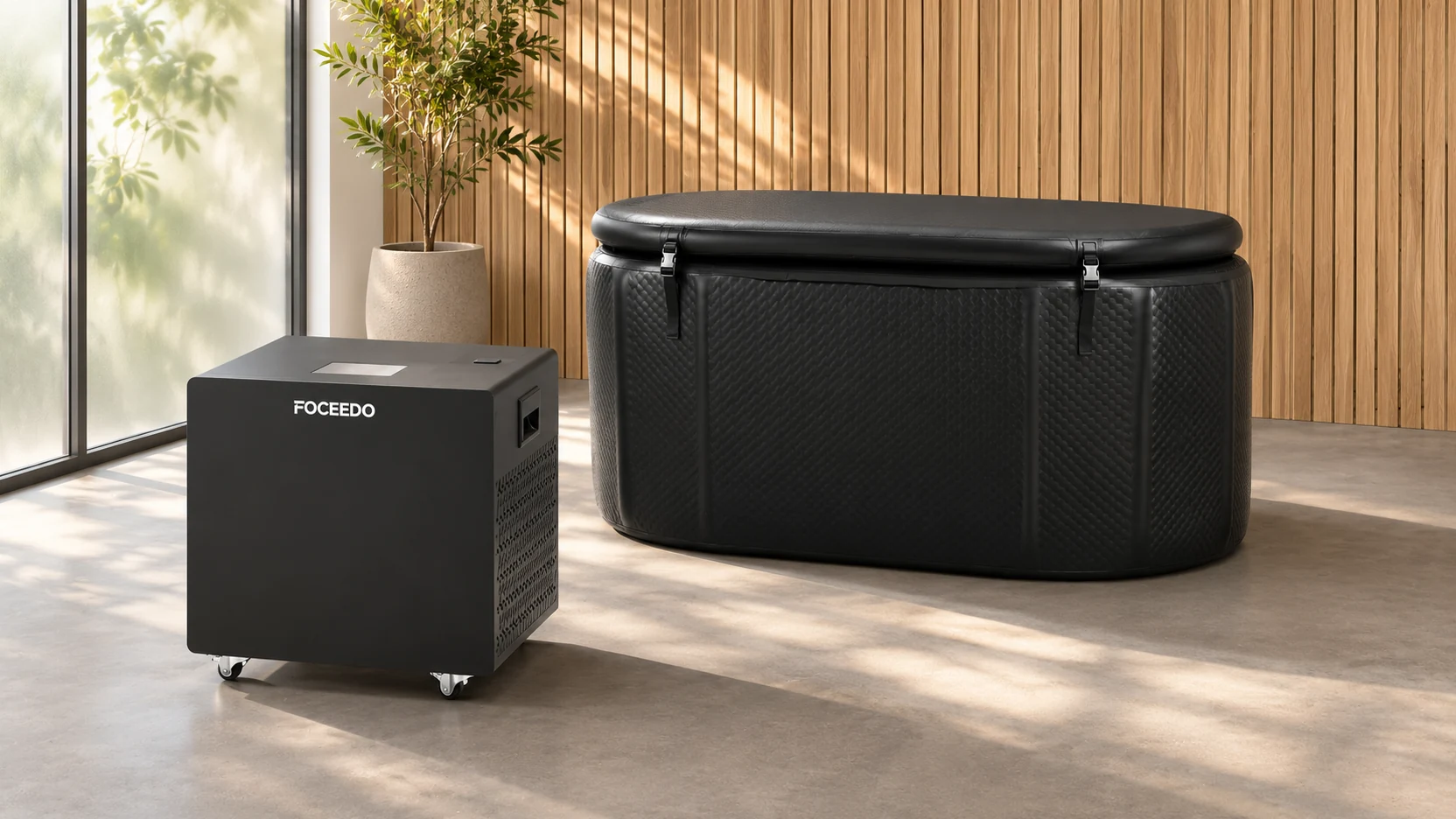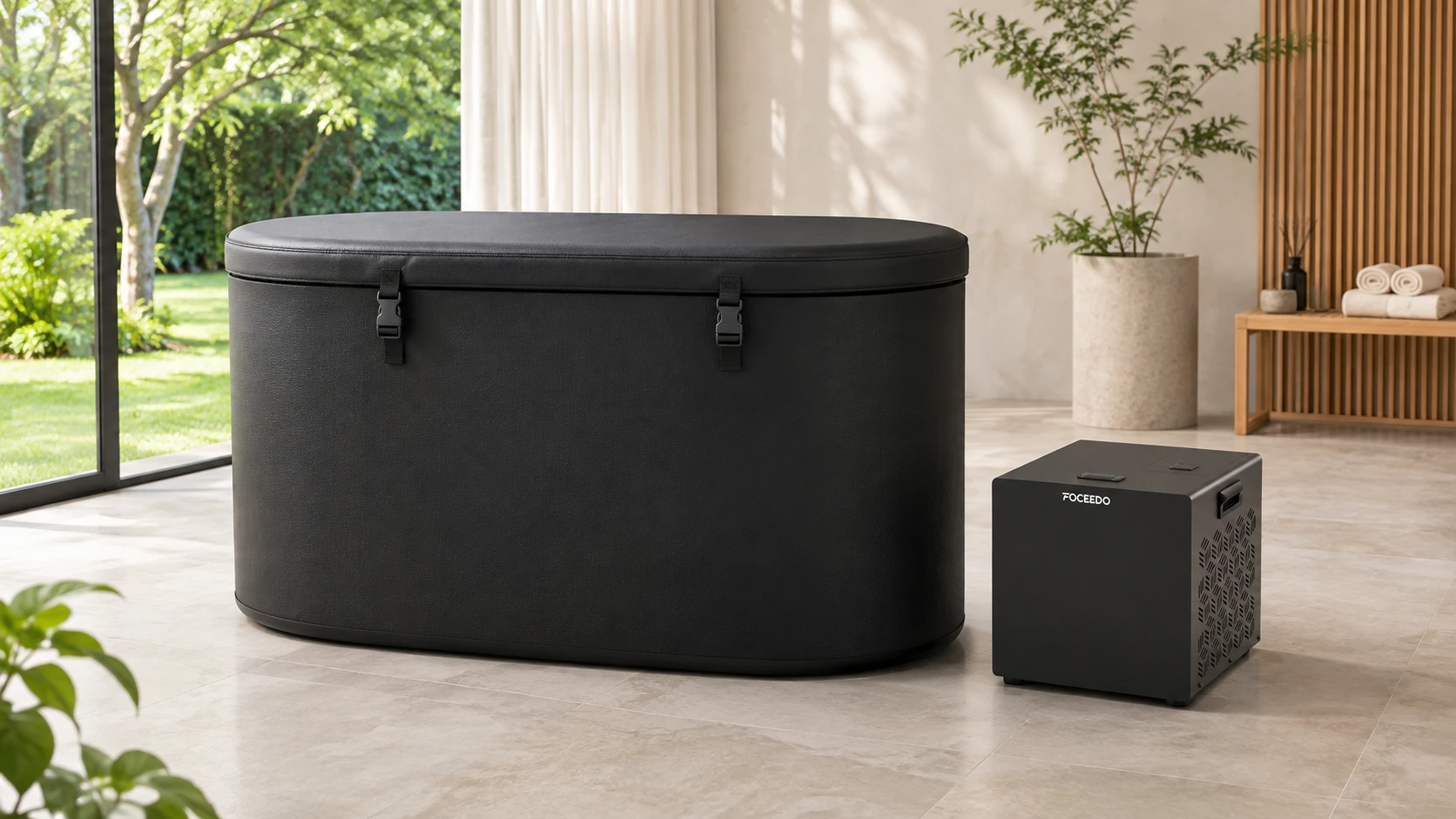










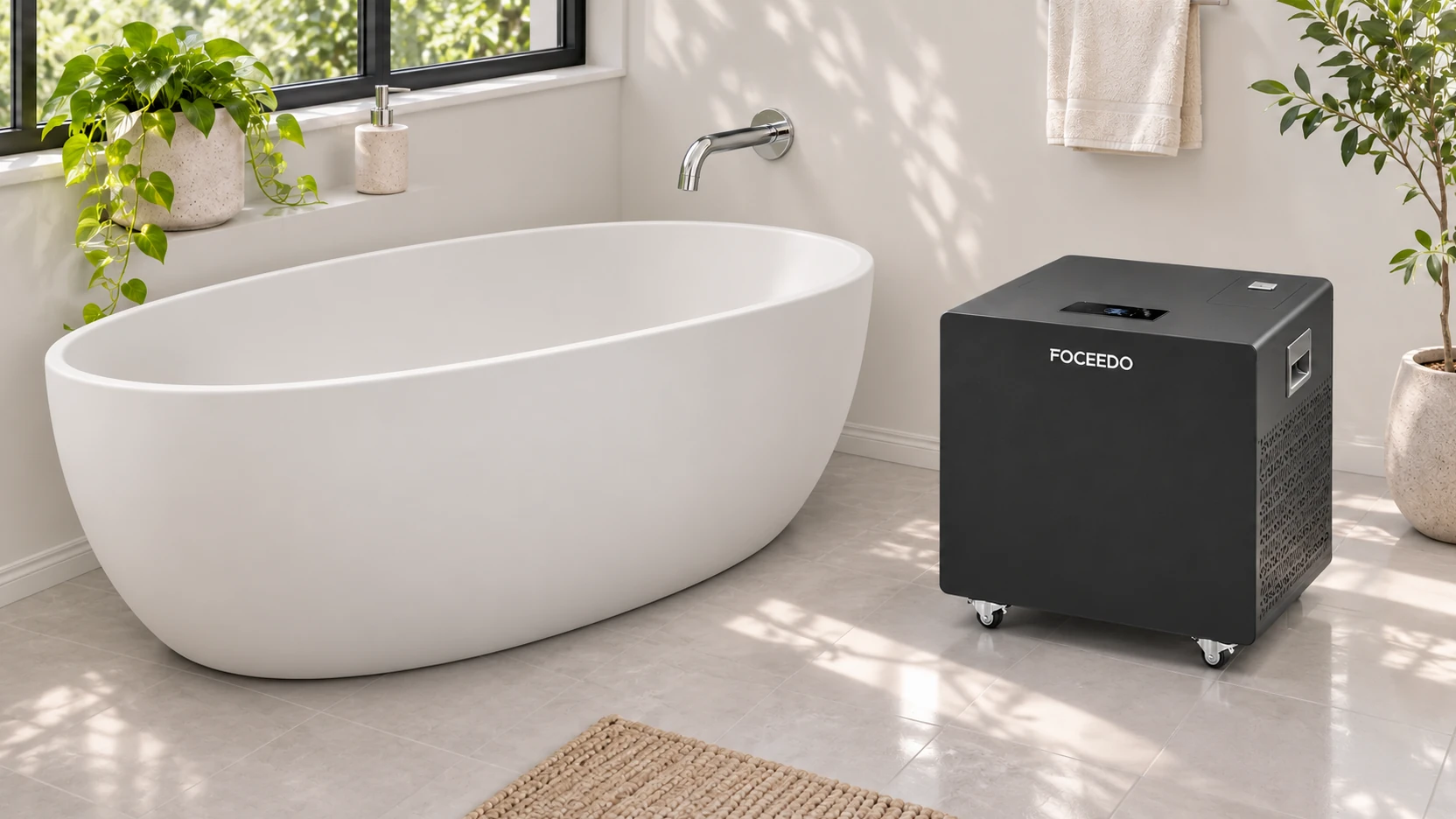
Yes, if the chiller has a way to draw water from your bathtub and send it back. A tub with compatible circulation ports can connect to a chiller by hose. If your bath has only a drain and an overflow, look for a chiller designed to draw and return water over the rim.
Ways to Cool Your Bathtub
Ice
For an occasional plunge, you can cool the water with bagged ice. Measure the amount of water you actually put in the tub and take its temperature before buying ice. If the water starts at 22 °C (72 °F), use these estimates:
| Water in the tub | Ice to reach 15°C (59°F) | Ice to reach 10°C (50°F) |
|---|---|---|
| 100 L (26 US gal) | 7.4 kg (16 lb) | 13.4 kg (29 lb) |
| 150 L (40 US gal) | 11.1 kg (24 lb) | 20.0 kg (44 lb) |
| 180 L (48 US gal) | 13.3 kg (29 lb) | 24.0 kg (53 lb) |
These estimates use ice starting at 0°C (32°F) and cover the heat exchanged between the water and the ice. A warm tub and room can add heat, while colder ice straight from the freezer can absorb more heat per kilogram. Leave room for the melted ice and for the water to rise when you get in. Add the ice in batches, stir and check the water with a thermometer before adding more.
A Chiller That Uses the Tub’s Ports
In a hose-connected setup, the pump draws water out of the tub, sends it through the chiller and returns it to the tub. A regular drain sends water to the waste pipe. The overflow carries away excess water when the level gets too high. For a chiller that connects to tub ports, look for fittings intended for circulation and verify their size and thread type.
Tento FOCEEDO E10, for example, uses ½-inch threaded water connections. If your existing tub has circulation ports, send the seller a close-up of each fitting and its dimensions so they can confirm which hoses or adapters fit. Once you’ve confirmed the fit, the chiller installation steps show how to connect and check the water circuit before cooling.
A Chiller That Connects Over the Rim
Some models made for ordinary bathtubs use an intake and return assembly that reaches over the rim. This lets you keep a tub with no circulation ports. Check whether the supplied assembly can rest securely on your rim, reach the water at your usual fill level and fit in the gap between the tub and the wall. A wide ledge, a steeply curved rim or a shower screen can make a setup that fits in a product photo impractical in your bathroom.
The Limits of a Regular Bathtub
Water Depth and Body Coverage
Check the water depth to the overflow in the tub’s specifications. For example, one bathtub specification sheet lists a 23-inch overall height and a 19-inch water depth. The latter is the depth when the water reaches the overflow. Your usual fill may be lower.
Your bathtub may cover your chest when you recline, as it does during a hot bath. Before using it for a cold plunge, try the position with comfortably warm water. Check where the waterline sits when you’re seated steadily, with your mouth and nose well above the surface.
If you have to slide down until your face is close to the surface to cover your chest, stay in the steadier position and accept a lower waterline. Sudden exposure to cold water can make you gasp involuntarily. If chest coverage matters to you, check whether a deeper tub gives you that depth while you’re seated securely.
Getting In and Out
Check the space inside the tub while you’re seated. A sloped backrest and a narrow base can leave you with less room to plant your feet than the tub’s outside dimensions suggest. Make sure you can sit down and stand up steadily, and keep the spot where you step over the rim clear of hoses and fittings.
Keeping the Water Between Sessions
If the bathtub is shared, plan where you’ll put the hoses and how you’ll clean the tub after draining it for the next person. If you can leave the water in, plan for circulation, filtration and treatment to maintain water quality between sessions.
Hidden Condensation
Cold water can cool the outside wall of a bathtub enough for moisture in the air to form droplets on it. You can usually see those droplets on a freestanding tub. On a built-in tub, they can collect behind a panel or under the tub. Before leaving cold water in for long periods, check which surfaces you can inspect and dry. Include the hoses and nearby floor in your condensation check.
What to Check Before Buying a Chiller
Water Volume and Cooling Time
When choosing a cold plunge chiller for your bathtub, use the amount of water you actually fill it with. If you drain the tub after each use, ask how long a fresh fill will take to cool. Suppose you use 180 L (about 48 US gal), your tap water comes in at 22°C (72°F), and you want 10°C (50°F) water ready in three hours. Give the seller those four numbers and check their cooling time estimate against the time you have.
If you keep the water cold between sessions, the chiller mainly has to remove heat that enters through the tub, cover and hoses during that time. Check whether a cover can sit properly with the hoses in place.
Space and Power
Measure the floor space beside the tub with the bathroom door open. Check the chiller’s required ventilation clearance and leave room to reach the hose connections and service the filter. Use the manufacturer’s placement instructions to check that the unit is suitable for the location you have in mind.
Ask a qualified electrician to check the proposed outlet location, the chiller’s power requirements and the shock protection required in your area. If the cord can’t reach a suitable outlet, sort out the power supply before buying. Avoid running an extension lead across the bathroom floor.
Keep Your Bathtub or Buy a Cold Plunge Tub?
Keep your existing bathtub if:
- The water covers the areas you want to soak while you’re seated steadily.
- You have a compatible chiller and a suitable place to put it.
- You can return the bathtub to everyday use easily, and using it saves you space.
Consider a dedicated cold plunge tub if:
- Your family needs the bathtub regularly, so each plunge means refilling, cooling and putting the equipment away again.
- You want more usable water depth while seated.
- You have room for a separate tub with circulation ports and want to leave the system set up between sessions.
Before ordering, send the seller a photo of your tub and its connections, the space you have available, your actual fill volume and target water temperature. Ask what it will take to connect the chiller and how long a fresh fill will take to cool.