









The Science Behind Ice Bath Recovery

Discover how ice baths can transform your recovery, performance, and mindset.

What is an Ice Bath?

Ice baths, commonly known as Cold Water Immersion (CWI), are a recovery technique that involves soaking the body in cold water—typically between 10°C and 15°C—for a set duration.
 
More than just a standard for professional athletes after intense training, ice bathing has become a mainstream lifestyle choice for relieving muscle soreness, elevating mood, and boosting the immune system.

The Science of Ice Baths

When you submerge in cold water, your body triggers its natural defense mechanisms. These biological responses are the scientific foundation behind the results you feel.

Vasoconstriction & Vasodilation

The moment you hit the cold, blood vessels in your limbs constrict sharply. This pushes blood toward your core to maintain your body temperature.
As you warm up afterwards, your vessels expand again. This flushes your muscle tissues and helps clear out lactic acid and other metabolic waste.
A 3D scientific illustration of blood vessels showing how FOCEEDO ice baths help blood vessels constrict and dilate, promoting blood circulation and clearing lactic acid.

Anti-Inflammation & Metabolic Regulation

Ice baths help dampen your body’s response to post-workout micro-trauma. By cooling the tissue, they limit swelling and local inflammation. The cold also slows down metabolic activity, lowering the cells’ response to damage.
After intense training, this is a powerful way to significantly reduce muscle pain and swelling.
An anatomical medical illustration showing the science behind FOCEEDO cold plunge anti-inflammation and fast recovery

Slowing Down Nerve Conduction

The cold significantly desensitizes nerve endings and slows down pain signals, providing instant relief from discomfort.
This natural reaction effectively soothes muscle soreness caused by intense exercise.
A scientific illustration of a neural network showing how FOCEEDO ice baths slow down nerve conduction for pain relief

Neuroendocrine Activation

The cold trigger activates your sympathetic nervous system, prompting the brain to release norepinephrine, dopamine, and endorphins. 
These substances not only help improve focus, but also promote a sense of well-being and enhance stress resilience
A scientific illustration showing how FOCEEDO ice baths improve mood and enhance focus through the neuroendocrine system

6 Proven Benefits of Ice Baths

Relieve muscle soreness​

This is the most well-known benefit of ice baths. By stimulating the nervous system and releasing natural pain-relieving substances, they can alleviate the soreness caused by micro-tears in the muscles following exercise.

Improve sleep quality

Ice baths briefly lower your core temperature, triggering a natural relaxation response as you warm back up. This transition shifts your body into a state of deep recovery, making it easier to drift into a high-quality sleep.

Reduce inflammation

Ice baths help constrict blood vessels and slow down blood flow. This reduces fluid buildup in your tissues, effectively easing swelling and discomfort. It’s a natural way to help your body recover faster.

Boost immune system function

Cold water immersion triggers your body’s natural defenses and boosts white blood cell counts.
This strengthens your immune system, making you more resilient against common colds and everyday illnesses.

Enhance mental resilience

Ice baths place your body in a brief state of cold stress, challenging you to control your breath and emotional response. This process helps you adapt to stress, gradually improving your mental toughness.​

Boost metabolism

Cold plunges activate brown fat within your body, which burns calories to generate heat and maintain your temperature. This process effectively boosts your metabolism and supports energy expenditure.

How to Take an Ice Bath

Find the Right Depth

The water should be deep enough to cover your chest and most of your body, especially the muscle groups you want to recover. No need to submerge your head for optimal recovery.

Get the Temperature Right

The ideal range is 10°C–15°C (50°F–59°F). You don’t need the water to be freezing to see results. In fact, water that is too cold can be more stressful for your body than helpful.

Watch the Clock

If you are new to this, start with just 1 to 2 minutes. As you get used to the cold, you can stay in longer. However, we recommend a maximum of 10 to 15 minutes to stay safe and effective.

Ease Your Way In

Don’t jump in. Instead, splash some water on your chest and back first to wake up your senses. Then, step in slowly and steadily until the water reaches your neck.

Control Your Breath

It’s natural to gasp when you hit the cold. Focus on taking slow, deep, and steady breaths. This helps your body stay calm and allows you to relax into the experience rather than fighting it.

Warm Up Safely

Dry off immediately and put on warm clothes. Let your body warm up naturally with a warm drink or light movement.

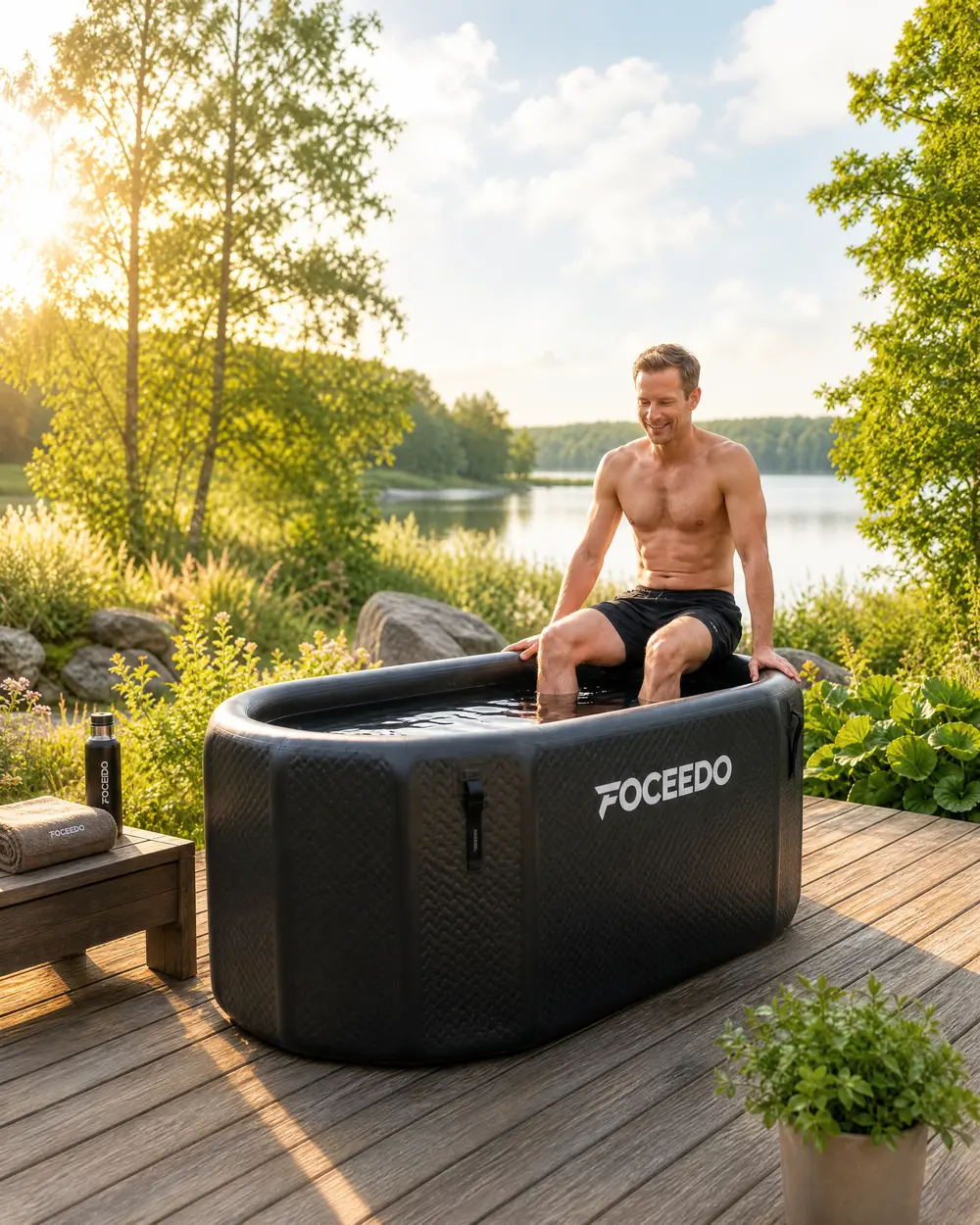
Athletic man preparing for outdoor cold water therapy in a inflatable ice bath with FOCEEDO Cold plunge chiller

Safety Precautions

Who Should Avoid Ice Baths

Scroll to Top

Request a Solution