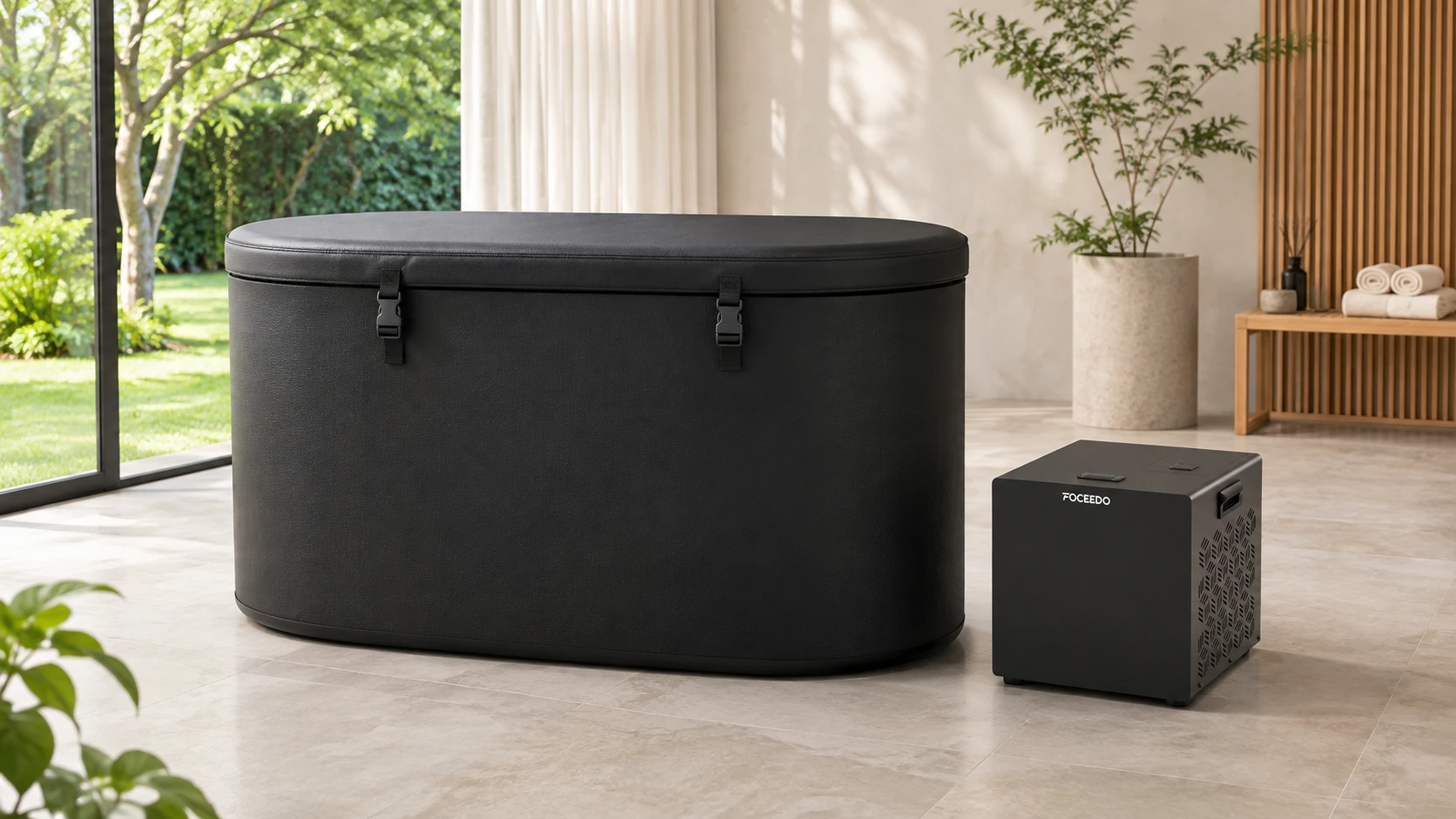










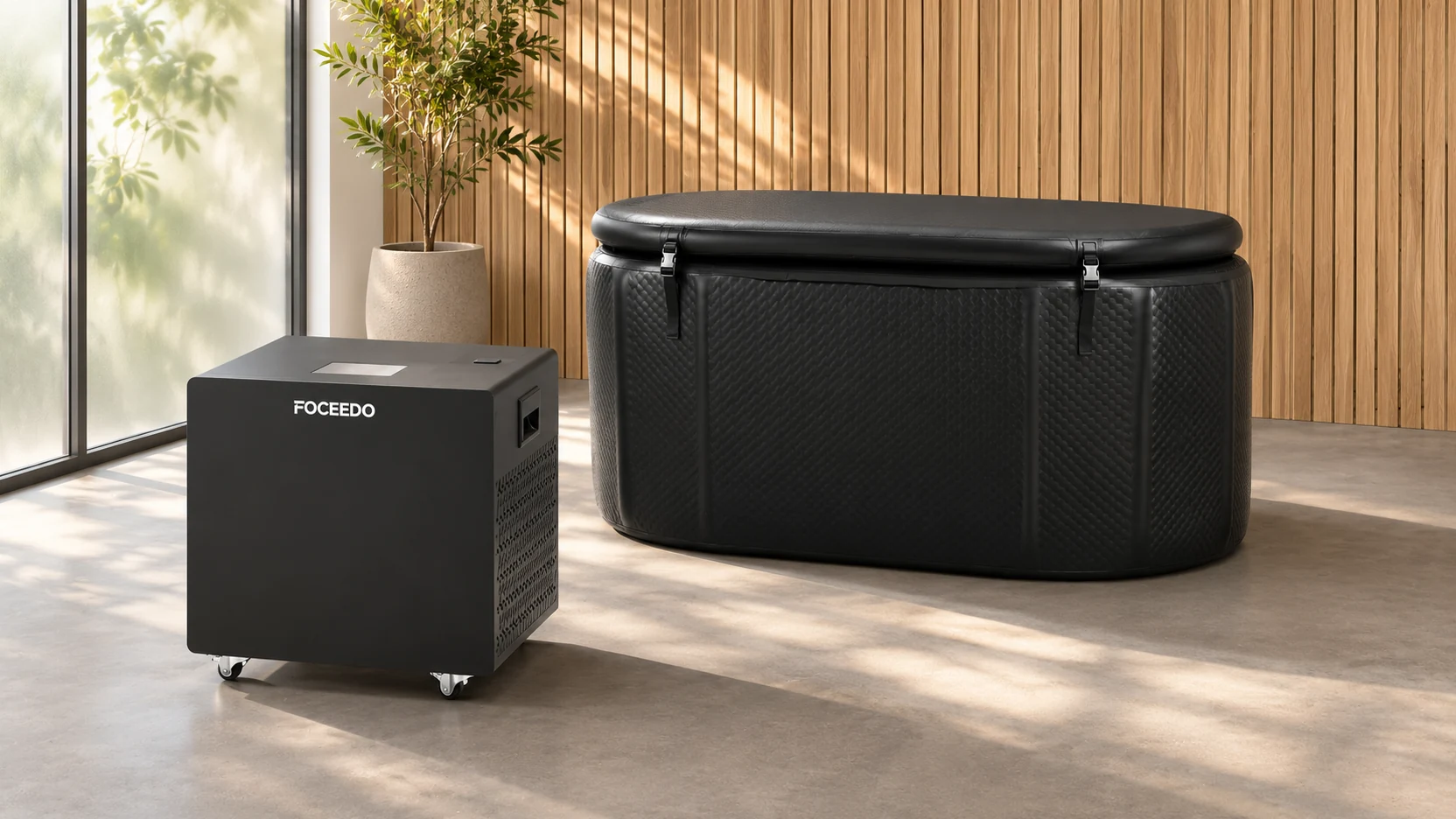
Leave your cold plunge chiller on automatic temperature control if you want the water ready throughout the day. If you know when you’ll plunge, you can start cooling ahead of that session and let the water warm between uses.
| How you use your plunge | How to run the chiller |
|---|---|
| Every day, often at different times | Leave automatic temperature control on |
| Occasionally, at times you can plan ahead | Start cooling before your session |
| Away on a long trip or done for the season | Shut down, drain and store the system |
Does the Compressor Run All Day?
When the chiller is in cooling mode, the compressor does the cooling. On a chiller with automatic temperature control, the compressor stops once the water is cold enough and starts again when the temperature rises above the controller’s restart point. The chiller can stay on through both parts of that cycle.
The pump moves water through the system. It can keep circulating water through the filter even while the compressor is off. That’s why you can still see water returning to the tub after cooling stops.
Choose a Schedule That Fits Your Routine
Daily Use
If you plunge most mornings or several people use the tub throughout the day, leave automatic temperature control on between sessions. That way, a change in plans doesn’t leave you waiting for the water to cool. Put the lid back on after each use to slow warming and reduce how often the chiller needs to cool the water again.
Occasional Use
If you mainly plunge on weekends, you can let the water warm between sessions and cool it again before the next one. This works best when you know how far ahead to start and can keep up with your usual water care between uses. If your pump and filter run only when the whole system is on, build their operating time into the schedule too.
Extended Breaks
If you’re putting the plunge away for the season, shut it down and drain the entire system, including the tub, hoses and chiller. Water left inside the chiller can freeze and damage the plumbing, even after you’ve emptied the tub.
How to Set a Chiller Schedule
- Measure how long your tub takes to cool. After a typical break between uses, record the starting water temperature and time how long it takes to reach your target.
- Work backward from your plunge time. If your tub took 90 minutes to cool and you plan to plunge at 7 p.m., start cooling by 5:30 p.m. under similar conditions. Give it more time if the starting water temperature is higher. On the FOCEEDO E10, you can schedule that start time in the app. A reminder works if you’re starting the chiller manually.
Is It Cheaper to Leave the Chiller On?
It can be cheaper to cool the water only when you need it. In a warm room, a tub held at 10°C (50°F) keeps taking in heat throughout the day. If you let the water warm between plunges, it takes in heat more slowly as it gets closer to room temperature. Both schedules can give you 10°C water for your next session, while the amount of heat the chiller has to remove along the way can differ.
Say you plunge every morning at 9 a.m. and want the water at 10°C. Compare two days with similar weather, using the same amount of water and covering the tub after each plunge. On each day, start measuring right after your session and stop just before 9 a.m. the next morning.
- Keep the chiller on. After your plunge, let the chiller bring the water back to 10°C and hold it there until the next morning.
- Cool on a schedule. Pause cooling after your plunge. Let the water warm, then start cooling early enough to bring it back to 10°C before 9 a.m. the next day.
Compare the total kWh for each interval, including the cooldown in both cases. Add any pump or water treatment usage that your meter hasn’t already counted.
Suppose you measure 3.0 kWh for maintaining temperature and 2.4 kWh for scheduled cooling. At a flat rate of $0.20 per kWh, that 0.6 kWh difference works out to 12 cents in running costs over the period you measured. If your rates vary by time of day, use the rate that applies when the equipment runs.
Will Running 24/7 Wear Out the Chiller?
If your chiller is designed for continuous operation, leaving it on 24/7 and letting it control the water temperature is normal use. To compare wear from all-day temperature control and scheduled cooling, look at how long the compressor actually runs and how often it starts.
Repeated short compressor cycles can increase wear when the compressor keeps stopping soon after it starts. Set your target temperature and let the controller handle the starts and stops. Avoid switching the machine off and back on in quick succession.