










Table of Contents
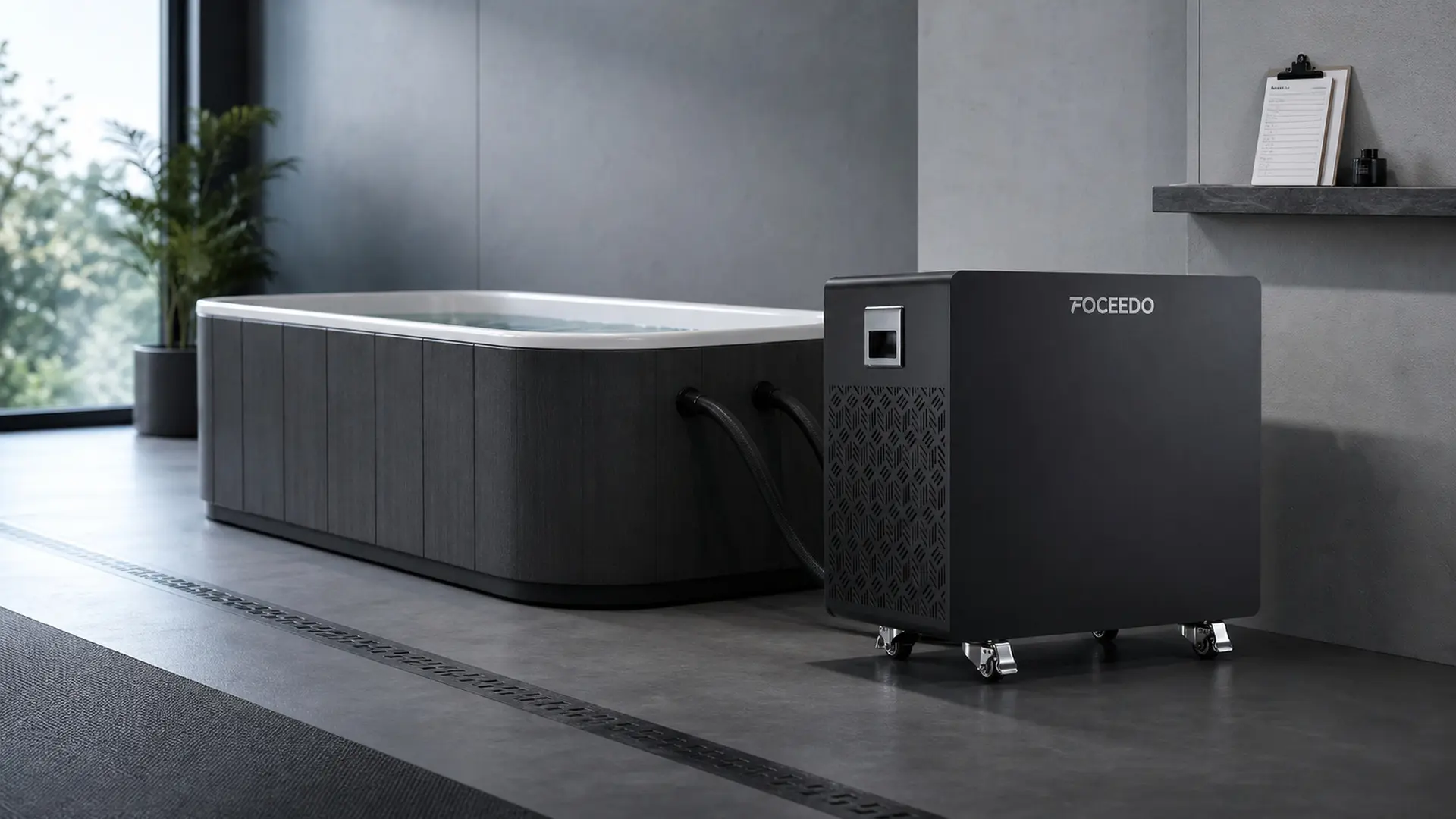
A commercial cold plunge needs two linked routines: equipment maintenance to protect water flow and cooling performance, and water-care controls to manage contamination. The correct frequency depends on the chiller model, filter type, bather load, water source, room conditions, treatment system, and local rules.
Quick Summary
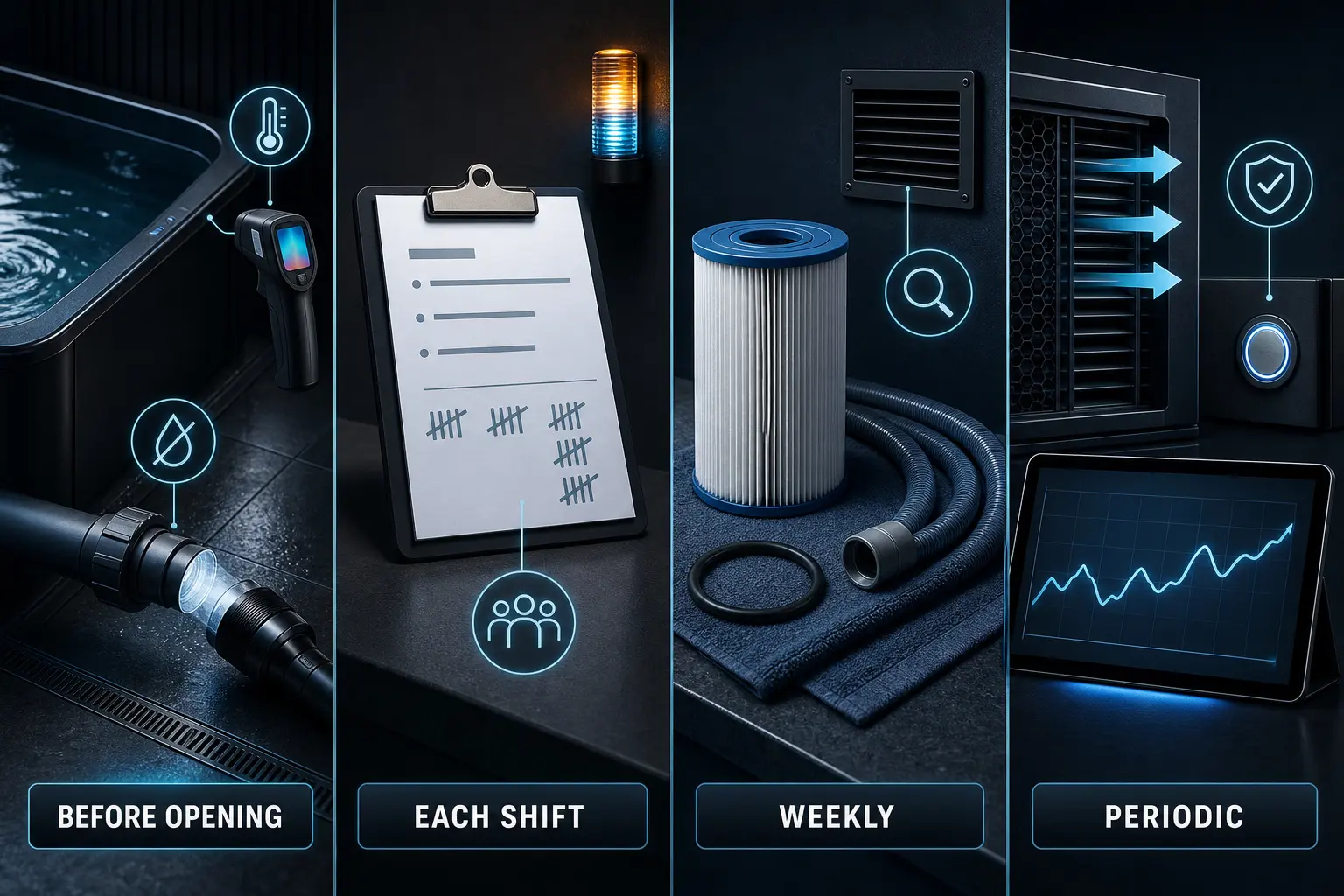
- Check temperature, flow, leaks, noise, alerts, water appearance, and the surrounding floor before opening.
- Record readings and problems at each shift handover instead of relying on memory.
- Inspect strainers, filters, hoses, ports, seals, vents, and the condenser area on a planned schedule.
- Increase maintenance when bather load, dust, heat, humidity, or contamination increases.
- Stop the unit for an electrical fault, repeated safety-device trip, internal leak, loss of flow, freezing risk, or unresolved error code.
- Follow the manufacturer’s manual and local public-health rules; a generic online schedule cannot replace either one.
Why Commercial Maintenance Is Different
A home user may notice a slow-cooling tub and clean it later. A gym, spa, hotel, or recovery studio has appointments, staff shifts, multiple bathers, wet floors, and a larger cost when the plunge becomes unavailable.
Commercial maintenance therefore needs an operating system, not an occasional cleaning session. Each task should have an owner, a trigger, a record, and a clear point at which staff must close the station or call technical support.
High bather load also changes the water-care burden. Sweat, skin oils, cosmetics, hair, lint, and outdoor debris can load the filter, reduce flow, and make disinfection harder, so a calendar-only schedule can miss fast-changing conditions.
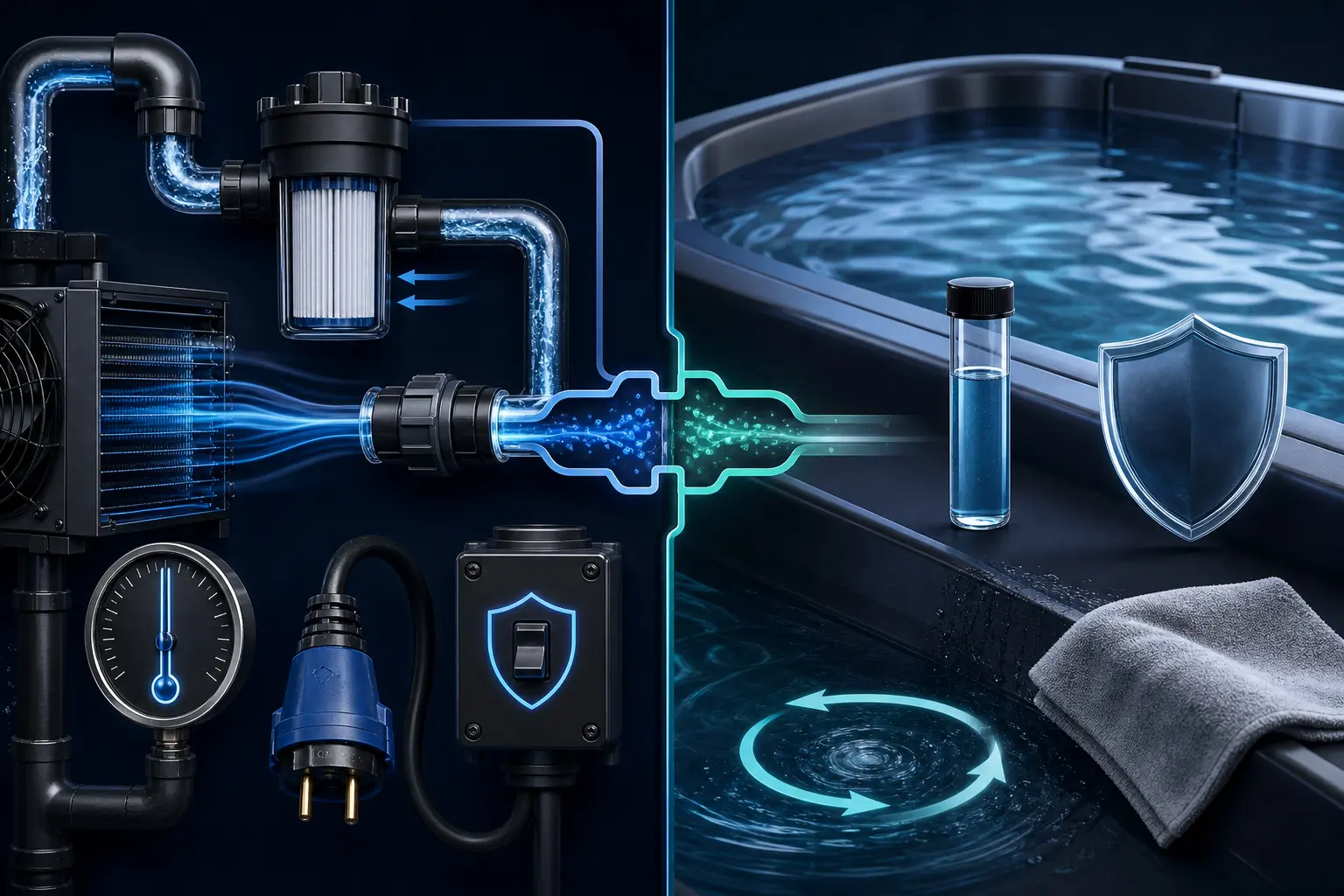
Separate Chiller Maintenance From Water Care
Chiller Maintenance
Covers the circulation and cooling equipment: filter restriction, pump flow, hoses, valves, water ports, airflow, condenser condition, electrical protection, temperature performance, error codes, and leaks.
Its goal is to keep the machine safe and able to move heat out of the water.
Water Care
Covers the water itself: visible clarity, odor, disinfectant controls where required, pH or other chemistry specified by the treatment system, cleaning of wet surfaces, contamination response, and water replacement.
Its goal is to control hygiene risks and keep the treatment process effective.
The two systems affect each other but are not interchangeable. Clear-looking water can still require chemical or microbiological control, while perfectly treated water will not fix a blocked filter, trapped air, poor ventilation, or a failing pump.
Build a Baseline Before Opening the Facility
Include:
- tub water volume and normal operating level
- target temperature and normal displayed temperature range
- normal time needed to recover after busy periods
- normal strength of return flow
- clean-filter pressure or flow reading, if the system provides one
- normal operating sound
- approved water-treatment method
- required ventilation clearance
- filter, seal, hose, and treatment-component part numbers
- manufacturer support contact and warranty records
Pro Tip: Take dated photos of hose routing, valve positions, electrical connections, and the clean equipment area. These images help a different employee restore the intended setup after cleaning or service.
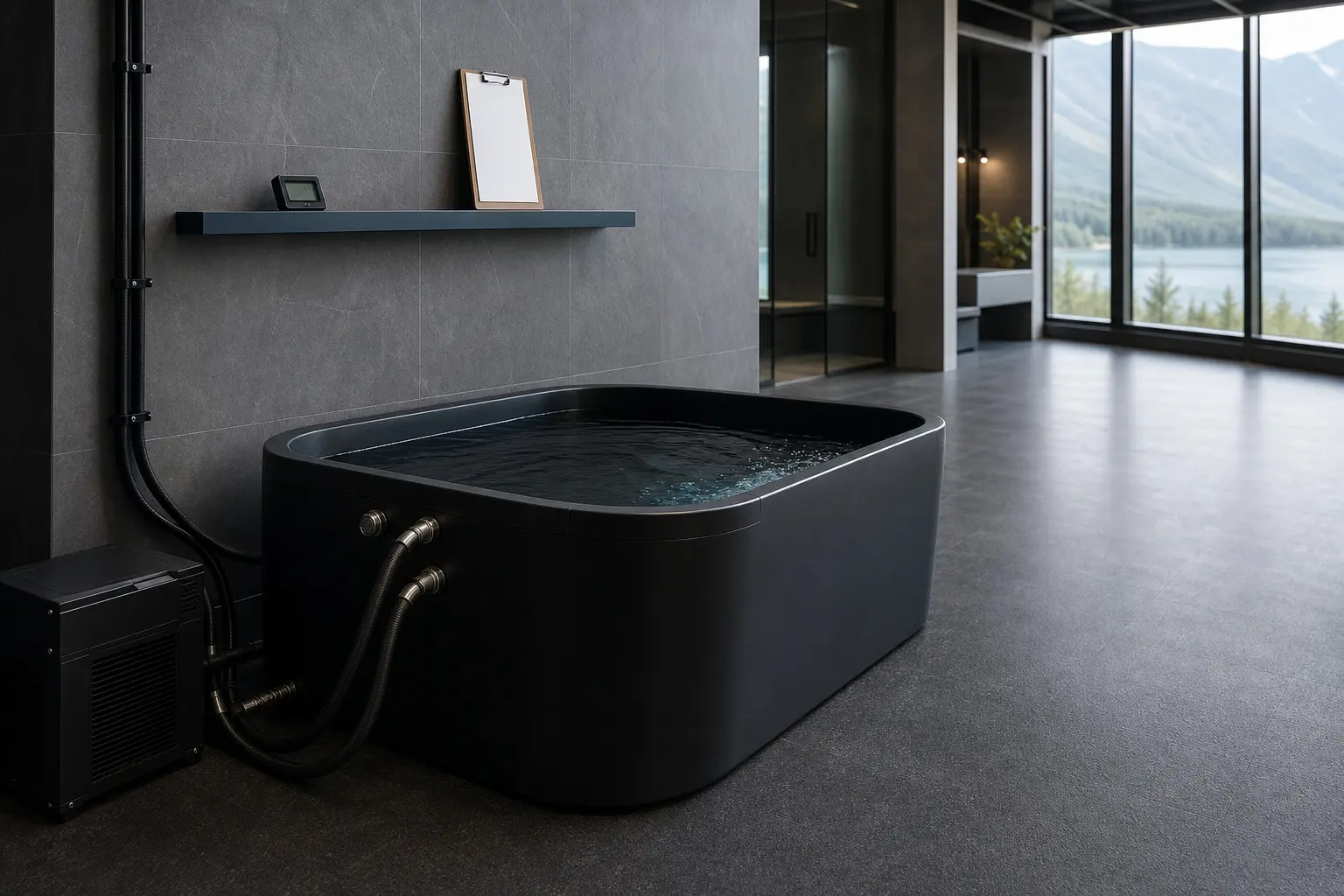
Before Opening: Complete the Safety and Flow Check
The opening check should happen before the first customer enters the water. It should take only a few minutes, but staff must record any abnormal result rather than simply ticking every box.
Check the Area and Power Supply
Confirm that the chiller is upright on a stable surface, its air openings are clear, and no towel, container, wall, or stored item restricts ventilation. Inspect the power cord, plug, outlet area, and visible safety device without opening the machine.
Check Water Level and Flow
Verify that the water level meets the manufacturer’s minimum and that all required valves are in their operating positions. Start circulation and confirm that return flow looks and feels consistent with the clean-system baseline.
Check Hoses, Ports, and Leaks
Inspect each hose from end to end, including bends, clamps, threaded connections, valves, filter housings, and inlet and outlet ports. Look for drips, damp fittings, bulging hose walls, cracks, loose connections, and flattened sections that restrict flow.
Check Temperature, Sound, and Alerts
Compare the displayed temperature with an independent thermometer at a consistent location in the tub. A small difference can occur because the chiller sensor may read water at the inlet, but a growing or sudden difference should be logged and investigated.
Listen for new rattling, grinding, rapid cycling, or vibration. Record any error code exactly as shown, including when it appeared and what the system was doing at the time.
Check the Water and Wet Surfaces
Look for cloudiness, foam, surface film, unusual color, debris, or a strong odor. Follow the facility’s water-treatment procedure and local requirements for testing, cleaning, contamination response, and reopening.
During Each Shift: Watch Recovery and Bather Load
Record the number of users or another practical bather-load measure. This connects changes in filter loading, water quality, and temperature recovery to actual use rather than guesswork.
At shift handover, record water temperature, visible water condition, flow status, active alerts, unusual noise, leaks, cleaning completed, and any item awaiting service. The incoming employee should acknowledge open problems and know whether the plunge is open, restricted, or closed.
A rising recovery time is an early warning even when the unit still reaches the setpoint overnight. Compare it with water volume, room temperature, cover use, bather load, filter condition, and airflow before assuming the refrigeration circuit has failed.
After Closing: Reduce Tomorrow’s Risk
Remove visible debris and clean high-touch and wet surfaces using products compatible with the tub, hoses, seals, filter housing, and treatment equipment. Never mix chemicals, and never use a product merely because it is suitable for a household bathtub.
Fit the cover if the system is designed to use one. A cover limits debris and heat gain, but it does not replace circulation, filtration, disinfection controls, or periodic cleaning.
Complete the daily log and flag unfinished work for the next shift. If water quality, flow, electrical safety, or leak status is unresolved, leave the system closed rather than passing an undocumented risk to the opening team.
Weekly: Inspect the Water Path
“Weekly” is a starting planning block, not a universal replacement interval. A busy recovery studio may need some checks more often, while the manufacturer may specify a different task or component schedule.
Inspect the Filter and Strainer
Switch off and isolate the equipment as the manual instructs before opening a filter housing or touching a strainer. Note filter color, debris load, damage, seating, seals, and whether the housing closes without cross-threading or leakage.
Clean or replace the element only as its manufacturer permits. A disposable cartridge should not be aggressively washed and reused unless it is designed for that process, and installing the wrong micron rating or size can change flow and filtration performance.
Inspect Inlets, Outlets, and Hoses
Remove hair, lint, and debris from accessible screens and ports using the approved method. Check that hoses retain their intended shape and route, because a soft hose can collapse under suction and a sharp bend can reduce flow without producing an obvious blockage.
After reassembly, restore water flow, release trapped air as instructed, and check every disturbed connection for leaks. Never run the pump or chiller dry to “see if it clears.”
Clean the Equipment Area
Remove dust and debris around the chiller without spraying or immersing it. Keep air paths open and preserve the clearance stated in the manual rather than choosing an arbitrary universal distance.
A dusty, enclosed, or hot equipment area makes it harder for an air-cooled chiller to reject heat. This can extend run time and slow recovery even when the water circuit is clean.
Monthly or Periodic: Test Protection and Review Performance
Some tasks are suitable for a monthly review, but the manual and local electrical rules control the actual method and frequency. Staff should never remove electrical panels or service refrigerant components unless they are qualified and authorized.
Test the Safety Device as Instructed
If the system uses an RCD, GFCI, or similar protection device, test it exactly as the equipment and device instructions require. A failed test or repeated trip is a stop-use condition, not a reason to bypass the protection.
Inspect the accessible electrical area for moisture, discoloration, heat damage, and loose external fittings. Do not use extension cords, improvised adapters, or an outlet that is not suitable for the installation.
Inspect Airflow and the Condenser Area
With the power isolated, inspect accessible vents and the condenser area for dust, lint, blocked fins, and stored objects. Use only the cleaning method approved by the manufacturer, because high-pressure air, water, or rough tools can damage fins or push contamination deeper into the unit.
Compare cooling and recovery data with the baseline after airflow is restored. Persistent performance loss may require a qualified technician rather than more cleaning.
Review Seals, Valves, and Spare Parts
Inspect O-rings, gaskets, filter-housing seals, valve movement, hose clamps, and threaded fittings. Replace damaged components with compatible parts instead of overtightening a connection to stop a leak.
Check stock levels for filters, seals, approved test supplies, and cleaning products. A commercial facility should not wait for a blocked filter or failed seal before discovering that the correct part is unavailable.
Schedule Deep Cleaning by Condition and Use
Set a written deep-clean trigger using the equipment manual, treatment method, bather load, test rules, and observed water condition. Do not copy another facility’s schedule if it relies on a different volume, filtration, chemical load system, and use pattern.
A deep-clean procedure may include draining the plunge, isolating power, cleaning the tank shell, cleaning the tub and accessible water path with compatible products, servicing filters, rinsing as required, refilling, removing trapped air, restarting circulation, checking leaks, restoring water controls, and documenting the work. Reopening should depend on passing the facility’s water-care requirements—not simply on filling the tub again.
Increase the frequency after an unusually high use, a contamination event, persistent cloudiness or odor, visible biofilm, poor flow, or treatment readings that cannot be stabilized. Follow the facility’s incident plan and local health authority requirements for fecal, vomit, blood, or other contamination events.
Adjust Frequency With Real Operating Conditions
Use the following factors to tighten or relax the draft schedule within manufacturer and regulatory limits:
| Factor | Why It Matters | Practical Response |
|---|---|---|
| Higher bather load | Adds more debris and organic material | Inspect water and filters more often; track recovery after busy periods |
| Dust, lint, or outdoor debris | Loads filters and air paths | Shorten inspection intervals and improve area control |
| High room temperature or direct sun | Increases heat load | Improve shading, airflow, insulation, and cover use |
| Hard or mineral-rich water | Can leave deposits in the water path | Use the approved water plan and inspect for scale |
| Cosmetics and body oils | Increase surface film and treatment demand | Improve pre-use hygiene rules and cleaning frequency |
| Frequent draining or hose removal | Increases leak and airlock opportunities | Check seals, hose routing, priming, and leaks after every reconnection |
| Freezing conditions | Can damage water-filled components | Drain and protect the system exactly as the manual requires |
| Repeated alerts or slower recovery | May show developing restriction or component wear | Compare with the baseline and escalate if simple checks do not correct it |
Troubleshoot in a Safe Order
Start with visible, reversible checks that do not require opening the machine. Record what changed, test one correction at a time, and stop when the next step requires a qualified technician.
If Water Flow is Weak or Stops
Check water level, valve positions, hose kinks, accessible screens, filter condition, and trapped air according to the manual. Stop the unit if normal flow cannot be restored or if the pump runs dry, overheats, or makes an abnormal sound.
If Cooling is Slower Than Normal
Confirm the setpoint, actual tub temperature, water volume, bather load, ambient temperature, cover use, airflow clearance, filter condition, and flow. If those conditions match the baseline but recovery remains poor, note the operating data and contact technical support.
If an Error Code Appears
Photograph the code and record its time, water temperature, flow condition, and any recent cleaning or hose work. Follow the model-specific manual; do not repeatedly reset an alert without finding its cause.
If Water Appears Cloudy, Smells Unusual, or Has Biofilm
Close the plunge if the water fails the facility’s accepted standards. Investigate bather load, testing records, treatment operation, circulation, filter condition, cleaning practice, and contamination events so the root cause is resolved.
Visible biofilm or recurring water problems need a full corrective process, not a larger dose of an unverified chemical. Use compatible products, follow label instructions, and comply with local health requirements.
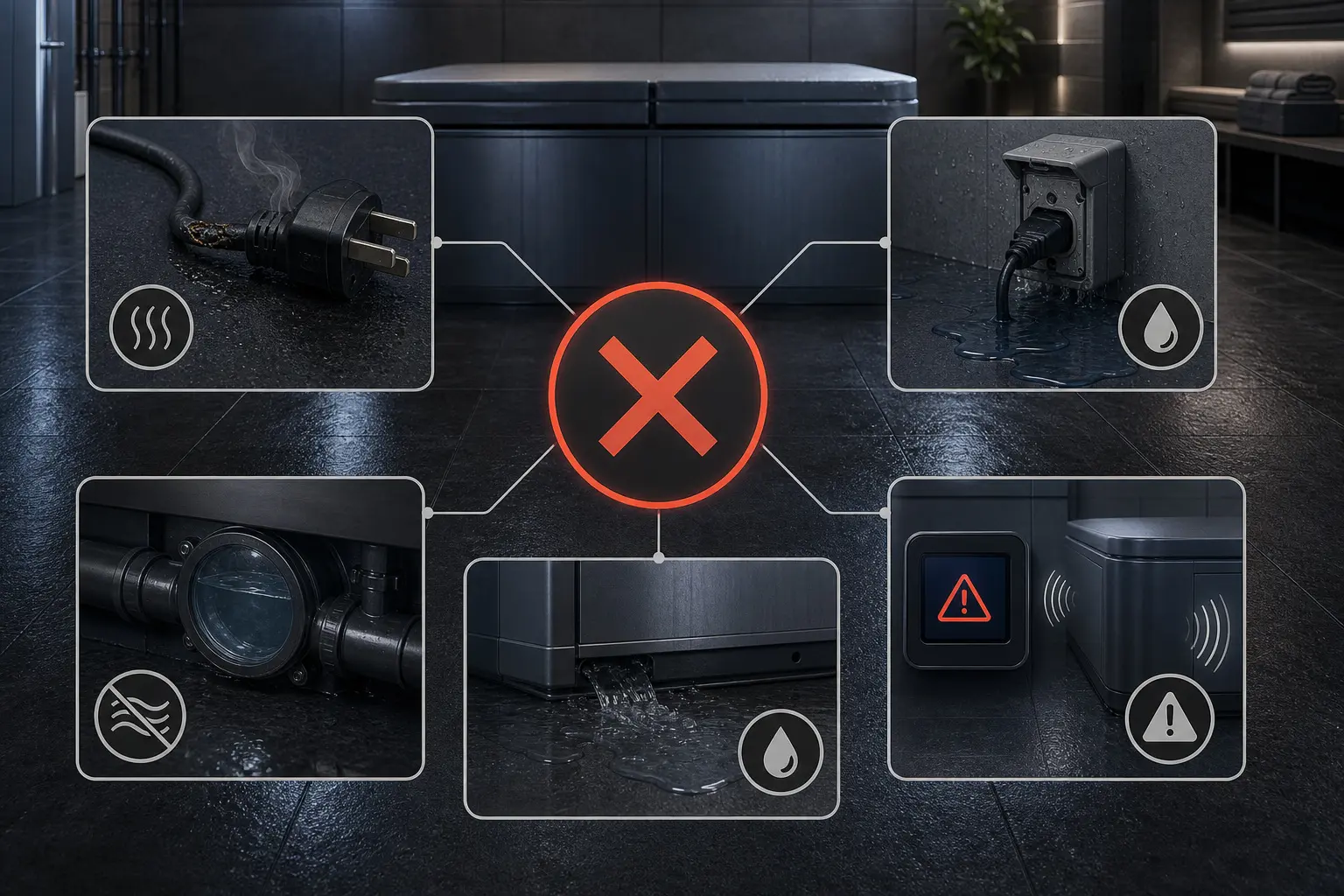
Know When to Stop the Chiller
Stop use and isolate the system when staff find:
- damaged power components, burning odor, smoke, or electrical arcing;
- water at an electrical connection;
- a failed safety-device test or repeated trip;
- no water flow or evidence that the pump is running dry;
- an internal or uncontrolled leak;
- freezing conditions without the required protection;
- grinding, violent vibration, or another severe new sound;
- an unresolved fault code that the manual treats as a stop condition;
- water quality outside the facility’s reopening limits;
- any condition the operator cannot assess safely.
Use a Maintenance Log That Staff Will Complete
A useful log is short enough for every shift and detailed enough to support a service decision. Digital or paper format is acceptable if records are dated, traceable, protected from water/editing, and reviewed.
Record:
- date, time, and employee
- bather load or session count
- target and measured water temperature
- water appearance and required treatment readings
- return flow status or measured flow
- filter or strainer condition
- hose, valve, seal, and leak check
- airflow and equipment-area condition
- noise, vibration, and error codes
- cleaning, filter service, draining, and parts replaced
- corrective action, reopening decision, and escalation status
FOCEEDO E-Series Example: Turn the Manual Into an SCP
A facility using a FOCEEDO E-Series chiller should build its schedule from the manual for that exact model and market version. Customizing flow and anti-freeze instructions to the specific user demands, limit checks before use, monthly vent testing, shutdown before filter service, and complete draining when ambient temperatures fall below 4°C (39°F).
Filter designs and service instructions differ across the range. For example, the documentation separates a large filter from a small filter, while the E-Series documentation describes a built-in filter point. Therefore, an operator should build a correct procedure and not rather than applying one filter rule to every chiller.
The same principle applies to alerts and air removal. If a facility operates several models, put the model number, QR link to its manual, filter part number, and flow line cover steps directly on each unit’s checklist.
Commercial Cold Plunge Maintenance Checklist
| Time | Check | Pass Standard | If It Fails |
|---|---|---|---|
| Before opening | Area, cord, outlet, and visible safety device | Dry, undamaged, accessible | Close and escalate electrical concerns |
| Before opening | Water level, valves, and return flow | Matches operating baseline | Check restriction, air, and valve position |
| Before opening | Hoses, ports, filter housing, and links | Secure with no uncontrolled leak | Stop, isolate, and correct or escalate |
| Before opening | Temperature, sound, and display | Normal range with no new alert | Record and investigate before use |
| Before opening | Water and wet surfaces | Meets facility and local criteria | Close and follow water-care response |
| Each shift | Bather load and recovery | Trend remains within baseline | Increase checks and investigate change |
| Shift handover | Open faults and completed tasks | Incoming staff accepts clear status | Keep closed if status is unresolved |
| Weekly or by condition | Filter, strainer, ports, and hoses | Clean, intact, correctly seated | Service with approved parts and method |
| Periodic | Vents and condenser area | Clear and undamaged | Isolate and clean only as approved |
| As instructed | RCD/GFCI or safety device test | Passes the prescribed test | Stop use; never bypass protection |
| Scheduled and triggered | Deep clean and water replacement | Resets to baseline all pass | Keep closed and correct the cause |
| Weekly review | Logs, alarms, recovery, and stock | No unresolved trend or missing parts | Adjust SCP or schedule planned service |
Related Articles
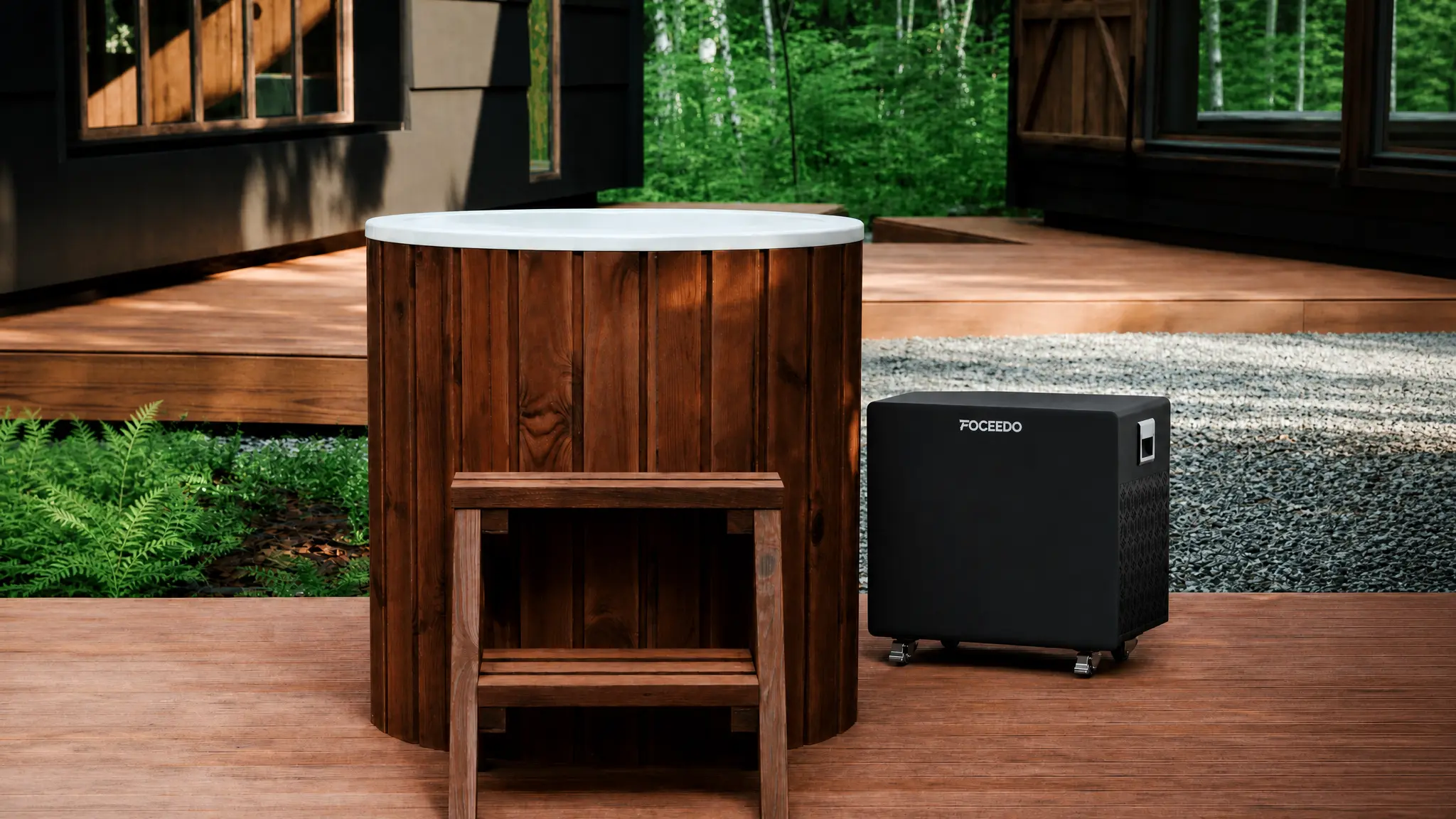
FOCEEDO Partners with Nordu Spa in Türkiye
FOCEEDO and Nordu Spa begin a distribution partnership in Türkiye, adding FOCEEDO ice bath chillers to Nordu Spa’s cold-plunge range.

Meet FOCEEDO at AusFitness Industry 2026
Meet FOCEEDO at Stand 116 during AusFitness Industry, 11–12 September 2026 at ICC Sydney, and discuss cold recovery and partnerships.
How Long Does a Cold Plunge Chiller Take to Cool Water?
Learn how long a cold plunge chiller takes to cool water, what affects cooling time, how to test your setup, and when slow cooling signals a problem