
Table of Contents
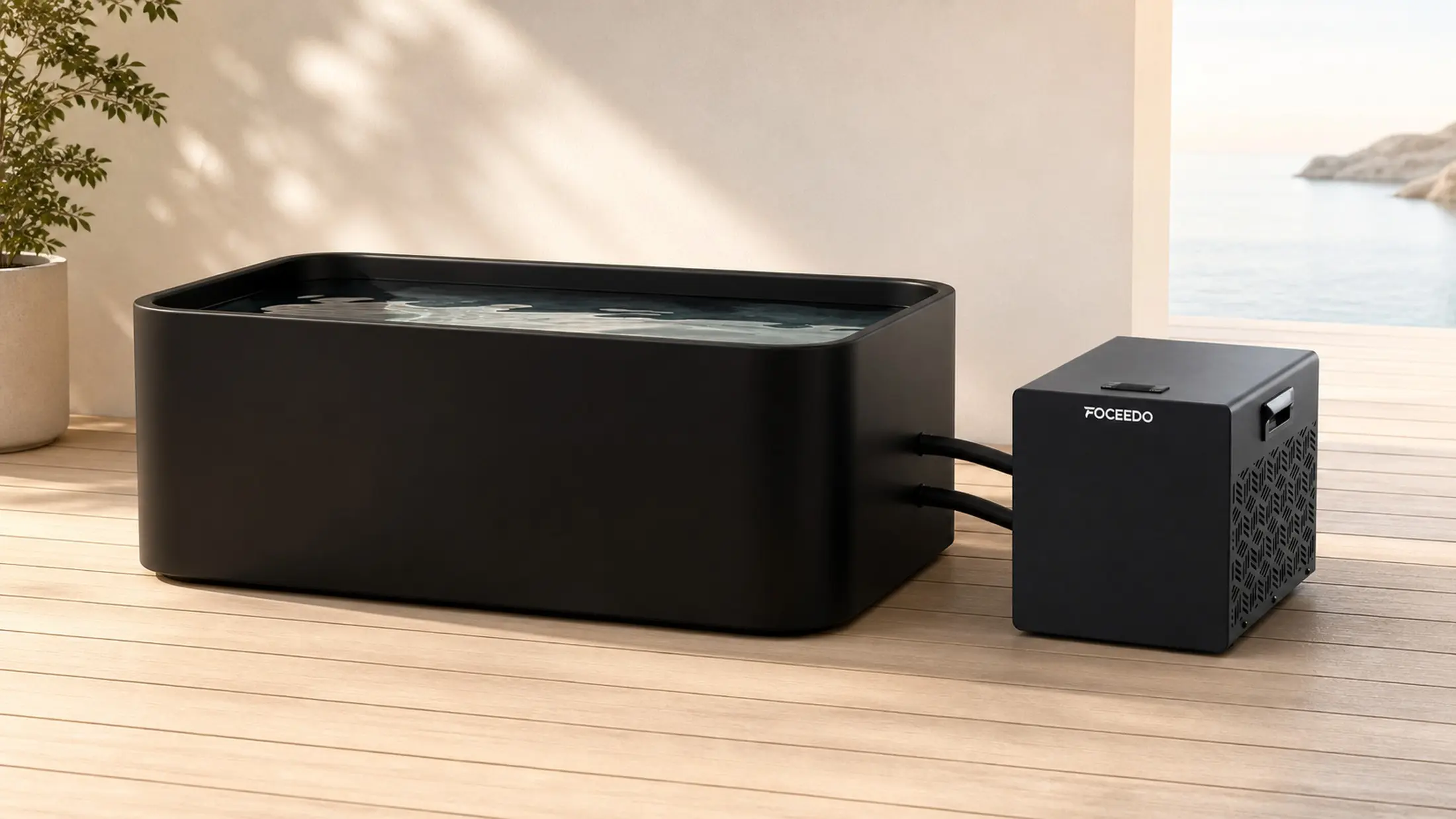
Quick Chiller Size Guide
Start with the actual water volume in your tub or small plunge pool. Use the ranges below as a practical starting point, then adjust for climate, insulation, target temperature, cooling speed, and daily use.
Match HP to Water Volume
- 50–100 gallons / 190–380 L: Start with 1/3 HP for a covered, well-insulated home setup.
- 100–150 gallons/ 380–570 L: 1/2 HP is a practical starting point for most standard home cold plunges.
- 150–200 gallons/ 570–760 L: Consider 1 HP, especially when faster cooling or more reserve capacity is needed.
- Over 200 gallons/ 760+ L: Assess 2 HP or more based on the total heat load and daily use.
Choose More Capacity When
- The tub is outdoors or exposed to temperatures above 90°F / 32°C.
- You want to cool the water faster or maintain a lower target temperature.
- Several people use the plunge back-to-back.
- The tub has weak insulation, no fitted cover, or more than 150 gallons / 570 L of water.
Start With Water Volume
Water volume is the first number to check because every gallon adds thermal mass. The more water your chiller must cool, the longer it takes to pull heat out and the harder it must work to hold a low temperature.
Most cold plunge tubs fall between 50 and 200 gallons. Larger stock tanks, commercial tubs, and spa installations may go well beyond that.
50–100 Gallons Entry Level
A small tub, barrel, or compact single-person plunge can often work with a 1/3 HP chiller if the setup is indoors, shaded, and used by one person. If you want faster cooling or live in a warm area, a 1/2 HP chiller gives you more margin.
100–150 Gallons Most Popular
This is the most common home cold plunge range. For many buyers, 1/2 HP is the practical starting point. It usually gives enough cooling power for daily use, reasonable cooldown time, and steady temperature control in moderate climates.
150–200 Gallons Pro Sumers
At this size, a 1 HP chiller becomes more realistic. The water volume is large enough that an undersized unit may run constantly and still struggle to reach your target temperature.
Over 200 Gallons Commercial
For tubs over 200 gallons, commercial-style sizing becomes more important. A 1.5 HP – 2 HP or higher may be needed for hot climates, high use, or larger commercial installations.
Compare HP Classes
Horsepower gives you a rough sense of compressor strength. It helps you compare chiller classes, but it should not be the only number you use.
A better sizing decision looks at horsepower together with actual cooling capacity, tub volume, temperature target, and installation conditions.
1/3 HP Chillers Quiet & Small
A 1/3 HP chiller is best for small tubs, mild climates, and indoor home use. It is usually quieter, smaller, and more energy-friendly than larger units.
The tradeoff is slower cooldown and less reserve power. If the tub is too large or the air temperature is high, a 1/3 HP unit may need to run for long periods without reaching the temperature you want.
1/2 HP Chillers Balanced Choice
A 1/2 HP chiller is the balanced choice for many home users. It fits standard single-person cold plunges, moderate climates, and regular daily routines.
This class works well when the tub holds about 100–150 gallons, has a lid, and is not sitting in direct sun. It is often the best compromise between cooling power, cost, noise, and space.
1 HP Chillers Heavy Duty
A 1 HP chiller is better for larger tubs, outdoor setups, hot climates, and users who want faster cooldown. It also gives better recovery when several people use the same water.
If you want to hold water near 40°F / 4°C or below, 1 HP gives more realistic performance than a smaller unit. It is not always necessary for every home setup, but it is useful when the conditions are demanding.
2 HP Chillers Commercial
A 2 HP chiller is usually for commercial or high-frequency use. It may be appropriate for recovery studios, gyms, spas, sports facilities, or large tubs used by multiple people each day.
For a small home tub, 2 HP may be excessive. It can cost more, take up more space, and create more noise than needed.
1/4 HP vs 1/2 HP vs 1 HP Chillers
A 1/4 HP chiller suits a small covered indoor tub, a 1/2 HP chiller suits a standard home plunge, and a 1 HP chiller suits larger, outdoor, or shared setups. The differences show up most in cooldown speed and how well the chiller holds temperature in warm weather.
If you are choosing between two neighboring sizes, use the table below as a starting point, then size for the hardest condition your tub will face.
| Factor | 1/4 HP | 1/2 HP | 1 HP |
|---|---|---|---|
| Cooldown Speed | Slowest | Moderate | Fastest |
| Best Placement | Indoors, shaded, with a lid | Moderate climate, out of direct sun | Outdoors, hot climate, direct sun |
| Holding 40–50°F / 4–10°C | Only in cool conditions | Fine in moderate weather | Realistic in warm weather |
| Noise, Power, and Space | Lowest | Middle | Highest |
| Main Tradeoff | Runs almost constantly in heat | Struggles with back-to-back users | Oversized for a small home tub |
1/4 HP vs 1/2 HP Small or Balanced
A 1/4 HP chiller is best for a small tub under about 80 gallons / 300 L that is indoors, covered, and used by one person. In that setup it can be quieter, smaller, and more energy-friendly than a larger unit.
The tradeoff is slower cooldown and less reserve power. A 1/2 HP chiller removes more heat each hour, so it cools faster and holds temperature with less strain. If the tub is outdoors, uncovered, or used by more than one person, 1/2 HP is the safer choice.
1/2 HP vs 1 HP Balanced or Heavy Duty
A 1/2 HP chiller is enough for most standard home plunges of about 100–150 gallons / 380–570 L, especially with a lid and moderate weather. It is usually the best balance of cooling power, cost, and space.
A 1 HP chiller becomes worth the extra cost when the tub holds more than about 150 gallons / 570 L, sits outdoors or in direct sun, or is used by several people back-to-back. It is also the more realistic choice if you want to hold water near 40°F / 4°C. For a small home tub in a mild climate, it is usually more than you need.
For a closer look at how fast each class cools, see how long a cold plunge chiller takes to cool water. Next, check BTU/hr, not just horsepower.
Check BTU, Not Just HP
Horsepower is easy to understand, so many buyers stop there. But the more useful performance number is often BTU/hr, which tells you how much heat the chiller can remove from water each hour.
Two chillers with the same horsepower can perform differently if their compressor, heat exchanger, airflow, pump flow, and refrigeration system are not equally efficient.
HP Is Only a Label
Horsepower describes motor power. It does not fully describe how much real cooling reaches the water.This is why two 1 HP chillers can have different cooldown times. One may remove heat efficiently, while another may lose performance because of weak airflow, poor heat exchange, or mismatched water flow.BTU Shows Heat Removal
BTU/hr tells you the cooling capacity more directly. In simple terms, it shows how much heat the unit can pull out of the water in one hour. Typical ranges vary by manufacturer, but many small cold plunge chillers fall roughly into these classes:
| Chiller Class | Typical Cooling Capacity | Best Use |
|---|---|---|
| 1/3 HP | Around 3,000–4,000 BTU/hr | Small indoor tubs |
| 1/2 HP | Around 4,000–6,000 BTU/hr | Standard home plunges |
| 1 HP | Around 8,000–12,000 BTU/hr | Large tubs, hot climates, faster recovery |
| 2 HP | Higher commercial range | Multi-user or commercial setups |
* These numbers are general references, not fixed promises. Always compare the manufacturer’s actual cooling capacity, not just the horsepower label.
Same HP Can Feel Different
A chiller’s real performance depends on how efficiently it moves heat from the water to the surrounding air. Compressor quality, heat exchanger design, condenser airflow, pump flow, and filter resistance all matter.This is why “bigger HP” is not automatically better. A well-designed 1 HP system can outperform a poorly designed higher-HP unit in real use.Set Your Target Temperature
Your target water temperature changes the sizing decision. Holding water at 55°F / 13°C is much easier than holding it at 39°F / 4°C.
The colder you go, the harder the chiller must work. Each degree near the low end requires more cooling effort, especially in warm air.
°F
50–55°F Is Easier
If your goal is light cold exposure, nervous system practice, or beginner-friendly plunging, 50–55°F / 10–13°C is easier to maintain.
A smaller chiller may be enough if the tub is compact and indoors. This range is also more forgiving if your insulation is not perfect.
°F
40–50°F Needs More Power
Many cold plunge users aim for 40–50°F / 4–10°C. This range feels clearly cold and is common for regular recovery routines.
For this target, most standard home tubs need at least a 1/2 HP chiller. Larger tubs, outdoor setups, or hot climates may need 1 HP.
°F
Below 40°F Is Demanding
Water below 40°F / 4°C is much harder to reach and maintain. It requires stronger cooling, better insulation, good circulation, and more time.
If this is your target, do not size your chiller for ideal conditions. Size it for your hottest days, your largest water volume, and your real use pattern.
Adjust for Climate
Climate can change the entire answer. A chiller that works well in a cool indoor room may struggle outdoors in summer heat.
Your chiller is not only cooling the water once. It is constantly fighting heat coming from the air, sun, tub walls, ground, and users’ bodies.
Indoor Rooms
Indoor setups are easier to size because the surrounding air stays more stable. If the room is climate-controlled, the chiller does not need to fight large temperature swings.
This is why a 1/2 HP unit can work well for many standard home tubs indoors. The system has a predictable cooling load.
Outdoor Shade
Outdoor shade is better than direct sun, but it still adds heat. Warm air, wind, and ground contact can all push heat back into the tub.
If your tub is outdoors, consider sizing up one class. A shaded outdoor 100–150 gallon tub may perform better with 1 HP than with a smaller chiller if summer temperatures are high.
Hot Summer Areas
If your average summer temperature rises above 90°F / 32°C, choose with more caution. The chiller has to reject heat into already-warm air, so cooling becomes less efficient.
In hot climates, 1/2 HP may become the minimum for many home setups, and 1 HP is often safer for larger tubs or colder targets.
Direct Sun
Direct sun is one of the easiest ways to overload a small chiller. Sunlight heats the water surface, tub wall, and surrounding materials.
Shade, a cover, and better insulation can reduce the load dramatically. In many cases, improving the setup is more effective than simply buying a bigger chiller.
Look at Insulation
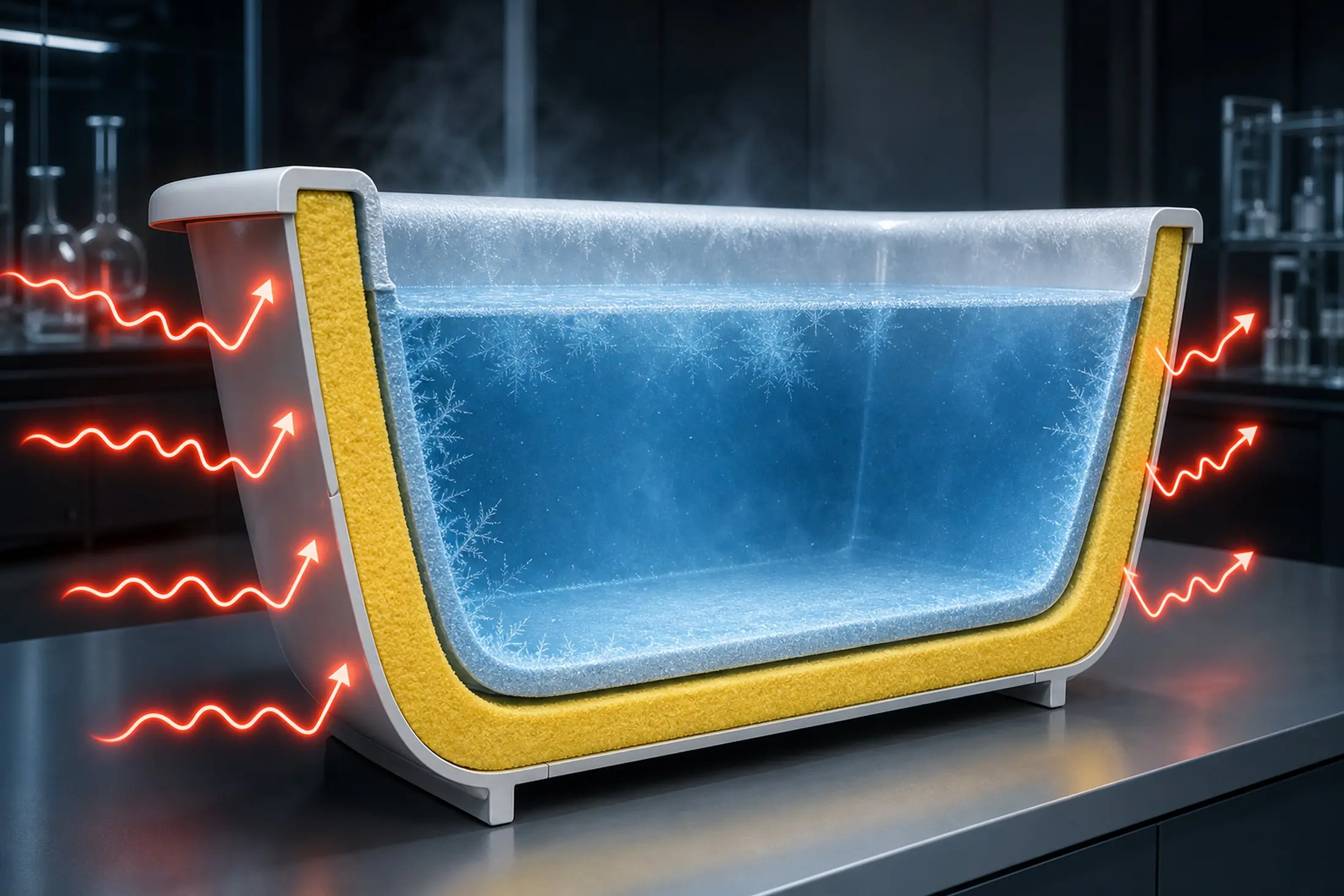
Insulation controls how much heat leaks back into the water. A well-insulated tub lets the chiller rest. A poorly insulated tub forces it to run longer.
This affects cooling speed, energy use, noise, and compressor stress.
Tub Walls Matter
HIGH HEAT LOSSThin, uninsulated tub walls lose cold quickly. This is common with basic stock tanks, inflatable tubs, and DIY setups.
If your tub has poor insulation, size up or improve the tub before expecting perfect performance. A small chiller on a high-heat-loss tub may never feel powerful enough.
A Lid Changes Everything
MUST HAVEAn insulated lid is one of the most useful upgrades for any cold plunge. It reduces heat gain through the open water surface when the tub is not in use.
Without a lid, warm air and sunlight continuously add heat. With a tight cover, the chiller can maintain temperature with less runtime.
Ground Contact Adds Heat
OFTEN OVERLOOKEDA tub sitting on hot concrete, decking, or outdoor flooring can gain heat from below. This is easy to overlook.
If your plunge sits outside, try to reduce direct contact with hot surfaces. A stable insulated base can help lower the cooling load.
Count Daily Users
A chiller must recover after every plunge. When a person enters the water, body heat warms the tub, and water movement mixes warmer layers into the system.
One user per day is very different from five users in a row.
One User
For one person using the plunge once daily, slower recovery may be acceptable. The chiller has plenty of time to bring the water back to target temperature before the next session.
This is where 1/3 HP or 1/2 HP can make sense, depending on water volume and climate.
Family Use
When several people use the same tub, the water warms faster. The chiller needs enough reserve power to recover between sessions.
A 1/2 HP unit may still work for moderate home use, but 1 HP gives more comfort if the tub is large or used often.
Gym or Spa Use
Commercial and semi-commercial settings need a different standard. A recovery studio, gym, spa, or wellness center may have repeated users throughout the day.
In that setting, the chiller must do more than reach temperature overnight. It must recover quickly, support circulation, and keep performance stable.
Check Water Flow
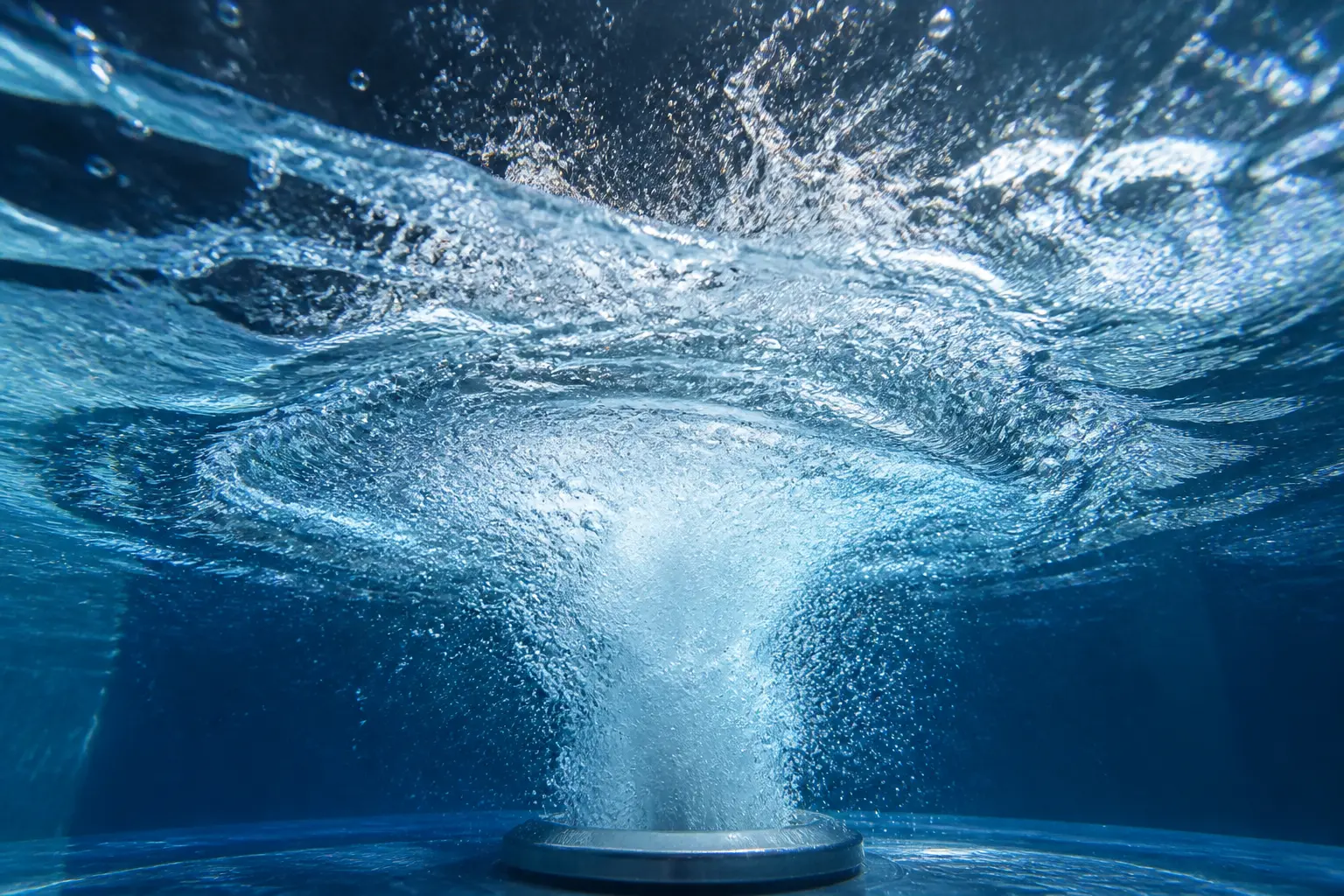
Cooling power only matters if water moves through the system properly. Poor circulation can make a strong chiller feel weak. The chiller, pump, filter, hose size, and tub layout must work together as one loop.
Flow Helps Cooling
Moving water improves heat exchange. It brings warmer water to the chiller and returns colder water to the tub.
Good circulation also reduces temperature layers inside the tub. Without water movement, the plunge may feel uneven even if the chiller is running.
Low Flow Creates Problems
Weak flow can come from a small pump, clogged filter, restricted hose, tight bends, or poor fittings. When flow drops, the chiller cannot move heat efficiently.
In extreme cases, low flow can create freezing risk inside parts of the system. This is why pump matching and filter maintenance matter.
Filters Add Resistance
Filtration keeps water cleaner, but it also adds resistance to the loop. A dirty filter can quietly reduce cooling performance.
If your chiller cools slowly after working well before, check the filter and water path first. The problem may not be horsepower.
Plan Power and Placement
Chiller placement affects safety, airflow, noise, and service life. A good location makes the system easier to use and easier to maintain. Do not hide the chiller in a tight corner just because it looks cleaner. It needs air and access.
Use GFCI Protection
Any electrical equipment near water should use proper grounded power and GFCI protection. A GFCI outlet can cut power quickly if it detects a fault. This is not an optional detail. It is part of basic cold plunge safety.
Leave Air Space
A chiller removes heat from water and releases it into the surrounding air. If the condenser vents are blocked, cooling performance drops. Leave open space around the chiller. Hot trapped air makes the machine work harder.
Think About Noise
Larger chillers often have stronger compressors and fans. That can mean more sound during operation. For home use, place the chiller where noise will not affect sleep or relaxation.
Keep Service Access
You need room to clean filters, check hoses, drain water, and inspect fittings. A setup that is hard to access is harder to maintain. Plan the space before installation to prevent small problems from becoming expensive.
Use This Quick Match
If you want a fast decision, use your water volume first, then adjust upward for heat, poor insulation, colder targets, or multiple users. This table is a practical starting point, not a replacement for manufacturer specifications.
| Setup Type | Water Volume | Likely Chiller Class | Best Fit |
|---|---|---|---|
| Small home tub | 50–100 gal | 1/3–1/2 HP | Indoor, one user, mild climate |
| Standard home tub | 100–150 gal | 1/2 HP | Daily use, moderate climate |
| Large home tub | 150–200 gal | 1 HP | Outdoor, faster cooling, colder targets |
| Large or hot setup | 200+ gal | 1–2 HP | Large volume, summer heat, frequent use |
| Commercial setup | Varies | 2 HP+ | Gyms, spas, studios, high user turnover |
Small Home Setup
Choose 1/3 HP if your tub is small, indoor, shaded, and used by one person. Choose 1/2 HP if you want better cooldown speed or more stable temperature. This setup is usually about comfort and consistency.
Standard Home Setup
For a typical 100–150 gallon home plunge, 1/2 HP is usually the best starting point. It gives enough performance without jumping into unnecessary size, cost, and noise. Move to 1 HP if outdoor or used often.
Large Outdoor Setup
A 150–200 gallon outdoor tub usually needs 1 HP for reliable performance. Heat gain from air, ground, and sun can quickly overwhelm smaller chillers. If the tub has no insulated cover, solve that first.
Commercial Setup
Commercial setups should be sized for peak use, not average use. For gyms, spas, and recovery rooms, leave more cooling margin. Uptime, water quality, and service access matter as much as the temperature number.
Avoid These Mistakes
Most sizing problems come from choosing for best-case conditions. Real setups are usually warmer, busier, and less insulated than buyers expect. A correct chiller size should work on normal bad days, not only on perfect days.
❌
Buying Only by HP
Horsepower is helpful, but it is not the whole story. Always compare cooling capacity, tub volume, target temperature, and installation conditions. If two chillers have the same HP, check their actual BTU/hr rating and design details.
❌
Ignoring Summer Heat
A chiller that feels strong in spring may struggle in July. Hot air lowers real cooling performance and increases heat gain into the water. If your tub is outdoors in a hot region, size up before summer exposes the weakness.
❌
Forgetting the Lid
An uncovered tub loses cold continuously. The chiller then has to cool the water and fight constant heat gain at the same time. A good lid may reduce runtime more than many buyers expect. It is one of the simplest ways to improve performance.
❌
Choosing Too Small
An undersized chiller may run constantly, cool slowly, miss your target temperature, and wear harder over time. This is the most common mistake. If your setup has several demanding factors, choose the larger class.
⚠️
Oversizing Without Need
Oversizing can also be wasteful. A large chiller may cost more, take up more room, and create more sound than a small home setup needs. The goal is not the biggest chiller. The goal is the right cooling margin for your real use.
Final Size Guide
If you only remember one thing, remember this: your chiller size should match the hardest normal condition your tub will face.
That means your largest water volume, warmest season, lowest target temperature, weakest insulation, and busiest use pattern.
🎯
If You Want the Simple Answer
Use this quick rule:
- 1/3 HP: small indoor tub, mild climate, one user
- 1/2 HP: most standard home cold plunges
- 1 HP: larger tub, hot climate, outdoor use, faster cooling
- 2 HP: commercial use, high-frequency sessions, large water volume
This gives you a practical first filter before comparing specific models.
🛡️
If You Want the Safer Choice
Size up one class if your setup includes several stress factors. These include outdoor placement, summer heat above 90°F / 32°C, target temperature below 40°F / 4°C, poor insulation, or multiple daily users.
Sizing up does not mean buying blindly. It means giving the system enough reserve power to perform when conditions are not ideal.
💡
If You Want the Lowest Running Cost
The lowest running cost does not always come from the smallest chiller. A small unit running constantly may use more energy and create more wear than a correctly sized unit that cools faster and rests.
The best efficiency usually comes from correct sizing, an insulated tub, a tight lid, clean filters, and good airflow around the chiller.
A cold plunge chiller is not just a cooling box. It is part of a full water system. When the chiller size, water volume, insulation, airflow, circulation, and use pattern all match, the water stays colder with less effort and the whole setup becomes easier to live with.
Most home cold plunges need 1/2 HP if the tub holds about 100–150 gallons and sits in a moderate climate. Small indoor tubs may use 1/3 HP, while large outdoor tubs or hot-climate setups often need 1 HP.
Commercial or high-frequency setups may need 2 HP or more, depending on water volume and daily user load.
Yes, 1/2 HP is enough for many standard home cold plunges. It is usually a good fit for 100–150 gallons, one or two users, moderate climate, and a tub with a proper cover.
It may not be enough if the tub is outdoors in summer heat, poorly insulated, larger than 150 gallons, or expected to stay below 40°F / 4°C every day.
A 1 HP chiller may be more than you need for a small indoor tub. But it is not too much for large tubs, outdoor setups, hot climates, colder targets, or multiple users.
If your plunge holds 150–200 gallons or needs fast recovery, 1 HP is often the safer choice.
Compare both, but give more weight to BTU/hr. Horsepower is a rough compressor label, while BTU/hr shows how much heat the chiller can remove from the water.
Also check pump flow, filter resistance, airflow, heat exchanger design, and your real installation conditions.
Most properly sized chillers take several hours to cool a cold plunge from warm fill water to a usable cold temperature. The exact time depends on water volume, starting temperature, chiller capacity, air temperature, insulation, and target temperature.
A small tub with a strong chiller may cool quickly. A large outdoor tub in hot weather may take much longer, especially if it has no insulated cover.
A 1/4 HP chiller is enough only for a small tub of about 80 gallons / 300 L or less that is indoors, covered, and used by one person in a mild climate.
If the tub is outdoors, uncovered, or used by several people, the chiller may run constantly and still miss the target temperature. In those cases, 1/2 HP is the safer choice.
Related Articles
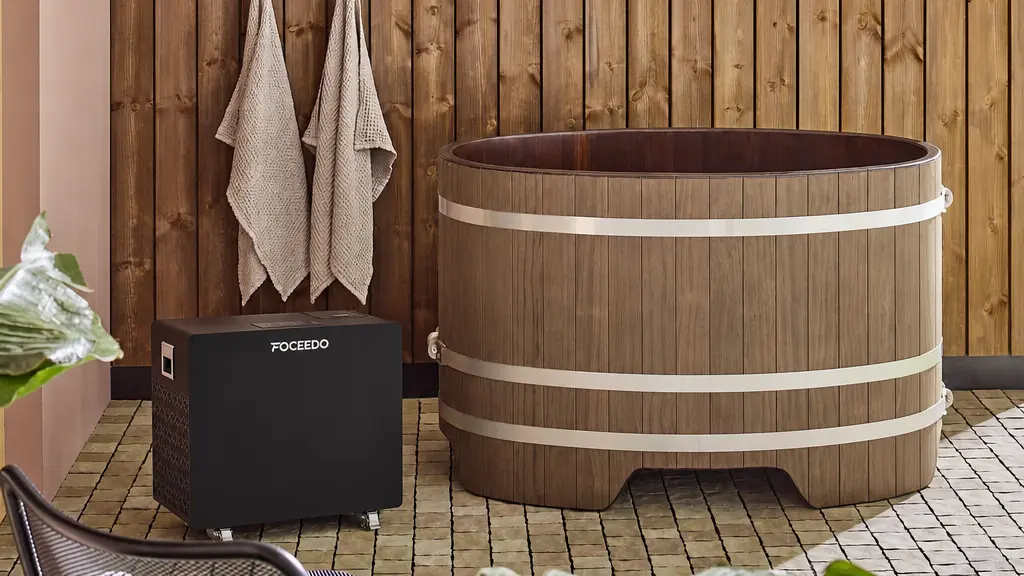
Blumenberg Tubs Powered by FOCEEDO Chillers
FOCEEDO partners with century-old German tub maker Blumenberg. Discover why they chose our chillers as the engine for their premium cold plunges.
FOCEEDO Partners with Nordu Spa in Türkiye
FOCEEDO and Nordu Spa begin a distribution partnership in Türkiye, adding FOCEEDO ice bath chillers to Nordu Spa’s cold-plunge range.
Meet FOCEEDO at AusFitness Industry 2026
Meet FOCEEDO at Stand 116 during AusFitness Industry, 11–12 September 2026 at ICC Sydney, and discuss cold recovery and partnerships.